Utility plans major solar, wind, battery projects
Namibia Power Corporation (NamPower) plans to increase its use of renewable energy over the next four years, targeting a power system in which 70% of its capacity comes from renewable sources by 2030.
The target forms part of NamPower’s 2026-2030 Integrated Strategic Business Plan launched this week, which aims to increase domestic electricity generation and take the country towards 80% energy self-sufficiency by 2030.
NamPower currently imports about half of the electricity it needs on average, with imports rising to as much as 70% during dry seasons.
Managing director Simson Haulofu says the utility will continue using regional electricity markets while it develops additional domestic generation capacity.
“NamPower will continue to tap into regional trading opportunities, through power purchase agreements and otherwise, to ensure a least-cost electricity supply mix and ultimately, security of supply until we put in place a baseload power plant,” Haulofu says.
SOLAR, WIND
PIPELINE EXPANDS
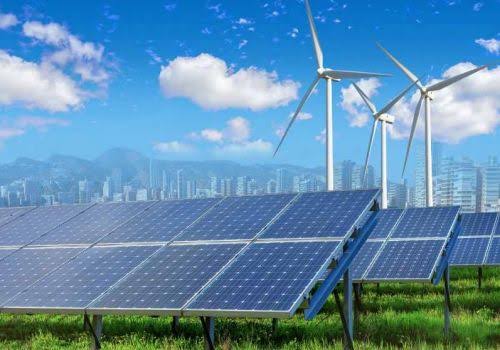
The renewable-energy push will be supported by a pipeline of solar, wind, biomass and battery-storage projects.
Among the projects already under development is the 100 megawatts (MW) Rosh Pinah Solar PV project, expected to come online in the first quarter of 2027, while the 44MW Diaz Wind project is scheduled for the fourth quarter of this year.
NamPower is also developing the 20MW Khan Solar PV plant, while an 80MW Omburu PV II project is planned for 2029.
The longer-term pipeline includes a 300MW Mega Wind project, as well as the 440MW Baynes hydropower project planned for 2032/33.
Battery storage is also becoming part of the utility’s strategy, with the 51MW Omburu Battery Energy Storage System and 45MW Lithops Battery Energy Storage System included in the programme.
The projects are intended to help Namibia add more domestic generation while managing the variability associated with solar and wind power.
LESS MONEY ON
IMPORTED POWER
Deputy minister of industries, mines and energy Gaudentia Kröhne says the shift towards greater domestic generation must ultimately translate into tangible benefits for households and businesses.
“When a parent buys a small amount of prepaid power and wonders how long it will last, the language of tariffs and balance sheets offers little comfort,” Kröhne says.
She says the country’s electricity strategy should ultimately be measured by its impact on people and the economy.
“By 2030, I hope we can return to this plan and speak in human terms: more homes with power they can use, more businesses able to grow, more Namibian minerals processed here, and less of our money spent on energy we could produce ourselves.”
The government has also set a target of reaching 70% national electricity access by 2030.
NamPower board deputy chairperson Paulina Elago says the new strategy was designed to respond to changes in energy markets and technology.
“In a world where geopolitics shift, markets evolve, and technology reshapes industries, standing still is not an option. This plan is our proactive response: a coordinated, company-wide strategy that leverages our strengths, confronts our weaknesses, and mitigates the risks that lie ahead,” Elago says.
Since 1996, NamPower’s generation capacity has grown from 394.6MW to 563.5MW, while its transmission and distribution network has expanded to about 25 000 kilometres and more than 200 substations.