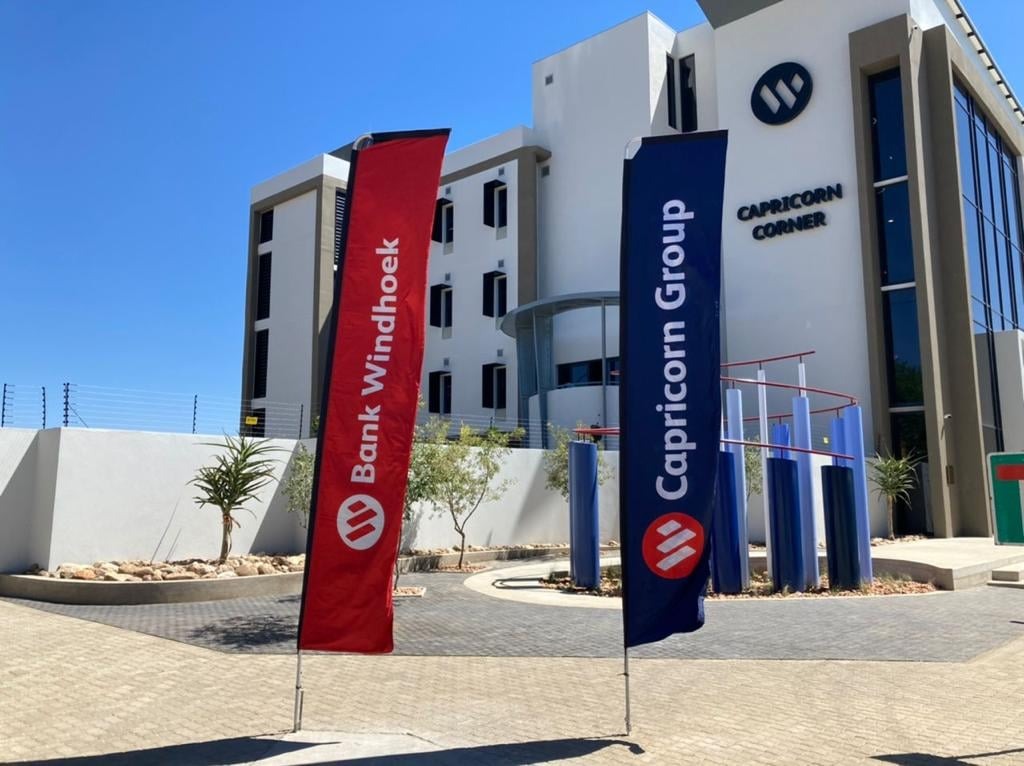
Capricorn Group’s profit fell 6.4% to N$1.87 billion for the financial year ended June, as a weak performance in Botswana weighed on the group despite stronger results from Bank Windhoek.
The decline of N$128 million marks the group’s first earnings contraction since the post-Covid-19 recovery, with higher credit impairments and weaker lending margins in Botswana being the main drags on the result.
Analysts at IJG Securities say Botswana accounted for most of the increase in the group’s impairment charges. Bank Gaborone also swung from a N$167 million profit last year to a N$113 million loss, a negative movement of N$280 million.
“This accounted for the bulk of the N$128 million decline in group earnings,” IJG says.
Bank Gaborone’s net interest income fell sharply as its net interest margin narrowed from 4.3% to 2.8%. The bank faced higher funding costs after relying more heavily on expensive institutional deposits amid liquidity shortages in Botswana during the first half of the year.
Bank Windhoek, however, moved in the opposite direction. Its net interest income grew 5.2%, while its net interest margin improved to 5.3%, helped by lower-cost deposits and a stronger funding mix.
IJG says the contrasting performance of the two banking operations highlighted the pressure facing Capricorn’s Botswana business, while Bank Windhoek remained more resilient in a lower-interest-rate environment.
The group’s non-interest income provided some support, increasing 8.3% to N$2.62 billion. Asset management and administration fees rose strongly as Capricorn Asset Management’s assets under management increased to N$67 billion.
Operating costs increased 7.6% to N$3.27 billion, with technology spending rising as the group continued its digital transformation programme.
Capricorn’s loan book also contracted, with gross loans and advances falling 2% to N$51.45 billion.
IJG attributes the decline partly to weak loan demand in Botswana and lower lending by Entrepo following the discontinuation of the government payroll deduction management system.
Despite the weaker earnings, the group maintained its ordinary dividend at 135 cents per share for the year, including a final dividend of 77 cents.
Headline earnings per share fell to 343.7 cents from 369.7 cents a year earlier.