




The government on Wednesday announced the detection of foot-and-mouth disease in the ||Kharas region.
The Namibia Agricultural Union and the government will now enforce strict bans on moving animals and meat products to contain outbreaks.
Export suspensions
An outbreak stops international red meat exports to protect global trade standards. This also means informal traders and local abattoirs face temporary slaughter and sales restrictions.
What farmers need to know
- • Where foot-and-mouth disease (FMD) is suspected, immediately isolate the herd with the affected animal or animals, if possible.
- • Do not remove any animals not showing signs and move to another herd – cases may still be sub-clinical.
- • Do not round up all livestock to check for other affected animals.
- • Rather drive through or move through the livestock in a calm manner to check for any other suspected cases. Look for lameness or animals reluctant to get up or walk, salivation, and lip smacking. Do this for all camps and herds to determine the extent of the suspected outbreak.
- • Wean the affected herd and any other unaffected herds.
- • No nose-to-nose contact between affected herds.
- • Immediately notify your local state veterinarian and farmer’s union representative.
- • Do not allow any movement of any animal from or to the affected establishment.
- • Avoid human contact with the affected livestock. If contact takes place, proper cleaning and disinfection of hands, clothes, shoes, etc. must take place before any other livestock is handled.
- • Do not cause panic – do not inform or notify other producers. All communication is to be done by the chief veterinary officer.
- • Cooperate fully with the state veterinarian.
- • nform the farmer’s union representative of the outcome of the official inspection. The representative is to only inform the chief veterinary officer and confirm cooperation.
Symptoms of FMD in cattle, goats and sheep
- • Lameness in a number of animals in the herd
- • Blisters or sores on the tongue, gums or lips
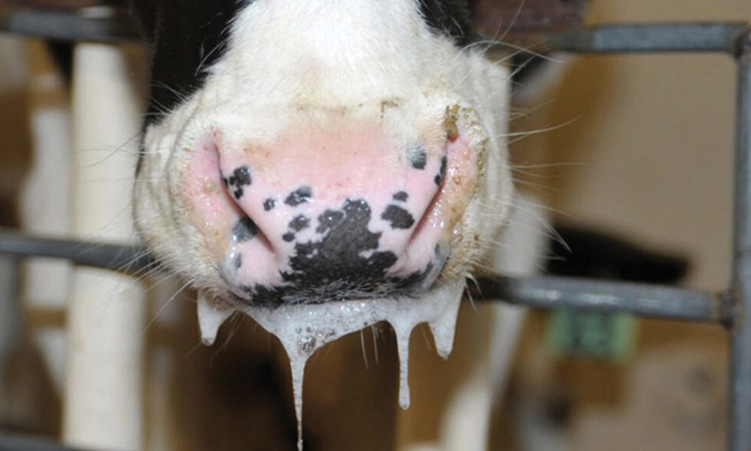
- • Pronounced salivation
- • Smacking of the lips or grinding teeth
- • Blisters or sores between the hooves
These symptoms can be very mild in goats and sheep and may not even be seen or noticed.
Pigs are very susceptible to FMD, and the disease can be seen in pigs even before it can be noticed in cattle, sheep or goats.
All the above-mentioned symptoms in a severe grade plus blisters or sores on the pig snout will be present.
Where two to three of the above-mentioned symptoms occur in a number of animals in the herd, FMD is suspected. – Source: Namibia Agricultural Union