



The United States’ decision to phase out HIV funding to Namibia leaves over 29 000 Namibians facing the loss of critical support services.
The planned reduction of US financial assistance for Namibia’s HIV-AIDS response was announced after Namibia achieved the Joint United Nations Programme on HIV-AIDS’ targets on testing, treatment and viral suppression.
The Ministry of International Relations and Trade released a statement last week, saying US support would transition from financial assistance to technical cooperation over the next year.
The US government says it will provide US$45 million (about N$750 million) for Namibia’s HIV response and this transition in the 2027/28 financial year.
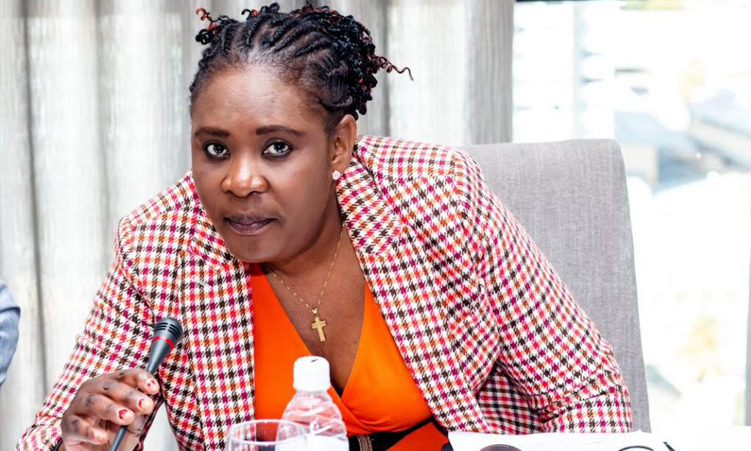
Tonata People Living with HIV Support Network executive director Victoria Kamule yesterday said the reduction in US financial assistance would have a “huge impact” on the government and people living with HIV due to their dependency on donor funding.
“The reduction of the funding will have a huge impact on the government and especially on people living with HIV, because a huge number of the treatment and management [programmes] were depending on this funding.
“We are seeing a lot of decline in services that were supposed to be active. It has a negative impact on us.
“The government assured us that on the side of treatment they will be able to procure medication for people living with HIV and all the other services that were attached to this treatment,” she said.
Kamule said organisations such as Tonata rely on continued funding to maintain support groups and provide assistance to people living with HIV.
“Our concern is whether the government will be able to manage it on their own.
“I’m not sure if we will have enough funding to continue to support these people,”she said.
Tonata represents about 29 000 people living with HIV across six regions.
Kamule said the organisation was particularly concerned about what would happen to programmes that had already been established through donor support.
“We need to see where the government will take us,” she said, adding that plans around social contracting would need to be strengthened to ensure civil society organisations could continue delivering services.
“Prevention programmes were entirely relying on donor funding and will now be laid down in terms of support,” she said.
‘SUCCESS STORY’
US ambassador John Giordano describes Namibia’s progress as a success story after more than two decades of cooperation through the President’s Emergency Plan for AIDS Relief.
“Namibia’s success story is a testament to what can be accomplished when nations work together with determination and shared purpose,” he has been quoted as saying.
The partnership between the two countries has lasted for more than 22 years.
More than 220 000 people are receiving lifesaving antiretroviral therapy through Namibia’s public health system, while the country has developed national health information systems, laboratory networks and supply chain mechanisms designed to sustain long-term epidemic control.
Minister of health and social services Esperance Luvindao in a statement says the achievement shows what is possible when national vision is supported by international solidarity.
‘RESPECTING HEALTH DATA’
“Our collaboration with the United States has strengthened our national capacity that allows Namibia to continue driving its own HIV response.
As we evolve this partnership, we remain committed to a cooperation model that respects Namibia’s sovereignty and the integrity of our national health data,” she says.
The Namibian last week reported that the government has rejected a US health data and specimen-sharing proposal, citing sovereignty and privacy concerns while seeking alternative funding for HIV programmes.
Government officials told The Namibian the country’s objections were raised after proposed funding of mostly HIV and tuberculosis programmes, worth over N$145 million per year, underwent legal scrutiny through the attorney general’s office.
Government officials have told The Namibian that, should the country fail to reach an agreement with the US government, they would explore alternatives to source about N$730 million to fund its HIV-AIDS programmes.
“The potential impact is significant if an agreement is not reached on mutually acceptable terms. The amount for 2027 is about US$45 million (N$730 million),” government officials have said.