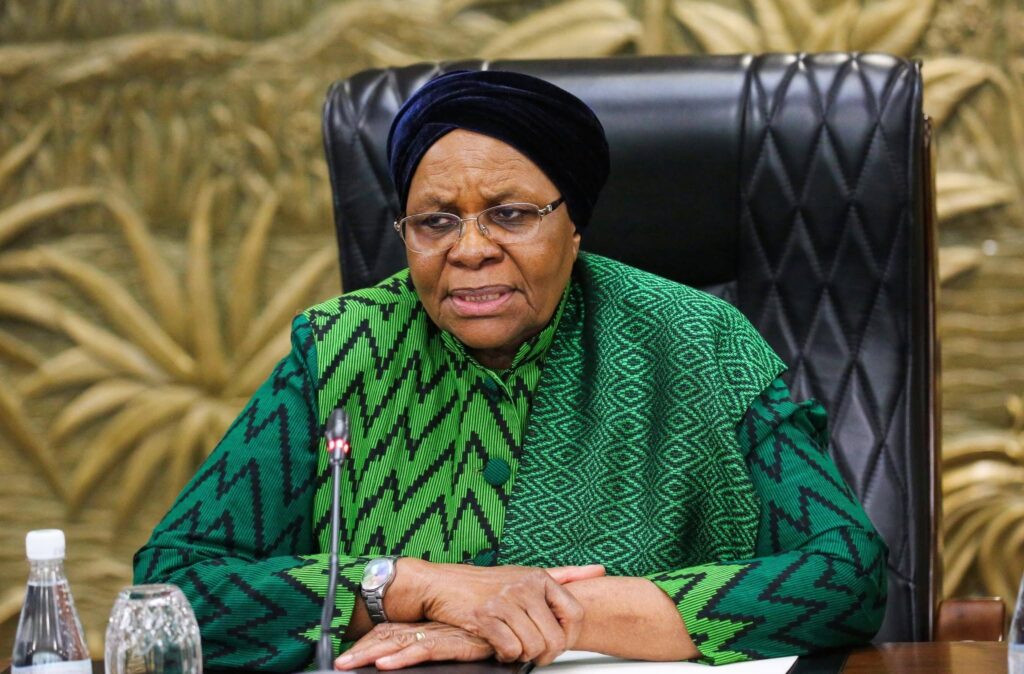
Hage Geingob Stadium, 2 September 2026.
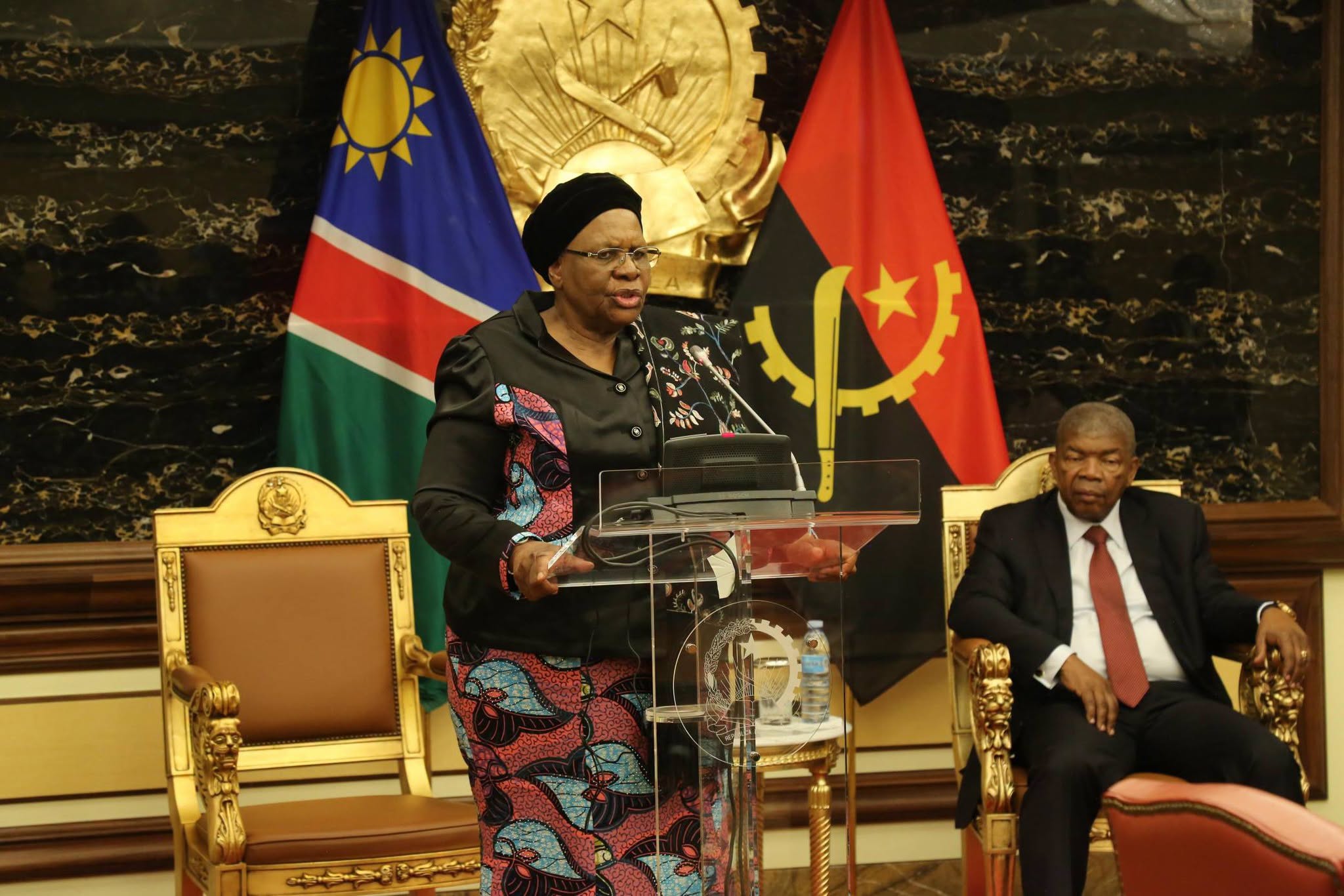
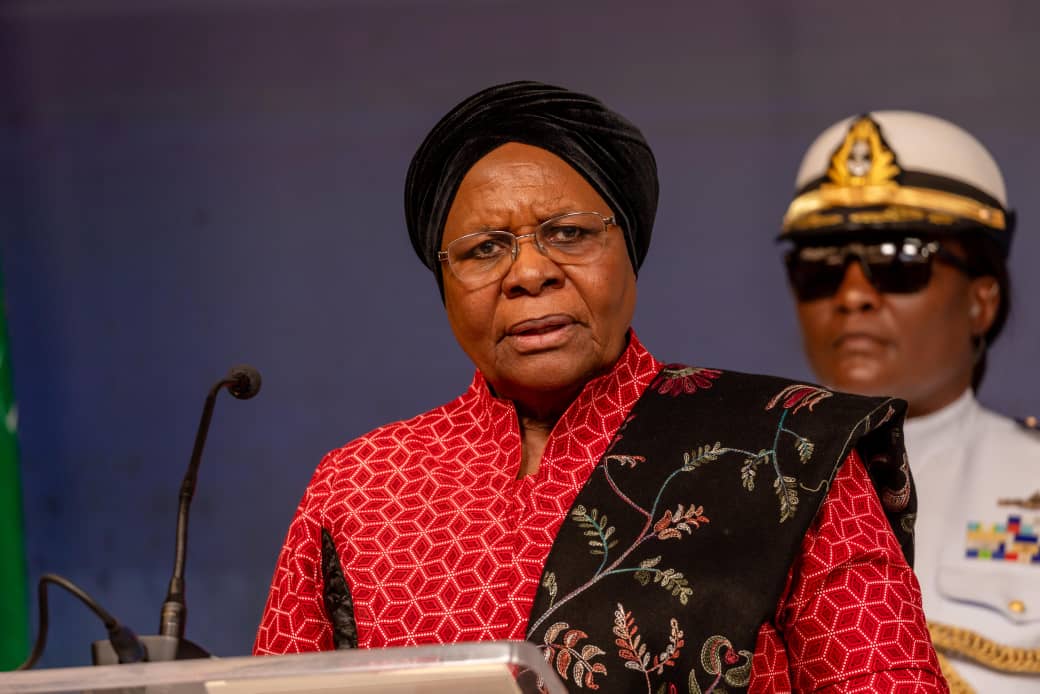
Statement by Her Excellency Dr. Netumbo Nandi-Ndaitwah, President of the Republic of Namibia.
Director of Ceremonies;
Hon. Emma Theofelus, Minister of Information, Communication and Technology;
Hon. Indileni Daniel, Minister of Environment, Forestry and Tourism;
Hon. Dino Balloti, Deputy Minister of Education, Innovation, Youth, Sports, Arts and Culture;
Honourable Ministers and Deputy Ministers Present;
Honourable Members of Parliament;
Your Excellencies, Members of the Diplomatic Corps;
Honourable Sa Shafiishuna Nujoma, Governor of the Khomas Region, and other Regional Governors present;
Your Worship Councillor Sakarias Uunona, Mayor of City of Windhoek;
Honourable Regional and Local Authority Councillors present;
Ms Nangula Uaanjda, Executive Director of Emeralds and Platforms and your Board of Directors;
Captains of Industries;
Community and Spiritual Leaders;
Esteemed Exhibitors and Participants;
Members of the Media;
Ladies and Gentlemen.
It is a pleasure to join you for the official opening of the Creative Sport Tourism Expo. I commend the organisers for bringing together sectors that are too often discussed separately, even though they draw strength from one another.
The name of this Expo tells an important story. Creativity gives sport its identity. Sport draws people together. Tourism carries that energy into our towns, communities, businesses and national economy. When these sectors are connected deliberately, a single sporting event becomes an entire chain of opportunity.
This is the approach required under the Sixth National Development Plan. Government can create an enabling environment, but transformation will come through purposeful cooperation among the public sector, private enterprise, communities, athletes and creatives. Our task is to move beyond discussing potential and begin building industries that create work, income and lasting value.
Our policy commitments are measurable. Under NDP6, we aim to increase the contribution of sport to employment from approximately 1 percent to 3.5 percent by 2030. In tourism, Namibia recorded 1,217,108 international tourist arrivals in 2025, compared with 1,257,093 in 2024 – a decline of 3.2 percent. Our target remains 1.8 million tourist arrivals by 2030. These figures reinforce the urgency of diversifying our tourism offering and linking it more deliberately to sport, culture and the creative industries.
The size of the global opportunity is considerable. Recent research by the World Economic Forum and Oliver Wyman estimates that the global sports economy generated approximately 2.3 trillion United States dollars in revenue in 2025 – close to 2 percent of global Gross Domestic Product. It is projected to reach 3.7 trillion United States dollars by 2030. This wider economy includes professional and participatory sport, sporting goods and sports tourism. The question before us is therefore not whether opportunity exists, but how Namibia positions itself to secure a greater share of it.
Director of Ceremonies,
When an athlete enters a stadium, the public sees the competition. Yet long before the first whistle, many other people have already been at work. Someone designed and produced the sporting attire. Someone built the stage, installed the lighting and sound, created the branding, prepared the field, sold the tickets and promoted the event. Broadcasters, camera operators, photographers, journalists and digital creators take the event to audiences far beyond the venue.
Around that same event are caterers, vendors, security personnel, medical teams, transport operators, hotels, guesthouses, tour guides, musicians and craftspeople. After the final whistle, visitors still need places to eat, places to stay and experiences that allow them to discover the host country. This is the value chain of sport. The opportunities do not begin and end with the athlete.
We saw this clearly during the recently concluded 2026 FIFA World Cup, hosted by Canada, Mexico and the United States of America. The tournament was football at its highest level, but it was also much more than football. Its ceremonies required costume designers, stage designers, musicians, dancers, choreographers, technicians, producers and many other creative professionals.
The host cities used music, food, art and culture to tell their own stories. Supporters travelled not only to watch matches, but also to experience the cities and countries around them. They stayed in hotels, used local transport, visited attractions, tasted local cuisine and bought merchandise and crafts. In that way, the sporting spectacle became a platform for tourism, culture, trade and employment.
Even the attire worn by an athlete begins in the mind of a creative person. A jersey needs a concept, colours, patterns, branding, textile production, tailoring, marketing, photography and retail. Every link in that chain represents a skill, a profession and an opportunity to earn a living. When we understand the full chain, we understand that the opportunities are virtually limitless.
Namibia has everything required to build this kind of economy. We have gifted athletes, designers, artists and performers. We have compelling landscapes, a rich cultural heritage and communities with stories worth sharing. Our coast, deserts, towns and villages can host sporting experiences that draw Namibians and international visitors while creating business for local communities.
A road race, cycling tour, boxing championship, football match or netball tournament should therefore be planned as more than a fixture on a sporting calendar. It should also be packaged as a tourism experience, a cultural showcase, a media product and a marketplace for Namibian goods and services.
Director of Ceremonies,
I speak about sport with a personal appreciation of what it can mean in the life of a young person. In my younger years, I was a keen netball player, and I believe I played the game rather well. Had the political climate of that time been different, and had our country offered the sporting pathways and opportunities that young people need, perhaps I could have gone much further in the game.
But ours was a generation whose choices were constrained by colonialism and apartheid. The struggle for freedom demanded much from us, and the systems needed to develop talent were not designed for the advancement of the majority of Namibians.
Young Namibians today stand on different ground. They live in a free country, with the right to dream beyond the limits that confronted earlier generations. However, freedom must be matched by functioning pathways: quality coaching, safe facilities, regular competitions, professional administration, investment and access to markets. Talent alone is not a development strategy. It must be identified, trained, supported and connected to opportunity.
For that reason, I call on public institutions, sports bodies and the private sector to treat this value chain as serious economic infrastructure. We must develop facilities, strengthen academies and leagues, build reliable event calendars, invest in broadcasting and digital platforms, and market Namibia more boldly as a destination for sport and adventure.
I call upon the responsible ministries, working with regional and local authorities and the private sector, to develop an integrated national calendar of sporting and cultural events that can be marketed together with tourism packages. We must also improve the collection of data on jobs, enterprises, visitor spending and local procurement across this value chain. What we measure, we can support more effectively; and what we support deliberately can grow into a sustainable industry.
We must also ensure that Namibian enterprises and professionals participate meaningfully whenever events are hosted. Local procurement must include designers, artists, tailors, technicians, caterers, accommodation establishments, transport operators and community-based tourism enterprises. The value generated in Namibia must circulate in Namibia and reach Namibian households.
This requires us to confront another obstacle: the stereotype that one cannot make a decent living in sport, tourism or the creative industries. We will not dismantle that stereotype through words alone. We will dismantle it when service providers are contracted professionally, credited properly and remunerated fairly and on time.
Exposure is not a substitute for payment. Passion does not remove the responsibility to pay people for their labour and skill. If we expect world-class work, we must build a culture that values professional service. A costume designer, photographer, musician, coach, tour guide, stage technician or athlete must be able to pursue excellence while also supporting a family and building a dignified future.
At the same time, service providers must organise themselves, uphold standards, price their work responsibly and deliver with discipline. Government and industry must improve access to training, finance, technology and markets. Professionalism and fair remuneration must advance together.
I therefore challenge the partnerships formed at this Expo to produce measurable results. Let us see new sporting events linked to destination packages. Let us see Namibian sportswear and merchandise on the market. Let us see more local music, design, food and culture forming part of the spectator experience. Let us see young people moving from informal talent to sustainable enterprise.
The awards presented during this Expo are also important. Recognition tells athletes, creatives and entrepreneurs that their work matters. It raises standards, builds confidence and gives the next generation examples to follow. Recognition must, however, be accompanied by opportunity, investment and a clear route for growth.
Our national ambitions will not be achieved by government acting alone, nor by any one sector working in isolation. One event can activate many industries, but only if we plan it that way. One talented young Namibian can create work for many others, but only if the supporting value chain is strong.
Let this Expo therefore mark a shift in how we see sport, creativity and tourism: not as side activities, but as productive sectors capable of creating jobs, generating income, strengthening national identity and carrying the Namibian story to the world.
I wish you constructive engagements and partnerships that continue long after the exhibition stands have been packed away. May the ideas exchanged here become enterprises, events, careers and livelihoods.
It is now my pleasure to declare the Creative Sport Tourism Expo officially open.
I thank you.