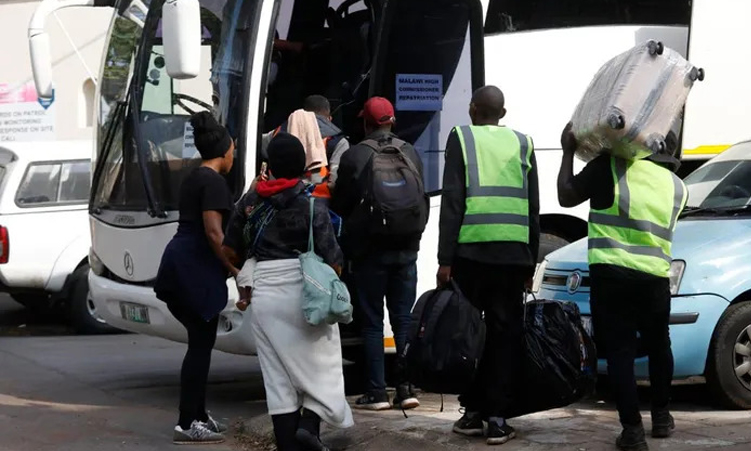
A month after being repatriated from South Africa with promises of support and reintegration, about 72 Namibians are now back home facing unemployment, documentation problems and financial hardship.
The returnees, who were brought back to Namibia in August and September following concerns over xenophobic attacks in South Africa, say the government’s promises of helping them rebuild their lives have yet to materialise.
Several returnees who spoke to The Namibian yesterday said the only assistance they have received was transport from South Africa to Namibia and food during the journey, after which they were taken to their respective regions and dropped off at family homes.
Nuusiku Gehardt, who spent six years in South Africa, said she returned to the Omusati region hoping to start a new chapter, but has instead become dependent on relatives.
“They promised us before we left SA that they would take care of us and reintegrate us, since many of us left home many years ago and have no means of survival. I left everything I had worked for and all I took was my luggage,” she said.
“Where are the tents, the documents, the land, the food and the capital to start afresh?”
Gehardt said some returnees are struggling to obtain identity documents for their children, making it difficult to access social grants and other basic services.
She called for temporary shelter, monthly financial assistance and start-up capital to help returnees become self-sufficient.
“For some of us who are fortunate to be with family, we are still counted as an extra burden because we do not contribute anything,” she said.
Returnee Hosea Angula said the group has submitted a list of people requiring documentation after being requested to do so by Omusati governor Immanuel Shikongo, but said they are now being told that no such list exists.
“How do we access basic services in our own country without documentation? Some have nowhere to go because they have been away for too long and have become strangers to their own families,” he said.
Angula said some returnees are considering returning to South Africa because government assistance has not materialised.
“They told us to not go back, they would provide everything we need to start all over. We are now in October and no help from the government,” he said.
‘TRAUMATIC EXPERIENCE’
Monika Fillipus yesterday said returning home had left her without an income or employment and that she had lost many of her belongings accumulated over years in South Africa.
“I returned home with no job and no income, and I lost a lot of my belongings after so many years of building. It is a traumatic experience. I did not just lose money, I lost my sense of identity too,” she said.
Fillipus urged the government to provide skills training, small-business opportunities and financial assistance to help returnees regain their independence.
Landless People’s Movement parliamentarian Eneas Emvula this week raised the matter with prime minister Elijah Ngurare in the National Assembly.
In his submission, Emvula said the returnees have little psychosocial support, leaving many dependent on ageing parents and relatives who are themselves struggling financially.
He called for an urgent needs assessment and a short- to medium-term relief package, including customised enterprise support.
Meanwhile, the Office of the Prime Minister and the Ministry of International Relations and Trade said they are looking into the concerns raised by the returnees.