




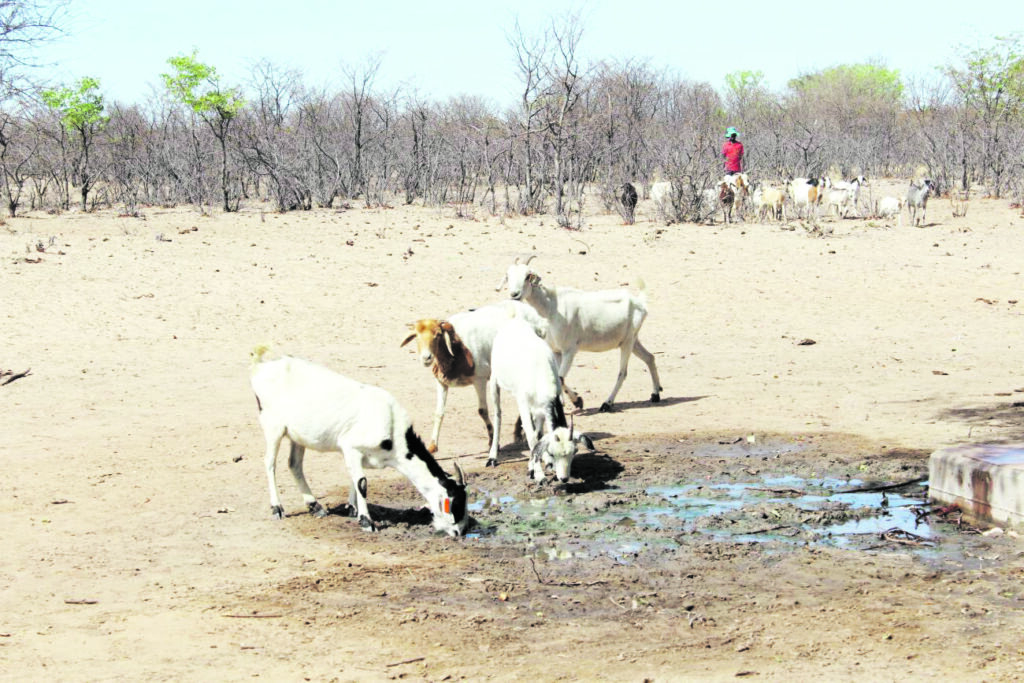
The outbreak of foot-and-mouth disease in Namibia has forced the government to reconsider plans to support the livestock sector should Namibia be hit by the prevailing El Niño climate pattern.
The pattern, which occurs every two to seven years, is a natural climate pattern caused by the unusual warming of surface waters in the central and eastern tropical Pacific Ocean.
It could contribute to hotter and drier conditions in Namibia.
Last month, the Namibia Meteorological Service said it expects El Niño conditions to strengthen from October, potentially bringing a hotter and drier than normal rainy season.
Ben Haraseb, the director of the Directorate of Agricultural Production, Extension and Engineering Services at the Ministry of Agriculture, Fisheries, Water and Land Reform, says the foot-and-mouth disease (FMD) outbreak has changed the situation.
“At this moment, everything we had planned for the livestock sector when it comes to El Niño is out of the window because of the FMD outbreak,” Haraseb said at a recent dialogue on nutrition for growth, food security and sustainable agriculture.
He says the government will now have to reconsider its plans.
“We have to go back to the drawing board now,” Haraseb says.
Namibia confirmed the current FMD outbreak last month, with the disease spreading to farms in the ||Kharas region.
The outbreak has disrupted livestock sales, including auctions, making it difficult for farmers to reduce their herds in preparation of possible dry conditions.
Percy Chimwamurombe, the head of the biology, chemistry and physics department at the Namibia University of Science and Technology, says the outbreak has made destocking difficult.
“It’s a disaster. Not much can be done regarding that aspect for now, and we don’t know when we’re going to be able to engage in livestock sales,” he says.
Chimwamurombe says cheaper sources of protein, including plant-based options, could be considered while the livestock sector is faced with these challenges.
Tino Hess from German development agency GIZ Namibia’s agricultural business and capacity development project says farmers would normally reduce livestock numbers through sales, but FMD restrictions have limited this option.
“Unfortunately, the livestock sector will now be hit heavily because the key strategy of destocking and marketing will not work,” he says.
Hess says farmers should consider alternatives such as harvesting grass and planting fodder where irrigation is available.
“We had a very rich rainy season. Who has been harvesting grass? And now we’re fighting for the dry grass that is out there,” he says.
Food and Agriculture Organisation in Namibia programme support intern Oscar Kangwiya says Namibia should activate its disaster preparedness systems instead of waiting for conditions to worsen.
“I know as a country we have a system, and it’s just a matter of us getting it ready and activated,” he says.
Namibia Nature Foundation chairperson Mareike Voigts says farmers need clear information to decide what to produce and where to invest.
“I still think knowledge or information is key so that farmers in this country really know what is expected and so they can make an informed decision,” she says.
Voigts also calls for efficient water use, particularly where farmers rely on irrigation.
“We really have to ensure we use that water efficiently and that we avoid any drainage of water. We must make sure the water stays where the roots can access it,” she says.