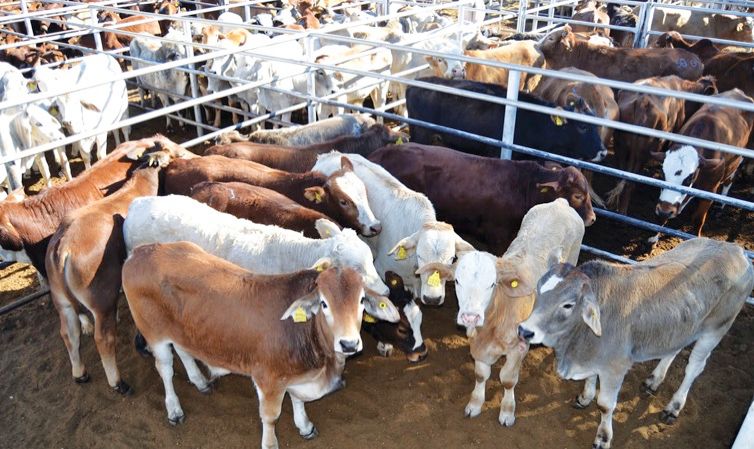
South African animal health experts will be in Namibia on Friday for talks on the possible reopening of livestock auctions involving Namibian animals.
Livestock auctions were suspended following the foot-and-mouth disease (FMD) outbreak in Namibia last month.
Agriculture minister Inge Zaamwani says Namibia is in talks with South African authorities on the protocols needed to resume auction trade, including the sale of livestock destined for the South African market.
“There will be a meeting with some of the experts from South Africa on Friday who are coming here,” Zaamwani told parliament on Tuesday while responding to Popular Democratic Movement leader and member of parliament McHenry Venaani.
Zaamwani said she has also spoken to her South African counterpart about reopening auction trade between the two countries.
“I spoke to my counterpart in South Africa about the possibility of us resuming auction trading for the market of South Africa. There are certain protocols that we have to put in place,” she said.
Technical officials from Namibia and South Africa held an online meeting on Tuesday to discuss the procedures needed to speed up the resumption of auctions.
Zaamwani said the government would first focus on containing the FMD outbreak in the Karasburg district before gradually reopening livestock trade.
“Once we have done an assessment and we are confident that we have contained the outbreak within that area, then we will look at gradually reopening the trading,” she said.
She said some livestock trade has already resumed under specific conditions. This includes animals that were already in auction kraals and quarantine facilities when the restrictions came into effect.
Zaamwani said laboratory testing has so far been conducted on 2 910 cattle, 22 289 sheep, 4 114 goats and nine pigs.
Clinical signs have been observed in 127 cattle, 50 sheep, one goat and one pig, she said.
Venaani raised concerns about the impact of the auction suspension on farmers.
He said farmers depend on auctions for income to pay workers, cover their children’s school expenses and buy animal feed and other necessities.