




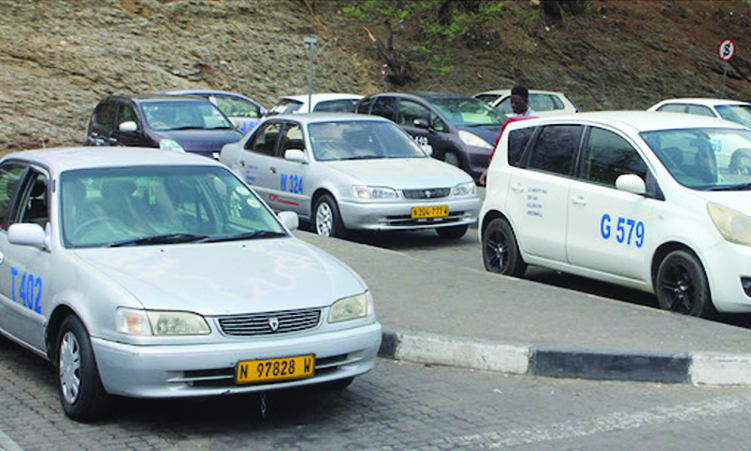
Transport and works minister Veikko Nekundi says a request to increase the taxi fare has been received, and the ministry will respond to the request as a matter of urgency.
This follows South Africa’s recent fuel price increase, with Namibia expected to follow suit.
Taxi drivers have expressed frustration, saying taxi fares have not increased since 2021, while fuel prices have increased many times over the years.
They asked the ministry to raise the fare to align with the fuel price increase.
Last month, minister of industries, mines and energy Modestus Amutse announced a fuel price increase, with petrol increasing by N$2.50 and diesel by N$4.
Petrol now costs N$22.08, while diesel costs N$23.
However, the taxi fare remains N$13.
Taxi drivers say they are spending more on fuel than generating income.
Goreangab-based taxi driver Taino Simeon says he makes about N$6 000 in a month, but spends about N$7 000 on fuel.
He says payments from customers go directly into fuel without any profit.
“Yango prices increase eventually, but ours remains the same. A customer can sometimes pay N$120 for Yango to go to Havana, but taxi fare has remained N$13 for about six years now. We sometimes even take money from our pockets to fuel up,” he says.
He says the ministry has turned a blind eye to their plight.
Simeon requests for the price to increase by at least N$2, adding that they also have homes to sustain and cannot make profit if the fare remains unchanged.
“We want it increased with a reasonable margin, we are not asking for too much. It will make a big difference,” Simeon said.
Public transport operator Lisias Ndemba says this has been a challenge for drivers, adding that it is worse for those driving for other people.
“At the end of the day you only drive for fuel and cannot provide the amount car owners are demanding. Majority of young people are driving for others, and it is critical for them. There’s no profit I am expected to make because the boss expects the money,” he says.
Seven Seaters Association member Pablo Benjamin says the recent fuel price increase in Namibia places real pressure on taxis and seven-seaters that rely heavily on petrol and diesel.
He says operating costs have risen sharply.
“Considering that taxi fares have not been adjusted in about six years, it is reasonable to question whether current fares are still fair for drivers. The current fares are no longer sustainable. Costs such as fuel, maintenance, tyres, and vehicle financing have all increased over time.
“If fares remain unchanged, drivers may struggle to maintain their vehicles or earn a decent income. An increase in fares can be justified,”’ he says.
However, Benjamin says affordability for passengers must also be considered because many people depend on taxis as their primary mode of transport.
He warns that a steep increase could place a heavy burden on already stretched household budgets.
“The suggested fares of N$450 from Windhoek to the north, N$300 from Grootfontein to Windhoek, and N$270 to Swakopmund seem reasonable if implemented carefully,” he says, adding that a gradual increase would ensure fairness and sustainability for both drivers and passengers.
Amutse is expected to announce the fuel price review for May, and provide an update on the country’s fuel status today.