Namibia has significant industrial ambitions. Green hydrogen, oil and gas, mining, marine engineering and heavy fabrication are all sectors in which this country has genuine competitive potential.
But ambition without capability is just aspiration. One of the most consequential structural gaps holding back Namibia’s industrial development agenda has been competent internationally recognised welding personnel such as welding engineers, welding coordinators and welders.
Welding is classified as a ‘special process’: one whose quality cannot be fully verified by inspection after the fact. To consistently deliver world-class products, you need more than trained hands.
You need quality management systems such as ISO 9001 and ISO 3834-2 and the competent people to run them. A certification alone means nothing without the right structure behind it: a welding engineer responsible for the system, welding coordinators responsible for execution and quality control and welders who are not simply machine operators but specialists with comprehensive knowledge of the processes and factors that influence product quality.
We are addressing a systemic gap, not just a skills shortage.
At Kraatz, we identified this as a systemic industrial risk back in early 2024 and not a skills shortage to be covered with a training course. This is a structural gap that required a deliberate, long-term response. That recognition shaped everything we have done since.
The establishment of WeldNam in 2024, Namibia’s official member body of the International Institute of Welding (IIW), was the first step. WeldNam is an industry-led institution designed to provide sector-level leadership, coordinate national standards development and create a credible interface between industry, academia and the government. Kraatz was a founding member and continues to chair the WeldNAM association, whose reach reflects the breadth of the problem.
WeldNam’s membership spans the mining, marine, offshore and heavy engineering sectors – the very industries most exposed to the qualification gap it was formed to close. That gap is real and documented: because Namibia’s current national welder qualifications do not align with ISO 9606 or ASME Section IX, local companies are routinely required to import welding labour and requalify their own certified welders at additional cost in order to compete for international contracts. Closing that gap required action at every level of the system simultaneously.
Kraatz also supported the establishment of GSI SLV Namibia, which delivers internationally benchmarked artisan training and welder qualification aligned with ISO 9606 and IIW frameworks – boosting locally generated qualifications with credentials that are portable, auditable and recognised in regulated industrial markets.
The most significant development in this journey is the launch of Namibia’s first International Welding Engineer (IWE) programme at the University of Namibia’s José Eduardo dos Santos Campus.
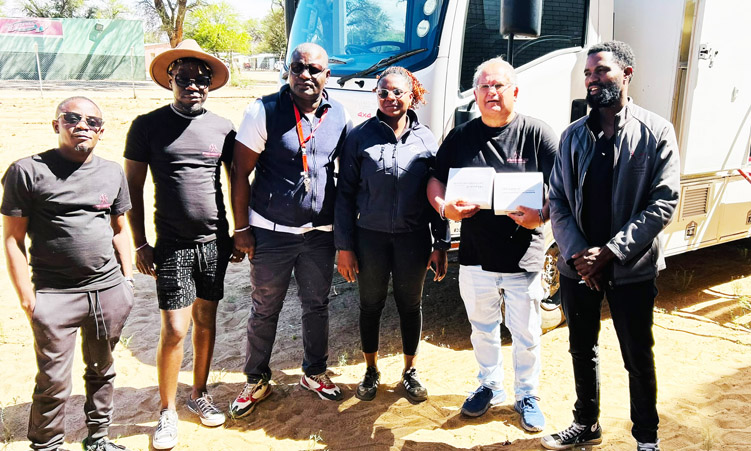
Kraatz is sponsoring two students from this inaugural intake. In 2027 financial year, those graduates will join us as welding coordinators under the direct mentorship of a senior Welding Engineer.
– Frank Kernstock is the managing director at Kraatz Engineering.