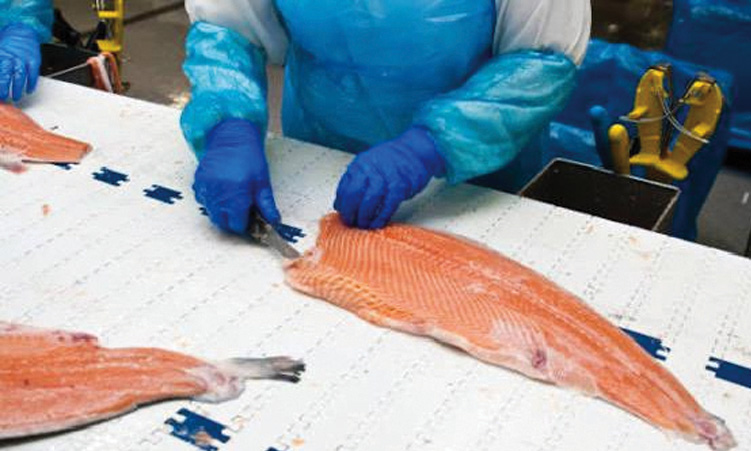
The entry scale of salmon farming is substantially ground-breaking and transformative, while capture fisheries have been the primary commercial fisheries in Namibia since as early as the 1940s.
Over the years, commercial fishing has been a lucrative market, but overreliance on natural stock has created strong dependence in the local economy.
Despite its stability, the sector has been threatened by illegal fishing, climate change, job dependency, a growing seal population and, more recently, an increase in whales.
Namibia’s politically stable environment and pristine environmental conditions provide an ideal investment opportunity for salmon farming.
Aquaculture licence holders will collectively be able to produce over 50 000 tonnes of salmon, worth about N$6.4 billion when operations are in full swing. This will generate significant revenue for the country and create jobs for Namibians. Skilled labour from commercial fisheries also stands a strong chance of being absorbed into the aquaculture industry.
Despite Namibia being more than twice the size of Norway, Norway has a larger population and a coastline of 100 000km (Namibia’s is about 1 500km), attributed to fjords and thousands of islands. This has allowed it to become a leading producer of over 1 200 000 tonnes of salmon, compared to Namibia’s capture fisheries which stand at around 300 000 tonnes per annum.
This success is the result of the government and oil industry’s investment in research and innovative technologies. Today, Norway’s rural coastal communities are active contributors to the economy through aquaculture.
This is another illustration of how aquaculture has created economic transformation for rural communities living along perennial water bodies.
This industry offers Namibians the opportunity not only to participate as employees but also to contribute across the value chain feeding into the production system.
Institutional participation through research, training and innovation is crucial to ensure the sector’s sustainability. Such frameworks need to be established, as this is a new industry, and regulations will need to be reviewed to allow smooth operations.
Namibia is poised to transform food production in southern Africa through aquaculture, provided it becomes a priority area for development and receives the required research facilities.
– Hiskia Asino is a PhD candidate at the Unam Sam Nujoma Campus and is the Universal Aquaculture Association chairperson.