





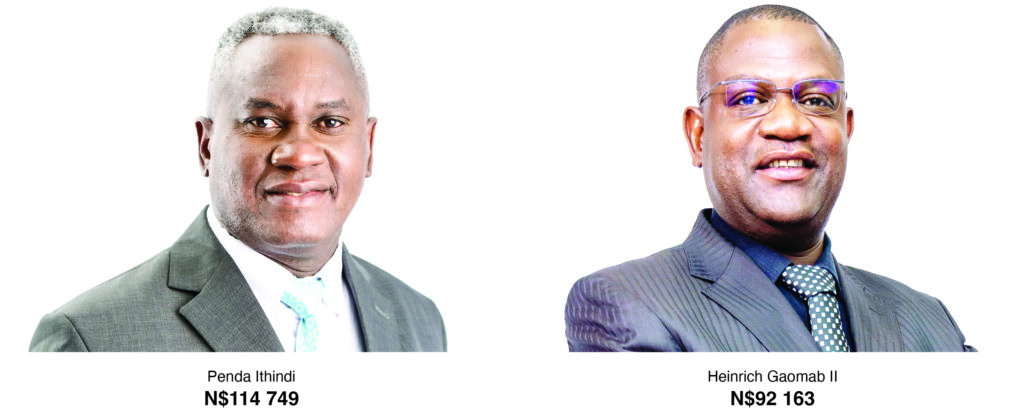
The Government Institutions Pension Fund (GIPF) paid its board of trustees chairperson, Penda Ithindi, N$114 000 for attending three meetings in two months.
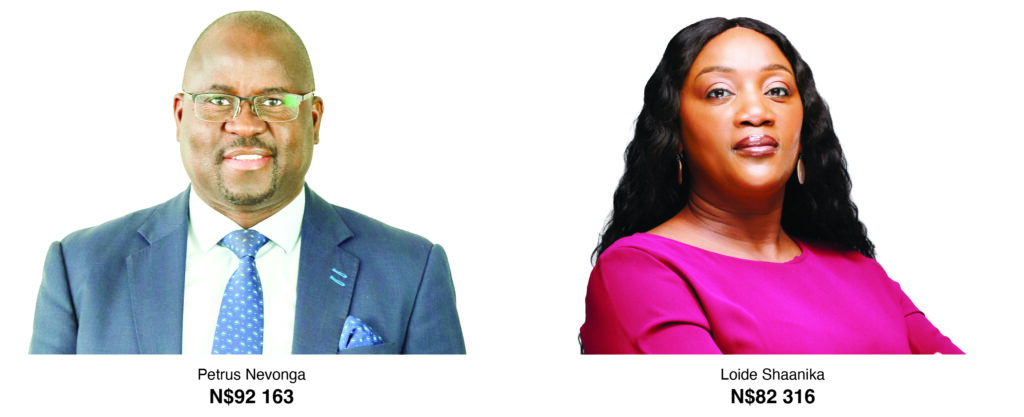
Namibia Public Workers Union (Napwu) general secretary Petrus Nevonga was paid N$92 163 during the same period.
This is according to payroll records The Namibian has reviewed.
Ithindi, who also serves as executive director of health and social services, is one of 13 GIPF trustees whose sitting fees and retainers were revised upward from 1 April 2025.
The fees revive long-held concerns that clustered board and sub-committee meetings have turned sitting fees into a parallel income stream for trustees already drawing salaries as civil servants or union officials.
Ithindi attended three GIPF meetings between 29 July and 15 August 2025, and was paid N$89 314 in sitting fees. He separately received N$25 400 on 31 August as his monthly portion of the chairperson’s annual retainer, which is paid regardless of meetings held.
Together, the meeting fees and that month’s retainer brought his total for the two-month period to N$114 700.
The above three sittings comprised a main board meeting on 29 July, for which he was paid N$23 800, and two meetings of the remuneration and human resources committee on consecutive days, 14 and 15 August, each of which paid him N$32 700.
Long-time trade unionist and Swanu of Namibia president Evilastus Kaaronda has told The Namibian that excessive GIPF sitting fees have long been a problem, particularly when trade union representatives sit on boards of trustees.
He said many of those representatives already held jobs as civil servants or at union offices, yet still earned additional income through board work.
“In some cases, those sitting fees were even higher than their monthly salaries. Most of these guys would be members of sub committees and will be paid almost close to what the main board will get,” he said.
Kaaronda said the frequency of meetings have also raised concern, with some taking place almost daily each month, turning fees into a major point of dispute.
“The complaints we had was that these meetings almost happened every day every month. Those fees became a bone of contention,” he said.
He said the National Union of Namibian Workers (NUNW) had previously adopted a congress resolution aimed at curbing the practice.
“We suggested through a congress resolution of the National Union of Namibian Workers that whoever represents NUNW and its affiliates on any board must not be paid those fees directly. The fees will be paid to the union account,” he said.
Kaaronda said the union would then determine what portion should go to the individual as compensation, arguing that board meetings are usually held during working hours already paid for by employers or unions.
“This is because when people attend these board meetings, they normally sit during working hours, and that is time already paid for by the union or the company they are employed at. There is a lot of double dipping,” he said.
He added that the failure to implement these resolutions is disappointing.
“I am shocked that people like Nevonga, after we left, have not implemented the congress resolutions so that the workers are not ripped off. This is daylight robbery. It’s white-collar theft.”
Kaaronda also weighed in on remarks by president Netumbo Nandi-Ndaitwah during her 2026 state of the nation address, saying her stance suggested deeper issues.
Nandi-Ndaitwah said the alleged disappearing funds at the GIPF and losses at the Bank of Namibia (BoN) are “smelling of corruption” and must be investigated.
“I think the president knows something we don’t know because of the level of her confidence to characterise that there is corruption.
“I was stunned, happy, and pleasantly surprised that she took a stance like that in front of everyone,” Kaaronda said.
MORE BENEFICIARIES
Other GIPF trustees who cashed in during the two months mentioned include former Namibia Industrial Development Agency (Nida) chief executive Heinrich Mihe Gaomab II who was paid N$93 000.
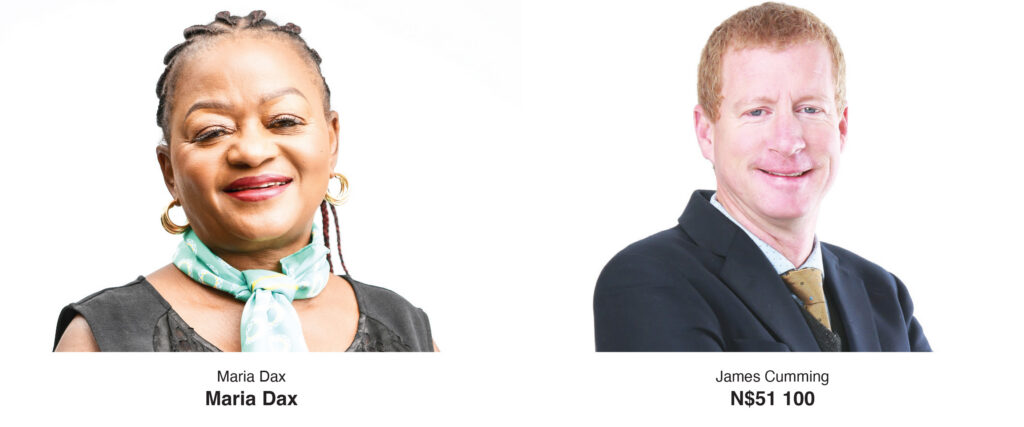
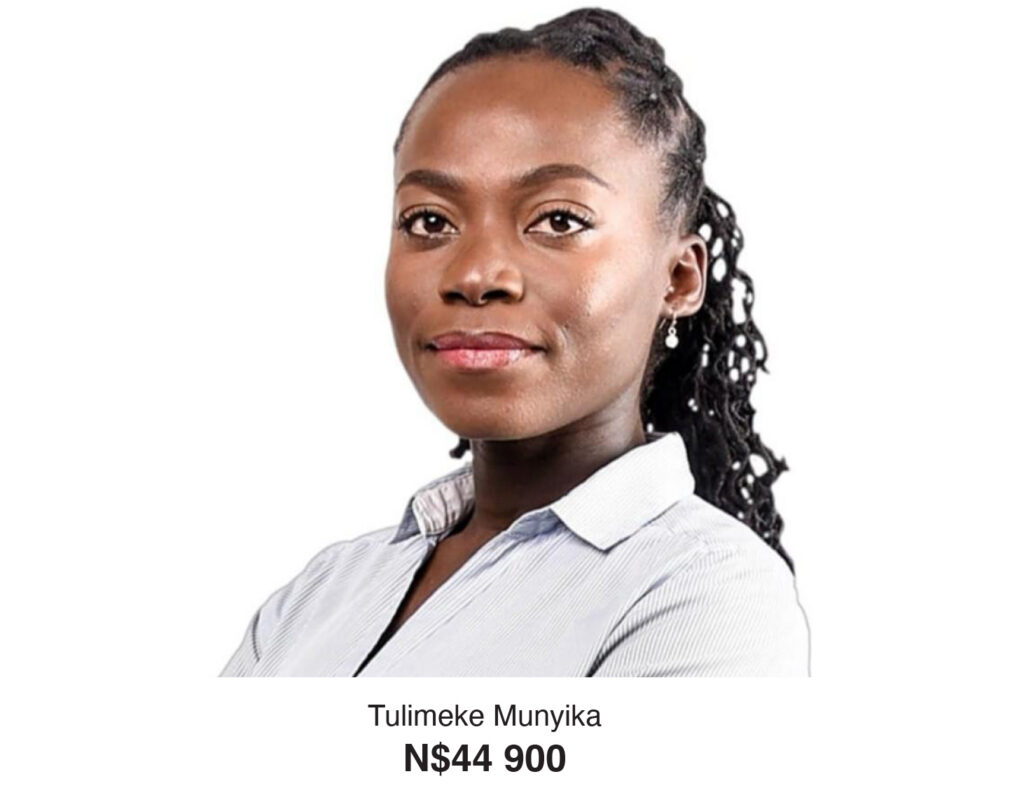
National Teachers Union (Nantu) secretary general Loide Shaanika received N$82 300, while Maria Shivute Dax, a communications consultant, was paid N$82 000. The other trustees include James Cumming, who got N$51 100, while deputy executive director of home affairs, immigration, safety and security Tulimeke Munyika was paid N$44 900 in two months.
Vice chairperson Evans Maswahu, who has been a GIPF board member on the ticket of Namibia Public Workers’ Union (Napwu) since July 2020, received N$42 600. He is the president of Napwu.
Faniel Kisting received N$21 864 and Nillian Mulemi N$26 793.
The lowest-paid members for the July-August period were Collin Katjitae, advocate Adolph Denk, and Bank of Namibia’s deputy director of business systems, Martha Dama, each receiving N$4 929.
Several of these board members have declined to comment and referred questions to the GIPF.
Dax, and Munyika referred questions to the fund’s chief executive.
Gaomab II, Mulemi, Nevonga, and Shaanika have not responded to questions.
Maswahu, Cumming, Katjitae, Denk and Dama could not be reached for a comment.
GIPF chairperson Ithindi has said: “Please liaise with GIPF stakeholder engagement and the chief executive’s office. Board payments are done in line with fund rules. Current remunerations are based on the revisions done.”
According to GIPF spokesperson Edwin Tjiramba, the workshop was held over two days and trustees who attended were compensated according to the applicable attendance fees.
He says the session was conducted in person and that none of the trustees participated virtually.
The GIPF offers some of the highest board payments, with trustees earning an annual retainer of about N$66 600, and total yearly earnings ranging between roughly N$270 000 and N$355 000 once sitting, committee, and meeting fees are included.
However, according to documents seen by The Namibian, board members were paid N$666 000 in retainers and meeting fees over July and August 2025.
The fees were revised and implemented in June 2025 after a report claimed that the trustees were underpaid compared to other similar bracket companies in southern Africa.
‘CASH COW’
Labour analyst Herbert Jauch says serving on the GIPF board should be about protecting workers’ pensions, not personal gain.
“To serve on that board is to serve workers and safeguard their pension. When people make so much money in sitting fees and other allowances then it actually turns the organisation into a cash cow for board members,” he says.
Jauch says while such payments may not necessarily be illegal, they raise serious ethical concerns.
“While it’s probably not illegal for these inflated fees, this definitely looks like blatant self-enrichment,” he says.
He says board members often control how frequently meetings are held, creating opportunities to increase their earnings.
“Most often board members set the meetings themselves so they have vested interest to meet regularly for a short period of time and they cash in sitting allowances. This is a form of abuse and self enrichment,” he says.
Jauch says ultimately, the burden falls on workers contributing to the fund.
“It’s ultimately paid for by the workers who pay in the pension fund because that’s where the sitting allowances are drawn from. Basically you are taking money out of workers’ pockets when you behave like that as a board member.
“It’s ethically highly problematic,” he says.
ENABLER
In 2024, the fund enlisted the services of Khokhela Remuneration Advisors to undertake a benchmark study to assess the competitiveness of the existing GIPF board remuneration.
“The mandate further included recommendations for appropriate remuneration, taking into account the magnitude and complexity of the GIPF board member role,” a board document says.
The study compared GIPF remuneration with that of similar-sized corporates and pension funds in both Namibia and the Southern African Development Community region.
“The population surveyed consisted of the following organisations: Namdeb, MTC, Capricorn Group, Momentum Metropolitan, Rössing Uranium, Sanlam, and Standard Bank”.