



A consultant advising the state on renovating Windhoek’s neglected Independence Stadium is allegedly set to earn about N$337 million – more than three times what the government has budgeted for the project.
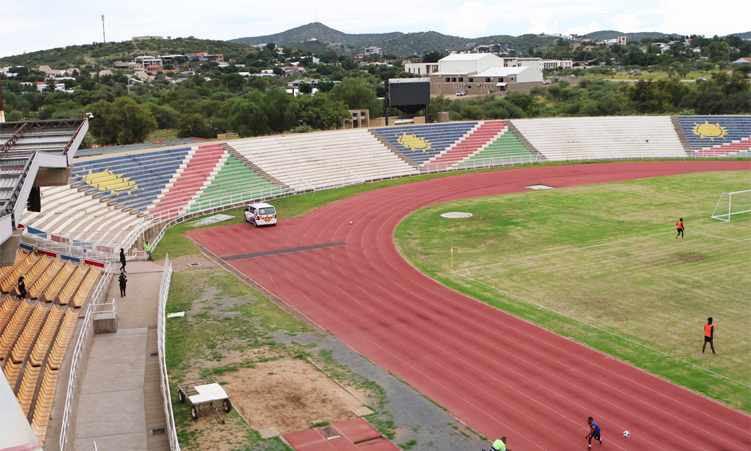
The stadium is earmarked for upgrades to enable Namibia’s national men’s and women’s football teams to host international matches at home again.
A feasibility study dated 11 February 2025, which The Namibian has seen, shows the lead consultant will take 17.5% of the total estimated project cost of N$2 billion.
This translates to N$112 million per year over the three-year period expected for the renovation, pushing total earnings to about N$337 million, including VAT.
Industry experts say consultancy fees are normally between 5% and 10% – labelling 17.5% “a stretch”.
By comparison, former finance minister Iipumbu Shiimi in 2022 said the government had budgeted only N$50 million for Independence Stadium’s renovation.
National Planning Commission director Kaire Mbuende in January said the government has set aside N$100 million per year for the project, still far below the consultant’s expected annual payout.
By April, the Ministry of Education, Innovation, Youth, Sport, Arts and Culture said it only has N$60 million for this project in the current financial year.
THE CONSULTANTS
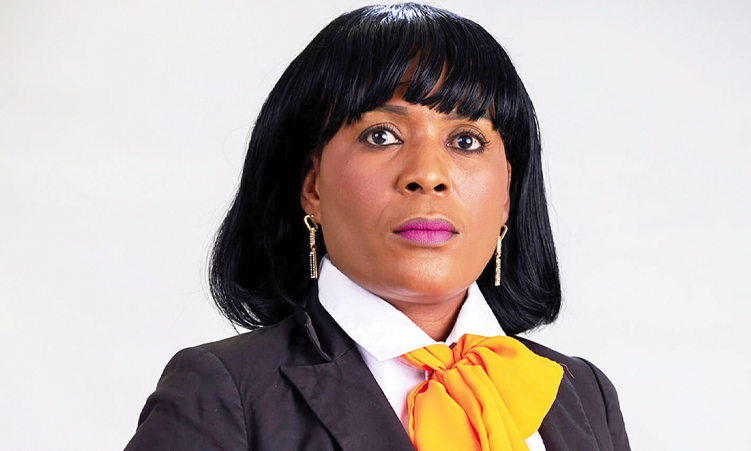
Marley Tjitjo Architects was appointed as the project’s lead consultant by the sport ministry in 2024 to guide the design and upgrade process.
Its partner consultants on the project include Denchi Consulting Engineers and Richard Frankle & Partners Quantity Surveyors.
The feasibility study indicates that the bulk of the construction costs will go towards major building components, estimated at N$803 million.
Mechanical installations are projected at N$26 million, while electrical works are set to cost N$153 million. External works are priced at N$205 million.
The project budget includes N$72 million for pre-contract escalation for eight months, and a further N$235 million for contract escalation for four years, reflecting expected cost increases over time.
Professional fees will amount to N$293 million in total.
According to the study, all figures are based on market-related rates as of February 2025.
“The drawings and specifications are produced by Marley Tjitjo Architects Inc (2025). Mechanical and electrical installation costs were provided by Denchi Consulting Engineers (February 2025). The standard of finishes is high quality,” the feasibility study reads.
The cost excludes items such as loose furniture, blinds and curtains.
Marley Tjitjo Architects in March told The Namibian the company is not in a position to divulge any information on the project to third parties.
“We are bound by a professional code of ethics and have client-architect confidentiality. Kindly direct all your questions to the accounting officer of the relevant ministry for their response,” it said.
Executive director of sport, youth and national service Gerard Vries says the figure of about N$330 million is incorrect.
“The figures currently being circulated in the public domain, including claims that the lead consultant will earn approximately N$330 million, are entirely incorrect and do not reflect the actual contractual position,” he says.
Vries says professional fees for architects, engineers and quantity surveyors in Namibia are regulated by law and governed by prescribed tariffs issued by their respective professional bodies.
He says these fees are calculated using established methodologies linked to a project’s scope and value and cannot be arbitrarily determined.
“While the ministry remains committed to transparency, detailed fee structures are contractually confidential to protect commercially sensitive information and maintain the integrity of procurement processes. The ministry assures the public that all consultancy fees are lawful, regulated, and significantly lower than the figures currently being misrepresented,” Vries says.
The ministry says it will provide a detailed breakdown of the project cost at a later stage, once all compliance inputs and final scope adjustments have been concluded.
“
At present, the project cost remains an evolving estimate. Adjustments may still arise from Confederation of African Football and World Athletics compliance requirements, as well as technical studies, including traffic impact, geotechnical and floodline assessments,” Vries says.
DELAYS
The renovation of the Independence Stadium has faced years of delays.
According to Vries, the project was delayed mainly by critical compliance and planning requirements that emerged during the technical phase.
He says the feasibility study identified the need to expand the stadium footprint, which required a land acquisition process that was completed in September 2025.
More delays were caused by the technical studies necessitated adjustments to ensure safety, functionality, and long-term sustainability.
Vries says the project is governed by multiple layers of oversight to ensure transparency, accountability, and value for money.
In April, the director of sport in the Ministry of Education, Innovation, Youth, Sport, Arts and Culture, Jo-Ann Manuel, said the ministry was yet to settle invoices for the project from last year – now worth N$66 million.
DEVIL IN THE DETAILS
Commenting in general, the Association of Consulting Engineers of Namibia has cautioned against assessing consultancy fees based solely on a percentage figure.
“It is important to note that engineering consultancy fees are not determined as a single fixed percentage across all projects,” Deoné Nel says.
According to the association, fees are calculated on a sliding scale and are influenced by factors such as the size, complexity, scope and risk profile of a project.
“As a general principle, smaller projects attract higher percentage-based fees due to fixed overheads and proportional effort, while larger projects benefit from economies of scale, resulting in lower percentage fees,” she says.
Nel says professional fees on relatively small capital projects worth around N$200 000 could be as high as 18%, while fees on projects valued between N$200 million and N$500 million may range from 5% to 6%.
She says standard professional fees often exclude project-specific costs such as full-time site supervision personnel, including resident engineers and inspectors, as well as disbursements and reimbursable expenses.
Commenting on whether a consultancy fee of about 17.5% would be reasonable, the association says it cannot make a definitive assessment without more information.
“Without detailed knowledge of the project’s size, scope and service requirements, it would not be appropriate to categorically classify such a fee as either acceptable or excessive,” it says.
The association says “such a percentage would be more typical of smaller-scale or highly specialised projects”.