





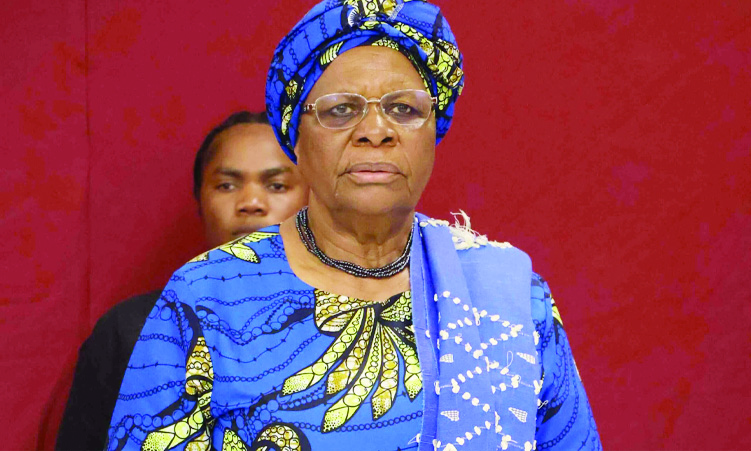
President Netumbo Nandi-Ndaitwah’s admission this week that a shortage of medicine at public hospitals gives her sleepless nights is a welcome show of empathy.
It’s a departure from scripted speeches that usually keep the country guessing about the stance of the president.
However, empathy is not a policy nor does it indicate a sense of urgency about a crisis that affects people’s lives.
This week The Namibian reported that medical specialists at state hospitals dispute health minister Esperance Luvindao’s claims that medicine stock levels have improved.
They say critical shortages continue to affect patient care in several departments. So, who is fooling who?
The shambolic state of the health sector is far from new.
In 2012, then president Hifikepunye Pohamba initiated a presidential commission of enquiry into the rot in the public health sector.
The findings highlighted the plight of public health patients. It confirmed a state of decay, as well as poor attitudes and poor conduct by some doctors and many nurses.
“Overcrowding at outpatient departments, long queues and long waiting times were particularly cited as indications of poor quality patient care,” the report says.
In the 14 years since the report was released, not much has changed for those who rely on state health facilities.
While the head of state loses sleep over a health crisis that treats a 60% national stock level as an achievement, her administration has shown that when it wants to act fast, it knows what to do.
Why is the president not as decisive as she has been in other sectors?
When Natangwe Ithete failed to toe the line, he was swiftly fired as minister of mines and energy, and the president assumed the role of energy minister in the interim.
She fired police inspector general Joseph Shikongo over a security breach that, under normal circumstances, should not have led to the firing of a chief of police.
To underline that the president can act with urgency, State House assumed control of the oil sector immediately after she became head of state despite a lack of supporting legislation.
Yet, when Namibian lives are affected because public wards don’t have essential drugs, the Presidency resorts to platitudes about research, innovation and the long-term goals of local manufacturers.
If a healthy nation is truly a productive nation, the structural crisis crippling our public health supply chain deserves the same aggressive interventions we see deployed in the natural resources sector.
The president’s visit to Namibian pharmaceutical manufacturer Fabupharm indicates profound irony. Fabupharm’s history, shared by founder Fanie Badenhorst, is an inspiring story of local resilience, starting with compounding creams during pre-independence wholesale shortages.
But Fabupharm’s five-year expansion plan alone cannot fix today’s emergency. Health ministry executive director Penda Ithindi’s suggestion that the company partner with international firms to introduce “high-end products” treats a structural logjam as a casual business development goal.
Namibia doesn’t just have a production problem. It has a medicine procurement, distribution, corruption and financing crisis.
Red tape, delayed payments and an inefficient central medical stores (CMS) ecosystem mean that even when local supply lines exist, the delivery chain still stalls.
If the president wants to sleep soundly, she must enforce accountability, including among health ministry officials who appear to have misled her that medicine shortages had been remedied.
The same resolve shown in weeding out ‘undesirables’ in the petroleum sector needs to be applied in restructuring health procurement.
This means upgrading logistics, clearing payment backlogs for vendors, penalising mismanagement within the CMS and providing immediate state guarantees to aggressively scale local manufacturing capabilities today, not over a five-year horizon.
The cold reality of public hospitals requires more than a sympathetic ear. It demands executive muscle.
Until our leaders treat healthcare with the urgency a key sector deserves, sleepless nights will remain a self-inflicted consequence of misplaced priorities.