




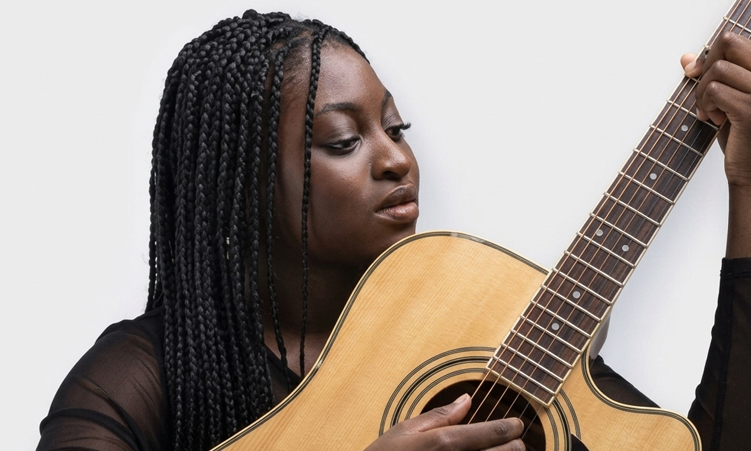
Seven years ago, Namibian singer, songwriter and disability advocate Alvarita Lucungo (formerly known as Alvara) named her first album ‘Fin’ to signal the end of her silence.
Fin is French for ‘the end’.
Now she wants to call her next album ‘Ellipsis’, which refers to the three dots at the end of a sentence. To her, this refers to thinking, continuing, or that something still incomplete.
The artist is also a trainer and advocate with firm views on disability, stigma and the barriers that hold people back.
The Weekender spoke to Alvarita about her personal journey on the WeSpeak Podcast, a platform for people with disabilities to tell their stories.
The podcast’s slogan is ‘Nothing About Us Without Us’.
Q: Who is Alvarita?
A: My name is Alvarita Lucungo, formerly known as Alvara. I am a singer, songwriter, composer, disability advocate and trainer. I was born and raised in Windhoek.
I was born with congenital glaucoma and nystagmus, conditions that affected my optic nerve and caused vision loss. I started doing music in 2018 when I joined Song Night Namibia.
In 2019, I released my debut album, ‘Fin’, under the mentorship of Lize Ehlers. Music has always been around me.
We had a family computer full of different music – R&B, local music and the latest songs from South Africa. My father also made sure we listened to kizomba and music from Angola.
So music was always in the house, always in my ears, always in my heart.
Q: Your music is emotional and story-driven. Why is storytelling so important to you?
A: I never wanted to be a one-trick pony. Music can say so much. I always say music is what feelings sound like. When I started making music, I wanted to amplify the voices of people living with disabilities, including my own. Growing up, I never saw someone like me on television. I never heard of someone like me having a successful music career. So I am intentional about telling my story through music, and also the stories of others.
Q: How did growing up with a disability shape your life?
A: It forces you to grow up quicker than you would want to. From a young age, I knew I was not the average child. I also experienced discrimination in school. In Grade 1, I was in a public school where there wasn’t enough support for me.
I was told I was holding the class back. It became so serious that my mother was encouraged to remove me from the school.
As a child, hearing those things hurts. It makes you feel like you are the problem.
Q: Was that discrimination or stigma?
A: It was definitely stigma. If a child is treated that way early in life, it affects their confidence and future opportunities. That is why we do not see enough people with disabilities in higher education or the workplace. If you break someone’s spirit early, it becomes harder for them to keep pushing.
Q: Your first album was called ‘Fin’. Why?
A: I called it ‘Fin’ because it marked the end of my silence. I released it when I was 16. It was about coming of age, moving from childhood into adulthood, and trying to understand life as a young woman with a disability.
Q: What barriers do you face as an artist with a visual impairment?
A: Some are physical barriers. I sometimes perform in spaces that are not accessible, especially now that I use a white cane more often after surgeries. It can be difficult to move around safely in some venues.
That has affected the number of opportunities I get. Another challenge is one many Namibian artists face – not enough performance spaces, not enough collaborations and limited opportunity.
Q: How has disability shaped your creativity?
A: Many people think disability is something negative, something that ruins your life. I don’t see it that way. I see it as a superpower.
You experience the world differently. You notice things differently. That gives me a creative lens that many able-bodied people may not have. That different perspective helps me create music people connect with.
Q: You are also active in advocacy. How did that begin?
A: Last year I became more active through TikTok. I had the app for a long time but never used it. Then I decided to start telling my story.
By telling my story, I could also tell the story of many others with disabilities. I wanted to challenge the idea that disability is scary or shameful. I wanted to show the truth – the good, the difficult and everything in between.
Q: How inclusive is Namibia’s creative industry today?
A: We are behind, honestly. Last year I went to Germany for the Grenzenlos Culture Festival. There I saw what inclusive artistic spaces really look like.
We visited a theatre designed for people with disabilities. Performances had closed captions for people with hearing impairments, audio descriptions for the visually impaired, and sensory support for people with autism. That experience showed me what is possible.
Q: Is Namibia making progress?
A: Yes, there is progress. I want to commend the National Theatre of Namibia. It has created a programme that amplifies the voices of artists with disabilities. Through them, I was able to host my first solo concert. That meant a lot to me. So we are trying, but we can definitely do better.
Q: Who is Alvarita outside music and advocacy?
A: I am a great cook – if I do say so myself. I am also a proud aunt to two boys and one niece. Watching them grow brings me joy. Those family roles are very important to me.
Q: What are you working on now?
A: I am working on a new album called ‘Ellipsis’. This album reflects my early twenties – finding identity and purpose and learning who I am outside the family unit.
Q: What legacy do you want to leave behind?
A: I want a child like me to dream of being creative and not feel it is impossible. I want that child to say: “I can be a musician. I can be an actress. I can be whatever I want.”
If my journey helps even one child believe that, it is worth it.
Q: What message do you have for Namibians about disability?
A: When you see a person with a disability, challenge yourself to look at them the same way you would look at anyone else. Give them the same respect, the same dignity, the same opportunities.
And to parents raising children with disabilities – we see your strength. Your children will always remember how hard you fought for them.
Q: What would you say to young creatives afraid to start?
A: Start small. Don’t wait for the perfect conditions. Whether it is singing in your room, drawing at home or practising every day, just begin.
I taught myself songwriting. I taught myself singing. I even play some guitar. Don’t let anyone tell you your dreams are too big or impossible. They are your dreams. Protect them, grow them and pursue them.
– This article was produced as part of a partnership between The Namibian and the NMT Media Foundation. Check out our YouTube channel for the full interview.