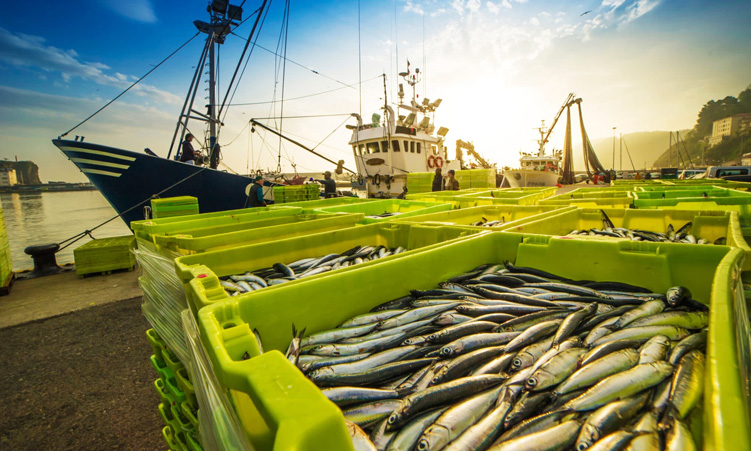





Daron Namibia has denied allegations that it misappropriated funds from a N$40-million Democratic Republic of Congo (DRC) fishing venture now at the centre of a High Court battle involving Standard Bank Namibia and Hodago Fishing.
Daron managing director Luther Mostert last week rejected the claims via social media, saying the company was being wrongly portrayed as having control over investor funds.
The money deposited by DRC’s state social fund into a Standard Bank account from 2025 was to be used to catch fish in Namibian waters through a partnership involving the three entities.
By the beginning of May this year, that account was empty and the fish was never fully caught.
Daron Namibia, which is a maritime supply and logistics company, is now being accused of using N$10 million from a protected account to settle its loan with Standard Bank.
Hodago Fishing, which is 45% owned by Swapo, is accused of misappropriating N$13.5 million from that account.
In written responses to The Namibian yesterday, Mostert rejected any suggestion of wrongdoing.
“Daron Namibia denies any suggestion that it misappropriated funds or acted unlawfully in relation to the DRC fishing venture,” he said.
Daron said it was not the owner of Hodago Fishing, not the quota holder, and not the principal party to the fishing agreement.
‘LIMITED ROLE’
According to Mostert, Daron’s role was limited to operating and maintaining the fishing vessel MV Venus 1.
“Daron did not receive or control N$40 million for its own benefit,” he said.
He said funds that moved through Daron-related banking arrangements were used for operational costs linked to the vessel, including fuel, repairs, crew, suppliers, port charges and other expenses.
Mostert said the company had already advanced and incurred significant costs in trying to keep the vessel operational, and remains unpaid for some of those services.
Daron Namibia further denied claims that it improperly benefited from the movement of escrow (reserved) funds, including allegations that part of the money was used to settle its own debt with Standard Bank.
“Daron did not approve any improper diversion of funds,” Mostert said.
He said Standard Bank was aware of the operational and commercial context of the arrangements, and insisted Daron had its own financial exposure linked to the vessel operation.
On its role in the escrow (holding) account structure, Daron said it only acted in an operational capacity to manage payments related to the fishing project.
Mostert said any changes to account signatories or mandates were made in an attempt to keep the vessel operation running amid financial difficulties involving Hodago and the wider project.
He said Daron acted “transparently and in good faith” and not for any unlawful benefit.
The company said it would not litigate the matter through the media as legal and arbitration proceedings are ongoing.
‘BLAMED FOR FAILED VENTURE’
Daron maintained that it was brought in to assist a failing vessel operation and is now being blamed for a failed venture involving other parties.
The denial comes after the DRC’s state social fund, officially known as the Fond Social de la République Démocratique du Congo, launched court action accusing the three parties of allowing money in a protected escrow bank account to be improperly moved and eventually depleted.
In its founding papers filed on 26 May, the fund alleges that about N$40 million was moved out of the account without its consent, including N$10 million allegedly used to settle a loan owed by Daron to Standard Bank and a further N$13.5 million linked to Hodago Fishing.
The DRC state social fund is suing Standard Bank Namibia, Daron Namibia, owned by Mostert, and Hodago Fishing, a joint venture between Gendev Fishing Resources (45% linked to Swapo), Kuiseb Fishing Enterprises (45% linked to Swapo liberation struggle stalwarts) and Venmar Fishing (10%).
Mostert said Daron’s role was limited to operational support, including vessel management, logistics, crew support and compliance services.
“Daron was not the owner of the funds and was not a shareholder of Hodago Fishing,” he said.
Mostert added: “Daron Namibia got Hodago in a critical condition and was under false pretences lured into a business transaction where we tried to the extreme to save them, at all costs of Daron Namibia.”
The DRC fund alleges the money was placed in a Standard Bank escrow account to safeguard a horse mackerel fishing deal, but was later moved without its approval.
It further claims Standard Bank allowed changes to account signatories and authorised transfers that violated the escrow agreement.
Standard Bank has indicated that it will defend the case, but told The Namibian it is unable to comment on an ongoing legal matter.
Responding to questions, Hodago Fishing confirmed that it received funds from the DRC state social fund as reflected in court documents.
However, the company said it could not provide further details on the amounts received or how the funds were applied because of ongoing legal proceedings and planned counterclaims.
Hodago rejected allegations that it misappropriated any funds.
“There was no misappropriation of funds from Hodago. All funds were applied as agreed and will be proven in court in our counterclaims,” it said.
Hodago further claimed not all of the funds in dispute were received by the fishing company.
“Some of the funds were not received by Hodago but by Daron Group, and that arrangement established an escrow account which was to be handled by Daron, the DRC group and Hodago, but was handled differently by Daron despite specific instructions from Hodago,” the company said.