






• Jean-Paul Gagnon: Democracy Expresses Itself In Many Ways When someone says “democracy is dead” they aren’t critiquing democracy itself. They’re critiquing a specific expression of it, usually the representative kind.
To conflate democracy with but one of its expressions is dangerous because this dismisses more than 2 000 of its other expressions.
Some, like deliberative democracy, are normative projects in part destined to improve the representative institutions that most of us are familiar with.
Others, like Waldorf democracy, where “waiters and financiers, telephone girls and captains of industry, coatroom clerks and merchant princes [sit] side by side” at dinner, are historical expressions that can help us find new purchase on some of today’s more enduring problems such as class division.
There are also expressions of democracy in action: Kabuki democracy and karaoke democracy are used to explain modern Japanese politics; garbage democracy captures Fidel Castro’s opinion of representation in the US; and somnolent democracy is used to describe countries with docile citizens.
These expressions help us make sense of the democracies we live in – think in particular of unwieldy democracy, green democracy and corrupt democracy.
So, it doesn’t make sense to say “democracy is dead”, because democracy doesn’t mean just one thing. As we come to know each of democracy’s expressions better, and make sense of them collectively, it’s my wager that this will lead to more inclusion, equality, self-rule, autonomy, fairness and non-violence within our states, between our states, and in our lives.
If we cannot imagine a future for democracy after the break-up of its historic marriage to capitalism, then I suppose we should declare it dead. But I prefer to think that capitalism’s spurning of democracy offers a context for instituting new forms of democratic governance.
The institutions of the modern democratic state have always stood for the interests of proprietors, upholding formal rights (equality of opportunity) over material equity (equality of condition).
The revolutions that threw off monarchical and colonial rule in the late 18th and early 19th centuries were, with very few exceptions, bourgeois revolutions.
The state’s obligation to the collective interest of the people thus finds a limit in its competing and contradictory obligation to the protection of private property.
From this vantage point, the corporate takeover and decimation of existing democratic institutions may free us to conceive and cultivate more radically democratic organisations that centre on the welfare of peoples, rather than individuals.
Movements such as Occupy Wall Street clearly tend in this direction, experimenting with radical, participatory democracy in the belly of the beast.
On the model of Occupy, radical democracy entails the creation of myriad autonomous zones, whether temporary or semi-permanent.
As ethno nationalism and authoritarianism flourish in the ruins of capitalist democracy, it remains to be seen if the left can reimagine itself, no longer as a dissident force, hostile or marginal to the institutions of capitalist democracy, but rather as a force for institutionalisation, elaborating new forms and practices of popular sovereignty at the local, regional and planetary scale.
The ideology of democracy has disfigured democracy and is one of the reasons for its weakness today.
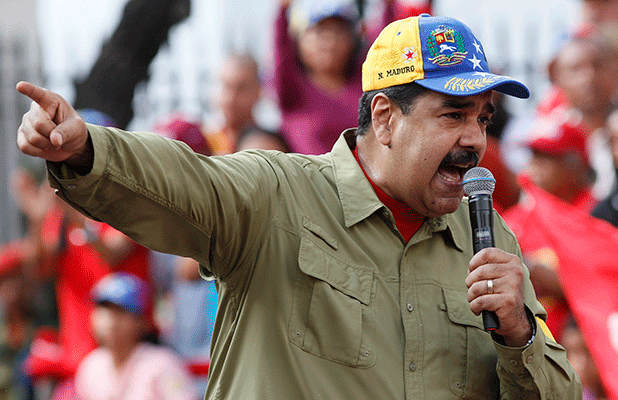
Contemporary democracy is at the centre of this paradox: as a political system, democracy enjoys an undisputed global hegemony so that even constitutional “reforms” that curtail civil liberties and contradict the spirit of political openness are made in the name of democracy as more genuine affirmations of democracy’s values. Venezuela and Hungary offer prime examples of this.
Particularly after the Cold War, the ideology of democracy has found itself in a situation of planetary solitude. The paradox is that no other names today are available to give legitimacy to political enterprises that are not easily rendered as democratic in the constitutional and representative mode in which democracy is valued.
So we witness the coinage of oxymoronic terms, like authoritarian democracy, technocratic democracy and meritocratic democracy, among others.
One of the effects of this paradox is that political orders named as democratic are not only in contrast with democracy but are moreover primed to cast doubt on the value of democracy. How can we value political equality when our democracies promote technocracy or national-populism?
Not to have names to name these transformations of democratic governments is a problem because it contributes to delegitimising democracy. The ideology of democracy obfuscates political reality and leaves us with no argument against adversaries of democracy from within.
This is the cultural and political context in which a new form of representative government is today primed to emerge within the democratic nest, thus changing democracy from within, silently and inadvertently.
Democracy is still a dominant force this century. No government or political leader literally opposes democracy and openly attempts to break it down. Indeed, they instrumentally use democracy to legitimise their own rule and governance.
So why is democracy dysfunctional in spite of its global and universal appeal among leaders and ordinary people?
One reason is that leaders manipulate the meanings of democracy and people misunderstand it. People do not understand democracy as its scholars do.
Moreover, a large proportion of Asians do not conceive democracy as most Westerners do. When thinking about democracy, many Chinese people imagine economic development, the domestic and regional dominance of Han China and social order.

