





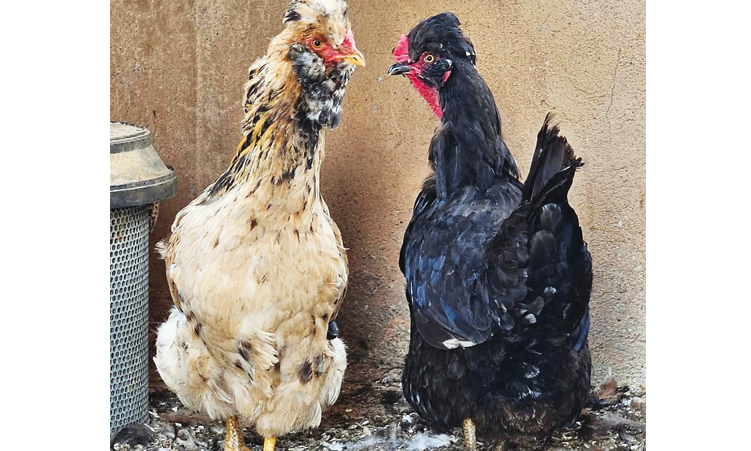
Ask any Herero in Namibia what a “Herero chicken” is, and they likely have no clue, but in South Africa, farmers have been singing the praises of what they call one of their premium chickens.
The indigenous breed fetches prices of up to N$1 000 each. Historian Kae Matundu-Tjiparuro yesterday said he has not heard of a Herero chicken in his 67 years.
He wanted to know how it got its name.
“I saw it on social media, and I was shocked. Herero people are into cattle, and goats, they are not into poultry. This is a new phenomenon,” he said.
South African poultry farmer Emmanuel Mudau, the founder of Mathuba Genetics, says the chickens were brought into South Africa from Gobabis’ ‘Herero land’ by white farmers in 2001.
‘FINGER-LICKING GOOD’
Mudau says this chicken breed is pricey because of its quality meat.
“We’ve been farming with them since then. We call them ‘Herero’, because when we were doing the Damara sheep, some guys went to Namibia and bought it here. It’s a very good chicken,” he says.
The chicken breed is almost similar to the Namibian ‘Wamboe’ chicken, but Mudau says it has a beard, a crest and a lot of feathers on its head.
He says these chickens do not even need medication.
“It is a dual-purpose chicken laying good eggs, and cleaning animal coops like goats, sheep and cattle. It also removes ticks from animals,” he says.
“They have crests on their beards that make them look funny and special. No other chicken has that,” Mudau says.
In a video interview with SA’s ‘Ama Fama’, an agricultural web series and podcast which aired in 2024, Mudau says he has sold a Herero chicken for over N$1 000. The presenter was shocked to hear of a chicken costing that much.
“You will only understand the price if you were into poultry,” he says.
“Herero chickens are some of our prized and precious indigenous African chickens first spotted in Namibia. These are rare chickens,” a social media post by the Lebombo Syntropic Farm site reads.
The farm goes on to list the chickens’ qualities, such as “being excellent foragers, very hardy and disease resistant, great for both meat and eggs, great for organic farming practices, and excellent for ornamental purposes”.
‘WE ONLY KNOW WAMBOE CHICKEN’
Meanwhile, local poultry farmers say the breed does not exist in Namibia, and they only know ‘Wamboe chicken’.
Nam Wi Poultry farmer founder Willem Amutenya says he was shocked when he learnt about Herero chickens.
“I have never come across a Herero chicken that’s even costing N$1 000.”
Shirley Investment CC chief executive Shirley Katuuo says she has never heard of the chicken.
“As a Herero, I would love to get myself one,” she says.
According to the Southern African Show Poultry Organisation Breed Standards, the Herero chicken was first brought to South Africa from Namibia by Johnny Morrison in 2001.
Morrison is an agriculturalist known for presenting Savanna ewes at major livestock auctions, such as the CDP Livestock Carnival.
“While looking for a specific goat breed in Herero Land, north of Gobabis, he saw these interesting and beautiful crested and bearded fowl, roaming among the local Herero people’s homesteads,” the organisation says in a document published online.
“He brought some chicks with him from Namibia and raised them to adult size on his farm in the Orange Free State. He never allowed these Herero fowl to crossbreed with any other fowl on his farm, but kept them pure from the day he obtained them and only interbred them.”