




“What is classical music if not the epitome of sensuality, passion and understated erotica that popular music, even with all of its energy and life, cannot even begin to touch?” said Lara St John.
Though many people do not get to experience the bliss of classical musical, or begin to understand the technicalities behind each instrument, Canadian violinist St John’s analysis of this genre is spot on.
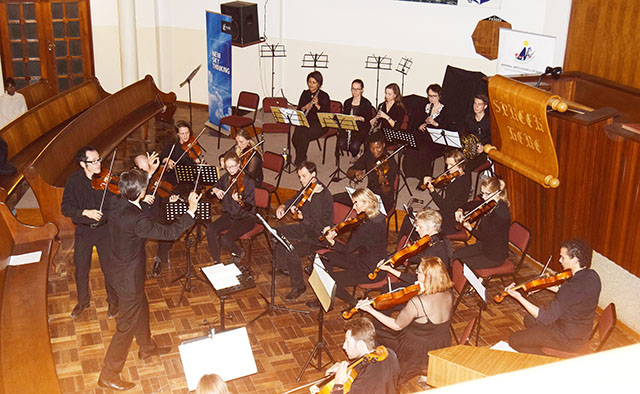
Sitting in the historical Dutch Reformed Church watching the Namibia National Symphony Orchestra perform alongside soloist violinist Enrico Palascino was nothing short of magical. The ‘Concert To Go’ was Palascino’s way of paying homage to Namibian musicians.
Born in Italy, Palascino studied classical music majoring in violin for 10 years before heading to Germany, mastering it for another six years. “I’m really glad I had an intense experience in classical music. I enjoyed a lot of concerts while playing in youth orchestras and enjoyed a lot of concerts while hearing them with great orchestras from all over the world,” he said, adding that these encounters further spurred him on to pursue his lifetime dream.
Palascino found his way to Namibia through his wife, who with the German ministry of development, was given the opportunity to come to the country and work on local development projects with our government. Palascino saw this as a pleasant change for himself, his wife and two young sons.
“My plan was not to be involved in any project because I was convinced that ‘why should I teach somebody music, most of all classical music, if no one is interested in it’,” Palascino said. But his plans to be a fully dedicated family man were slightly deterred by the introduction to the Youth Orchestras of Namibia (Yona) coordinator, Gretel Coetzee.
“So thanks to Gretel Coetzee, I worked intensively in building up Yona – a music school for little children with the aim to teach them to love music, to teach them instruments and to prepare them maybe for a more colourful future in music and music for Namibia.”
“When you work with music for almost 30 years as I did, you understand the really profound truth. There is no classical music, there is no jazz, there is no rock, there is just beautiful music. And this music has to be played. I don’t see any music with colour. I don’t see white music, I don’t see black music. I just feel honoured to be able to play all these types of music and contribute to bring it to life.”
Palascino couldn’t leave to Berlin without a word of encouragement for his Namibian companions. He wishes musicians would gather more often, be open and explore all avenues of music, leaving fear and doubt behind. “Do not have fear, try and experiment with new things. These experiments might open doors you never knew existed.”
“Don’t ever think there is one right type of music, and the rest is not interesting. This is a mistake I made at the beginning, and I’m really convinced that this is the future of music in Namibia. Namibia has so many different colours, so many different types of music that have to be known,” Palascino said, adding that different cultural groups should be able to sing and relate to each other’s music.
“Without musicians, there will be no music, even if it is written for eternity. Think about the bigger picture – that music can bring people together.”
In an age of information overload, Sunrise is The Namibian’s morning briefing, delivered at 6h00 from Monday to Friday. It offers a curated rundown of the most important stories from the past 24 hours – occasionally with a light, witty touch. It’s an essential way to stay informed. Subscribe and join our newsletter community.

The Namibian uses AI tools to assist with improved quality, accuracy and efficiency, while maintaining editorial oversight and journalistic integrity.
Stay informed with The Namibian – your source for credible journalism. Get in-depth reporting and opinions for
only N$85 a month. Invest in journalism, invest in democracy –
Subscribe Now!