Okakarara-born former JS Academy and Brave Gladiators’ star Vewe Kotjipati has a story to tell of both the track and the football field.
Kotjipati was a prominent sprinter at the Jacqui Shipanga (JS) Academy before the football bug bit her.
“Football was actually never my first love growing up. I was naturally very athletic and spent most of my childhood doing sport like athletics, netball, hockey and even trying rugby at some point. Athletics and netball were definitely my strongest disciplines.
“I was extremely fast and competitive. I attended Eldorado Secondary School and that is where my football journey unexpectedly started. After school we would usually have athletics training, but one day the girls’ football team needed players for a match,” she says.
The former sprinter says she was thrown into the team, playing barefoot and having no idea what she was doing, but she kept outrunning the ball.
“Somewhere in that chaos, I started falling in love with the game. The more I played, the more I wanted to improve. I first started to play for the school team before I was subsequently signed by JS Academy,” she says.
“That was the first time I experienced structured football. It completely changed my understanding of the game. Jacqui Shipanga, the owner of JS Academy and a pioneer of women’s football in Namibia, became my first coach and also one of the biggest influences in my football career.”
Kotjipati says she was always a disciplined person and thanks her grandmother for shaping her into the person she became.
“My grandmother played a big role in raising me and shaping the person I became. Growing up in a small town teaches you values very early in life – respect, resilience, humility and the importance of community. Life was simple, but it was filled with discipline and survival,” she adds.
Looking back, Kotjipati realises those early years built the foundation of her character, teaching her how to stay grounded no matter where her football career took her.
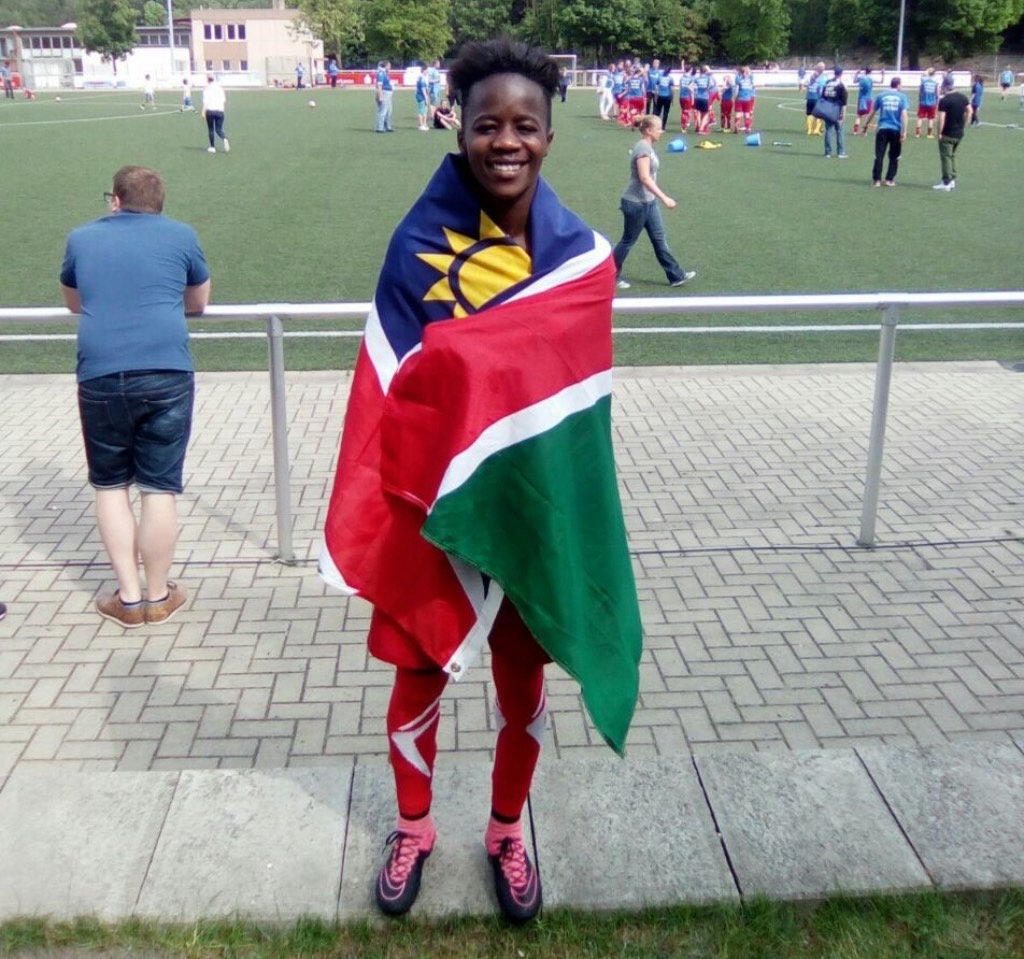
Although her favourite positions were mainly in defensive and wider midfield roles, she felt most comfortable playing out wide because it allowed her to use her speed, energy and work rate both offensively and defensively.
“One thing that defined me throughout my career was versatility. My mentality was always simple. Wherever the coach needed me, I would do the job for the team,” Kotjipati says.
“I was not the most naturally gifted player, but I worked hard, adapted and always tried to put the team first. Most importantly, I hope people remember me as somebody who represented Namibia with pride and carried herself with dignity, both on and off the field,” she says.
Kotjipati says joining JS Academy changed everything for her as it made football became more serious and organised.
She adds that at the time she started playing women’s football, opportunities and exposure were very different from what young players experience today.
“My opportunity abroad came through the exchange programme between Namibian-German-Westfalen, which opened the door for me to move to Germany. I joined SJC Hövelriege, a small village team playing in the sixth division,” she says.
“Adapting to Germany was not easy; the weather, the language, the culture and everyday life were completely different. One of the biggest blessings during that period was the family who welcomed me into their home. Until today, they still treat me as one of their own.”
Kotjipati is currently based in Hamburg, Germany, where she continues balancing football, work and her everyday life.
Besides still playing football at club level for St Pauli, she also works as a preschool teacher.
She has plied her trade in Germany for more than a decade, playing for top clubs like Arminia Bielefeld and Borussia Mönchengladbach II before joining her current club.
“At club level, my biggest achievement was playing in the second highest women’s league in Germany with Borussia Mönchengladbach and Arminia Bielefeld.
“Another unforgettable moment in my career was playing in the semi-finals of the DFB Pokal against Wolfsburg. Standing on the field against players like Alexandra Popp and many stars from the German national team felt surreal,” Kotjipati says.
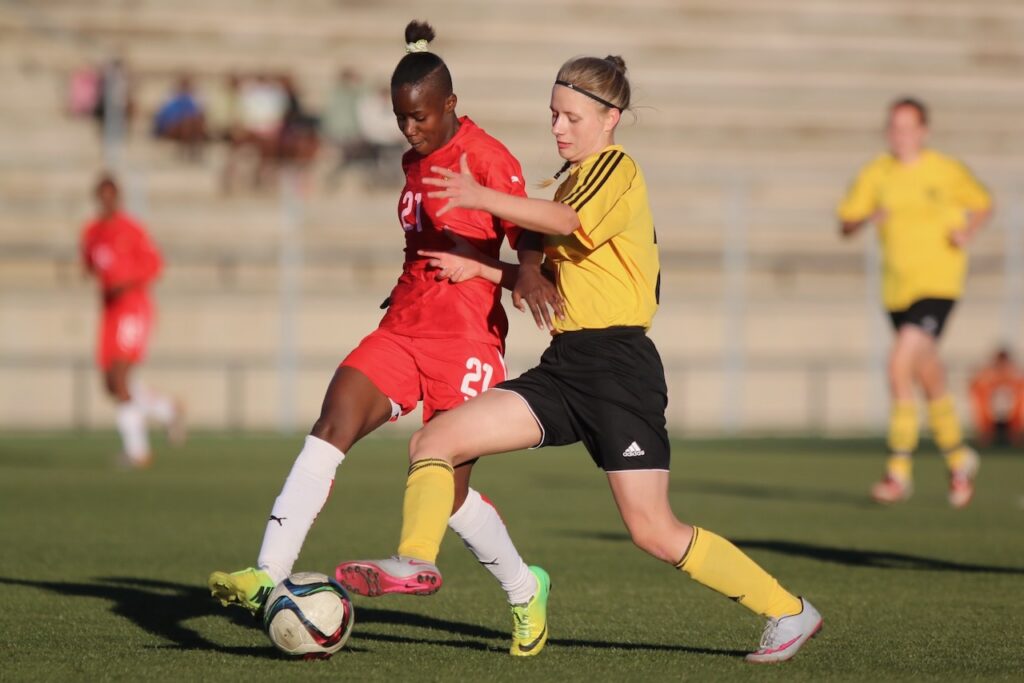
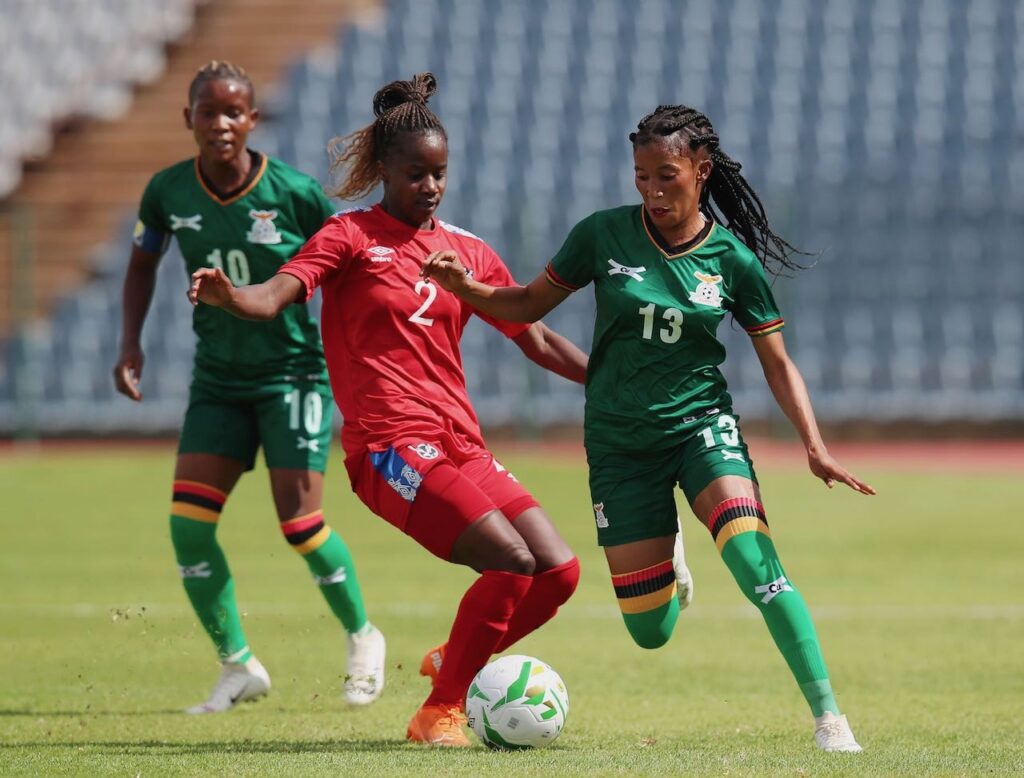
Playing for the Namibia women’s national football team gave her the opportunity to play against some of Africa’s best players, including Asisat Oshoala and Barbra Banda.
And what characterises her playing style?
“Without a doubt, speed was one of my biggest strengths. Coming from an athletics background, I was naturally explosive and quick. I would describe my playing style as a combination of work rate, adaptability and tactical discipline.
“I was never the flashy player trying to do too much individually. I understood my role, worked hard for the team and used my speed intelligently both offensively and defensively,” she says.
Kotjipati has represented the Namibia women’s national football team in the Council of Southern Africa Football Associations Cup, the African Women’s Championship, Africa Cup of Nations qualifiers, Fifa World Cup qualifiers and Olympic Games qualifiers.
“We always had very good opponents and every competition brought different experiences and lessons. Looking back now, I can honestly say my journey with the national team was brilliant because I learned so much,” Kotjipati says.
Regarded as one of the golden girls of Namibian football, Kotjipati says she doesn’t have any regrets regarding her career.
“I truly believe I received my opportunities when it was my time. I entered the national team system very young through the under-17 national team and suddenly football became more than just a sport,” she says.
“For the first time in my life, I started earning small amounts of money through camps and matches. Family responsibilities and football needs always came before personal things. I left home when I was only 14 years old and from that point, I never really looked back.”
She says her only real regret might be retiring from the national team later than she felt ready to.
One thing she is still learning is how to create a healthier balance between work, football and her private life as her demanding schedule makes it difficult to fully switch off from work and responsibilities.
What is her advice to young footballers?
“Football is not only about talent. Talent can open the doors for you. However, discipline, mentality and consistency are what keeps you going,” the star says.
“Protect your mental health, build meaningful relationships and never stop growing as a person outside football because a football career eventually comes to an end. Most importantly, stay humble and grounded because football changes very quickly.”