Committee says bypassing could expose process to abuse
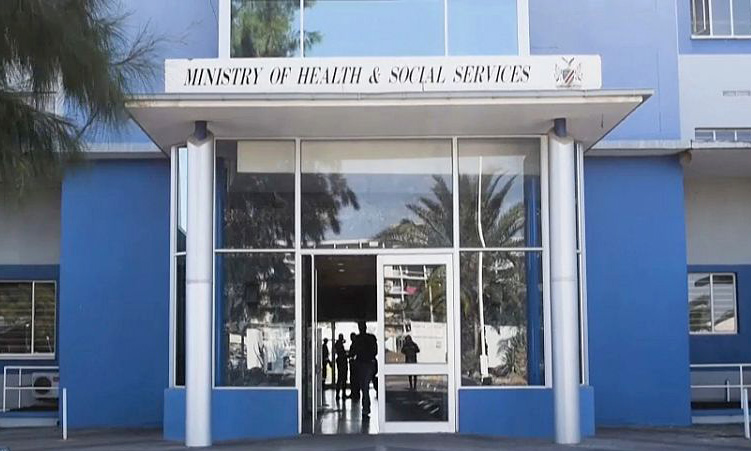
The health ministry’s procurement committee has blocked senior ministerial officials’ proposal to buy medicine worth N$1 billion without a public tender, warning that the urgent tender process could be abused.
This decision points to a potential stand-off inside the Ministry of Health and Social Services, with one camp pushing for a fast emergency deal and the other holding out for stricter controls to protect public money.
The N$1-billion tender is meant to address medicine shortages at public hospitals and clinics across the country.
In a letter dated 8 June, health ministry bosses approved the N$1-billion emergency procurement of pharmaceutical products, saying stock levels at the Central Medical Stores have reached zero for some products.
Internal documents show the ministry’s management, led by executive director of health and social services Penda Ithindi, had wanted to fast-track the purchase through what is known as ‘emergency procurement’, a process allowing the government to buy goods quickly when needed.
‘HIGH RISK’
The standoff between senior management and the procurement committees comes amid Anti-Corruption Commission warnings that emergency procurement in the health ministry is a high-risk area for abuse.
Sources familiar with the matter say senior ministry officials were also pushing to proceed without the prior approval of the Ministry of Finance, raising concerns about whether proper financial clearance had been obtained.
However, the procurement committee has refused to endorse the plan.
In its resolution of 18 June, the committee says the amount involved was large and could not be handled as a simple emergency purchase.
“The amount is too big to take note, hence it is considered as a market scan and recommend the rates that can be used for direct procurement,” the committee says.
Instead, it orders that the process be handed over to the Central Procurement Board of Namibia (CPBN).
“The team should submit the requested information to the CPBN without any further delay. Procurement committee is recommending that this process should be run by the Central Procurement Board of Namibia.”
People familiar with the discussions say the committee was concerned that bypassing normal procurement steps could expose the process to abuse, especially given the size of the deal.
The emergency procurement report itself paints a worrying picture of the country’s medicine supply, warning that several essential drugs were already completely out of stock.
“This situation posed a significant risk to public health, including potential delays in patient treatment, the disruption of medical procedures, and adverse impacts on healthcare outcomes across public health facilities,” the report states.
The proposed plan involved inviting 195 suppliers, with 55 responding to the emergency request for quotations.
The procurement committee, however, flagged several problems regarding the list of medicines and prices submitted.
Some items were removed because specifications were wrong, others because there was already enough stock, and in some cases prices were considered too high or needed further checking.
The disagreement highlights long-standing tensions around emergency procurement in the health sector, where speed is often weighed against accountability.
In October 2025, Anti-Corruption Commission (ACC) director Paulus Noa warned that emergency procurement processes at the health ministry are particularly vulnerable to abuse.
He said: “Emergency procurement raises a lot of suspicion. There are also a lot of repeat orders of the same products. Those two issues likely lead to corruption. I don’t want to say more. We’re on it.”
This was in response to an ACC investigation into the health ministry.
Health ministry spokesperson Walters Kamaya yesterday acknowledged questions but did not respond at the time of going to print.
Corporate governance analyst Ntelamo Ntelamo says he agrees with the procurement committee’s decision to block the deal.
“This figure is too large. The motivation for such value should be clear. How will you identify suppliers for this emergency direct procurement? From a governance point of view, the finance ministry can raise a query regarding that emergency procurement system. The ministry should be able to identify stock levels well in advance or they face the issue of being subjected to high prices,” he says.
TREASURY
Finance ministry spokesperson Wilson Shikoto this week confirmed that the ministry received and considered a request relating to an exemption for the proposed procurement.
He said the Public Procurement Act allows government institutions to use emergency procurement in situations that qualify as emergencies.
While a public entity does not normally need prior approval to invoke emergency procurement, authorisation is required when the value of the procurement exceeds the institution’s prescribed procurement threshold, he said.
“Where a public entity establishes the existence of an emergency and the anticipated value exceeds its procurement threshold, it may request authorisation to procure above that threshold,” Shikoto said.
“If such authorisation is granted, the public entity may conduct the procurement itself in accordance with the act and applicable regulations, rather than through the CPBN, as would ordinarily apply,” he said.
Asked about the apparent disagreement between the health ministry’s management and its procurement committee, Shikoto said the finance ministry was not aware of any internal dispute.
“Such matters fall within the internal governance and procurement structures of the respective public entity, and it is assumed that any internal differences were addressed and resolved before the request was submitted to the (finance) minister for approval or authorisation where required by law,” he said.
Shikoto said any emergency procurement must strictly comply with procurement laws, including obtaining all required approvals, properly documenting the emergency, maintaining records for audit purposes and ensuring value for money.
“The ministry’s guidance would therefore be that a public entity should not refrain from addressing a genuine emergency solely because of concerns regarding the size of the procurement, but must ensure any procurement undertaken is fully compliant with the applicable legal and regulatory framework,” he said.