






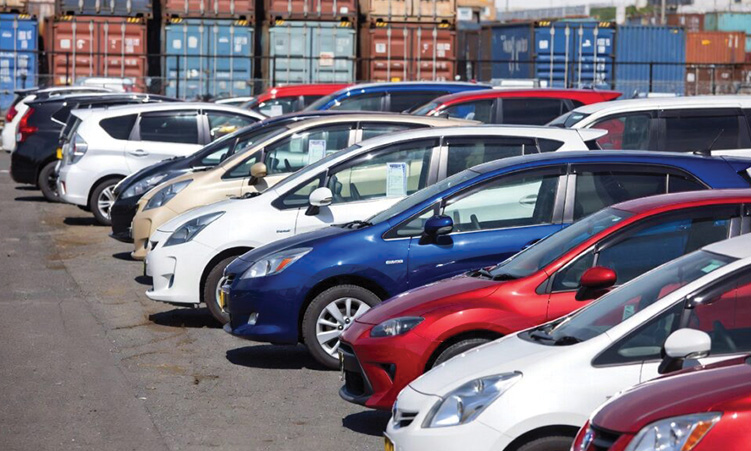
Motor industry stakeholders are divided over plans to relax Namibia’s restriction on importing vehicles older than 12 years, with calls for greater consumer protection alongside efforts to improve access to affordable vehicles.
The government this month said it is reconsidering the restriction on importing vehicles older than 12 years.
Finance minister Ericah Shafudah, during an engagement with “order with me” operators in Windhoek, said the policy may have increased costs without achieving its intended purpose.
Pupkewitz Motors managing director Anton Westraadt says any move to relax the vehicle import restriction should include measures to protect consumers from unnecessary risks.
Westraadt says the company respects the government’s efforts to review policies in the interests of consumers and the economy.
“Our concern is not primarily commercial. It is about the customer who works hard, saves diligently and spends a significant portion of their income on a vehicle,” he says.
“When that vehicle arrives without the correct tyres for our road conditions, without access to genuine parts, and without a dealer network equipped to service or repair it, the customer has no recourse.
That is a situation no one should find themselves in.”
He questions whether vehicles imported from markets such as Japan are always suited to Namibia’s conditions.
“There are real questions about whether vehicles sourced from markets like Japan, where road, climate and fuel conditions differ significantly from ours, are genuinely suited to the Namibian environment.”
Westraadt adds that Namibia’s temperatures, fuel quality and dusty conditions place demands on vehicles that may not have been designed for local use.
He says any revised policy should include minimum roadworthiness standards, requirements for parts availability and clear accountability measures for importers.
Westraadt says the current 12-year restriction has had little direct impact on Pupkewitz Motors.
“We deal in quality vehicles, both new and used, and every pre-owned vehicle on our showroom floor undergoes a stringent inspection process before being offered for sale,” he says.
The restriction was introduced in 2022 when the maximum age for imported second-hand non-commercial vehicles was increased from eight to 12 years.
The rule applies to passenger vehicles and light commercial vehicles, including most cars, station wagons, double-cab bakkies and small trucks.
These vehicles cannot be imported if they are more than 12 years old from the date of manufacture, except for vehicles imported within the Common Customs Area for less than two years before entering Namibia.
At that time, the trade ministry had said the restriction does not apply to special-purpose vehicles such as cranes, fire engines, ambulances, mobile clinics, television broadcasting units and certain chassis fitted with engines.
HVR Auto owner Handie van Rensburg says removing the ban would make quality and affordable vehicles more accessible to Namibians.
Van Rensburg, who has been importing vehicles for 10 years, says many vehicles older than 12 years in countries such as Japan remain in good condition and are suitable for Namibia.
“I think it would be one of the best decisions the government could make,” he says.
Van Rensburg says many Japanese vehicles have not been exposed to harsh weather conditions or gravel roads, allowing them to remain well preserved despite their age.
“There are many vehicles in Japan that are older than 12 years but are still in very good condition and can be used in a country like Namibia. We are talking about vehicles such as Toyota RAV4s and bakkies that have been properly maintained,” he says.
He rejects concerns that lifting the restriction would turn Namibia into a dumping ground for old vehicles.
“Some people say it will make the country a scrapyard, but that is not how it works.
There may be one or two people who import poor-quality vehicles, but there will be strong competition from reputable importers who bring in quality vehicles,” he says.
Van Rensburg says more competition would lower vehicle prices and give consumers more choices.
“The government is currently losing out because some of these vehicles are coming into Namibia through other countries. There is revenue that could be collected if imports were properly regulated.”