The University of Namibia (Unam) is seeking about N$30 million to complete the second phase of its Veterinary Academic Hospital. The money would be used to complete facilities including a surgical theatre and an auditorium.
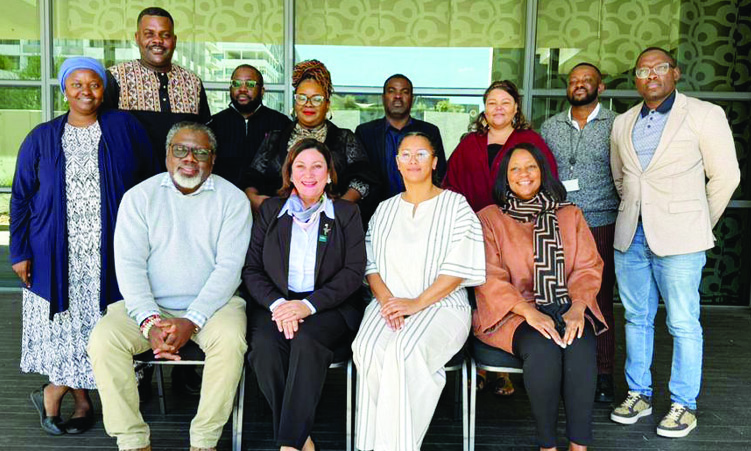
Unam last Friday held an Open Day of the Unam Veterinary Academic Hospital to show off what the hospital offers.
“Around N$30 million is what they are looking for to complete the second phase,” finance minister Ericah Shafudah says.
The hospital has already received about N$98 million in investment.
Shafudah says the African Development Bank contributed N$38 million, while the government invested N$60 million in the facility. She says the facility shows how investment in higher education can support development.
The minister says the government considers human capital development important in achieving the country’s development goals.
Shafudah says investment in higher education, particularly science, technology, engineering and mathematics, should continue alongside research and development, adding that veterinary education is important because animal health is linked to public health, food security and Namibia’s livestock industry.
“Vet professionals also act as the first line of defence in pandemic prevention. Given Namibia’s export market, the profession’s importance is economic stability, food security, and animal welfare,” she says.
Unam vice chancellor professor Kenneth Matengu says investment in veterinary education and animal health services is important to Namibia’s agriculture, food safety, public health and livestock industry.
“The Veterinary Academic Hospital is a centre where knowledge is transformed into practical solutions, where our students receive world-class clinical training, where research addresses real problems, real challenges facing animal health, and where communities benefit from quality veterinary services,” Matengu says.
He says Namibia’s livestock sector depends on skilled veterinary professionals to maintain access to export markets.
“We would not be able to meet those markets if we did not have expertise to serve,” he says.
Matengu says the veterinary academic hospital should be viewed as a national asset because it contributes to animal welfare, livestock production, food safety and public health.
According to Matengu, Unam has since been approached by three South African universities seeking guidance on establishing veterinary faculties.
He says veterinary faculties in East Africa have also approached Unam for collaboration and clinical training opportunities.
Matengu says more investment would be needed as veterinary education develops.
“Its infrastructure must grow, its technology must remain current, and its teaching, research, and clinical capacity must continue to grow and improve,” he says.
Associate dean of Unam’s School of Veterinary Medicine, Anna Marais, says the final phase of the hospital will also include an intensive care unit, a hydrotherapy unit, animal wards, a laundry and staff offices.
She says the university also needs ambulatory vehicles for its branch clinics, estimated at about N$1 million each.
The university graduated its first 19 locally trained veterinarians in 2019.
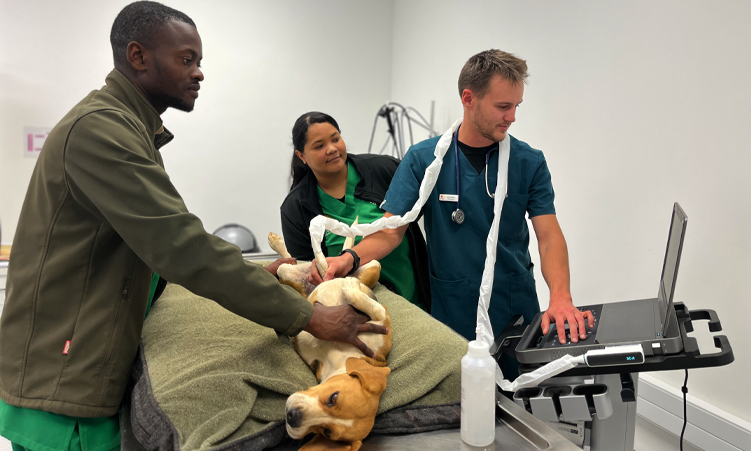
Marais says students receive practical training first on models in a clinical skills laboratory before working on live animals.
The laboratory allows students to practise procedures such as taking blood samples, listening to heart and lung sounds and performing surgical techniques.
The school also provides wildlife veterinary training, allowing graduates to obtain an additional qualification to work with specialised drugs used in wildlife management.
Marais says students are taken to game reserves and other facilities to learn how to handle, immobilise and treat wildlife.The Veterinary Academic Hospital in Windhoek has been open to the public since July 2022 and has treated more than 14 000 animals.
“The hospital has recorded 14 439 patients, including more than 10 000 dogs, about 1 300 cats, as well as birds, cattle, horses, sheep and pigs,” she says.