





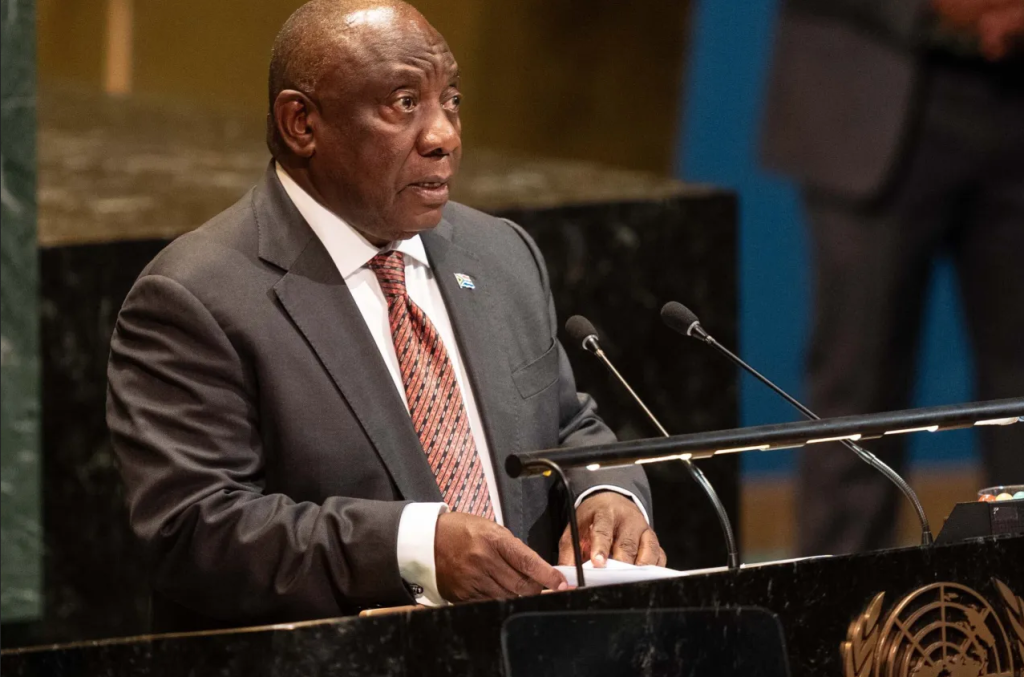
President Cyril Ramaphosa told the United Nations (UN) General Assembly on Tuesday, 23 September, that “trade is now being used as a weapon against a number of countries,” in an ostensible rebuke of US President Donald Trump’s tariffs.
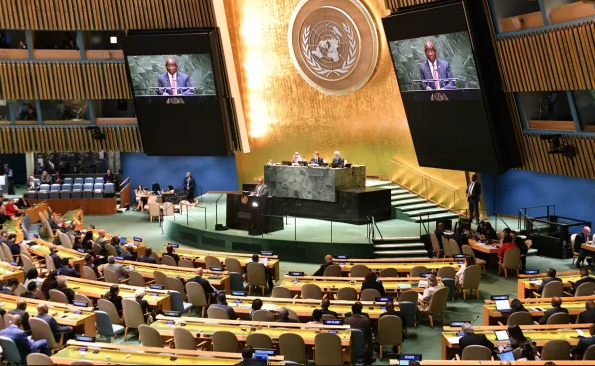
“It is concerning that geopolitical shocks and unprecedented trade policy volatility are destabilising the global economy and jeopardising a critical source of development financing,” Ramaphosa said.
“We must redouble our efforts to strengthen the link between trade and development. Unilateral trade practices and economic coercion have a detrimental impact on many nations.”
He said the African Continental Free Trade Area, the world’s largest free trade area, would become “the central pillar of economic cooperation and integration” for the African continent.
Trump imposed a 30% tariff on South African exports last month, after Pretoria failed to reach a trade deal with Washington before a 1 August deadline set by the US president.
South Africa first offered a proposal for a trade agreement to the US in May and subsequently submitted a revised offer for a deal in August.
In the days before Trump’s tariffs were effected, South African officials said Washington had not responded to their trade offers or come to the negotiating table, according to a Reuters report.
Ramaphosa sent officials from the Department of International Relations and Cooperation (Dirco) and the Department of Trade, Industry and Competition (DTIC) to the US earlier this month to prepare for further trade negotiations with the US.
Last week, DTIC Minister Parks Tau held a series of meetings with trade representatives from the Trump administration to discuss “hatching a trade deal” with America. In an interview with Daily Maverick, Tau said he was “quite optimistic” that a deal would be reached between SA and the US.
‘Solidarity between nations’
Ramaphosa also joined several other countries which addressed the UN General Assembly in New York on Tuesday, in recognising the values of the United Nations.
“Eighty years ago, the United Nations was established to save succeeding generations from the scourge of war and build a peaceful, prosperous and just world arising from the devastation brought about by global conflict,” Ramaphosa said.
“Now more than ever, we are called upon to uphold the values and advance the purpose of the United Nations. We are called upon to advance cooperation and solidarity between nations. We are called upon to promote multilateralism and safeguard the institutions that enable it,” he said.
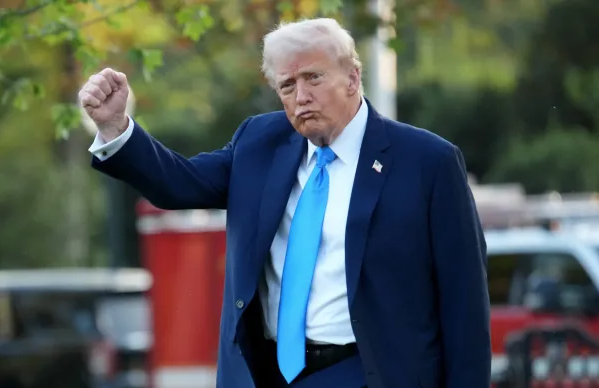
This stands in sharp contrast to the position of the US outlined by Trump in a lengthy speech to the UN earlier on Tuesday. In his address, Trump questioned whether the UN should exist, and rebuked the multilateral organisation and other countries ad nauseam about how they are failing.
“What is the purpose of the United Nations?” Trump asked, claiming he had solved several regional conflicts without the assistance of the UN. He said the organisation was “not even coming close” to living up to its potential, but did not outline a vision for its reform during his 56-minute address.
He further claimed the UN was not solving the world’s issues, but “creating new problems”.
Going off script, Trump opposed two of the UN’s core issues: global migration and climate change. He dug in against the climate crisis, calling it a “hoax” and celebrated his administration’s withdrawal from the Paris Agreement – the global pact to bring down carbon emissions. Trump also attacked European countries’ immigration policies, and claimed the UN was “funding an assault on Western countries and their borders” – a criticism aimed at its assistance for asylum seekers.
In his speech, Ramaphosa said climate change was “an existential threat”, and called on UN member states to “honour their undertakings and commitments in line with the guiding principle of common but differentiated responsibilities and respective capabilities”.
“We are failing future generations by our inability to reduce global warming. Climate change is reversing economic growth and development gains in many countries, especially in the Global South. Although Africa carries the least responsibility for climate change, many countries on the continent experience much of its harshest effects,” he said. DM