It is a Saturday morning just before 10h00 and I get a text message: “I am outside.”Grabbing my camera and locking the door behind me, I jump into Erick Mwiya’s taxi and venture off to receive a tour of a city that I always thought I knew like the back of my hand.
Sitting in the taxi are two German tourists: a couple in their late 20s. We shake hands and exchange greetings before we drive off to the first port of call on our tour: The Alte Feste Museum.
In front of the museum are a man and a woman gazing out into the valley of Windhoek. They stand proudly with their arms raised, exposing broken chains, staring out into the distant and bright future. No ordinary man and woman, the two are bronze statues that make up part of the Genocide Memorial, representing hope and good things to come, turning their backs on the Alte Feste and the dark colonial history of our country, and looking out into Katutura, the destination for our township tour.
Moving from the Alte Feste – where Mwiya quickly addressed Namibia’s colonial history – our next stop was in Windhoek West at the Swapo school where he shared information about our country’s liberation struggle. He pointed to the pictures of those detained in Robben Island and talked about the forced removals from the Old Location to Katutura, something the tourists knew little about.
Mwiya moved to Katutura from Katima Mulilo when he was 14, like many looking for better opportunities. Having worked a lot of dead-end jobs, he found work as a taxi driver. Determined to own a taxi, Mwiya worked tirelessly, eventually purchasing his own vehicle and growing his business from taxi services to airport transfers. A lot of his foreign clients began asking him questions like: ‘Where is the best spot to eat?’ or ‘What is life like in Katutura?’.
He decided to give them tours so that they could see for themselves – guided by someone who lived there for most of his life.
We jump into his taxi and head to China Town where we walk through shops selling cellphones, luggage and rows of colourful artificial colours. Having been there a hundred times when I was looking for a good deal, it was refreshing to see it not just as a source of cheap goods that many Namibians sell in their shops and stalls, but as a tourist destination.
Next, we go to the informal settlements, beginning in Okahandja Park. Erick shows us where he grew up, the trees from which he took sap to make the perfect glue for fixing broken shoes to the rough and tumble of street soccer.
We then stop by a stall where a woman is selling dried meat: a necessity for someone who wants to have their daily intake of protein despite lacking access to a fridge or electricity.
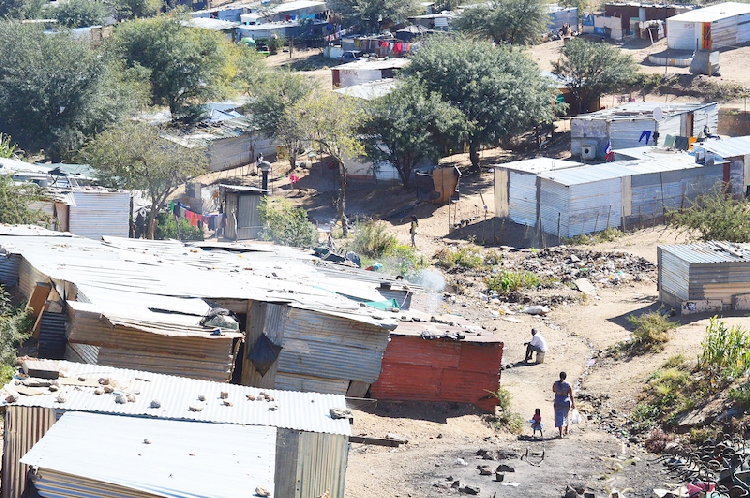
Atop a hill in Okahandja Park, Mwiya shares the difficulties he faced growing up there. We look down upon lines of corrugated iron sheets and sporadic streetlight poles as Erick plainly states: “When a fire starts here, the fire brigade can’t come – the roads are too small – people’s homes just burn down. Even the tap is too far to carry water by bucket.”
Water. While we constantly speak of it as something to give to our cows, grass, and swimming pools, we forget that droughts affect our ability to control fire. This hit home hardest at this particular juncture of the tour.
This is not the bright future that the figures in the bronze statue envisioned for us: crowded corrugated neighbourhoods, communal toilets and taps, limited electricity… In 2017.
Life should not be so difficult for so many.
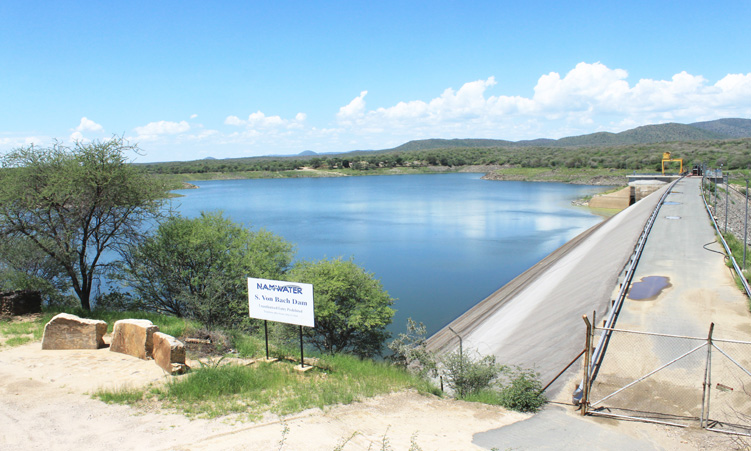
Whizzing through Eveline Street where the traffic is bumper-to-bumper and cars vibrate from the loud sub-woofers of nearby taxis and shebeens, we make our way to Goreangab Dam for a touch of calming nature. We finally end off the tour at the place whose smoke can tempt even the most devout of vegetarians: Oshetu Market, for some of Namibia’s finest kapana and vetkoek.
Unlike other stuffy tours that are incredibly formal with no real room for social commentary, Mwiya’s tour is laid back; you learn as much from him as he does from you. Beginning the tour at the Alte Feste wasn’t just a poetic starting point, it was necessary. Colonialism is the mother of townships.
The phenomenon of township tourism is often scrutinised for feeding into “poverty tourism”. Busiwe Deyi, in an article on the popular commentary website Africa is a Country, makes some valid arguments as to whether the tours benefit the impoverished residents of the townships. After all, just as we exoticise “traditional life” in ethnographic museums, we also can attend a “simulation shebeen” that appropriates township life and poverty.
Township tours, however, can be done right when they are run and operated by people who don’t just know their way around town, but know the life and the struggle of the neighbourhoods.
For this reason, Mwiya is able to provide insight which many simply can not. The harsh realities of township life were balanced by the sense of community and warmth felt towards the residents. Katutura is Windhoek’s heartbeat. This was a personal tour by a man who wants others to see his home as he sees it.
There is nothing like being a tourist in your own city. We often get so caught up in the hustle and bustle of working life that we rarely get to explore our history, our townships, our home.
If you want to experience a different perspective in your own backyard, Mwiya Tours and Transfers is the way to go.
In an age of information overload, Sunrise is The Namibian’s morning briefing, delivered at 6h00 from Monday to Friday. It offers a curated rundown of the most important stories from the past 24 hours – occasionally with a light, witty touch. It’s an essential way to stay informed. Subscribe and join our newsletter community.

The Namibian uses AI tools to assist with improved quality, accuracy and efficiency, while maintaining editorial oversight and journalistic integrity.
Stay informed with The Namibian – your source for credible journalism. Get in-depth reporting and opinions for
only N$85 a month. Invest in journalism, invest in democracy –
Subscribe Now!