

Choosing a career is a hard task, especially if you haven’t even reached university yet. Society tells you that the better option is to become a doctor, lawyer or engineer and you decide to go for it because those are the ‘money-making careers’. But have you ever asked yourself what you really want to do?
Are you someone who is dedicated to helping others, especially children? Would you like to dedicate your life to shaping the future of children who have certain impairments? Then perhaps you should think about studying Special Education. Not sure what that is? Don’t worry, most people aren’t aware of it.
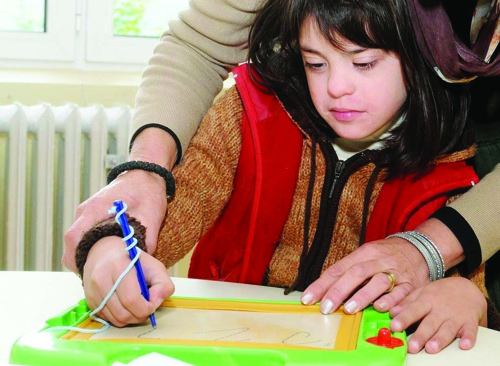
Special Education, also known as inclusive education in Namibia, involves the practice of teaching special needs children. By special needs children, we mean students who have hearing, intellectual or visual disabilities.
The lack of teachers in this field of study makes the possibility of these youngsters having a successful school career almost unrealistic. Is this fair? Definitely not. So what are you going to do about it? How do we curb the shortage? Could a career in Special Education be your calling?
Underrated and Ignored
Sadly, if you asked students around the country, Special Education wouldn’t be their first choice of career and there are a number of reasons why. Perhaps being a teacher isn’t given as much credit as it deserves. When you think of leaving school, the last thing you want to do is to end up back in a classroom again because you’ve witnessed first-hand what it’s like.
Teaching is stressful, pressured and you’d rather stay away from ‘rowdy kids’ who like to fool around during class. But have you ever thought about how these students really need help and are eager to learn despite their behaviour?
Now imagine what special needs children are going through. The situation is quite serious and the demand for qualified teachers in Special Education is quite high. This means more job opportunities and better chances of getting hired. Not only that. You could start your own school in areas other than Windhoek and become the principal. If you feel that working for someone no longer does it for you, this could be a great way to get ahead.
Picture yourself having a special school named after you and everyone remembering you as the first principal. It is quite enticing and the lives you could change are endless.
Another reason why you wouldn’t study Special Education is because you weren’t well informed in advance. In that case, read on.
A Little More
Currently, Môreson and Dagbreek Centre are the only two schools available which cater for special needs children from the ages of seven to 18 in Windhoek. Those who wish to work with special needs children over 18 may go to Ehafo, a school located on the way to Gobabis.
Here are some interesting facts: Dagbreek Centre accommodates students who are autistic or have Down Syndrome. Môreson is divided into three sections: those who have hearing problems, those who have intellectual problems and those who are visually impaired.
Naomi Hamauka, a teacher at Dagbreek who has studied Special Education, describes how her teaching career began. “I started off studying lower primary education as it was the mainstream choice and then I switched to special needs schools four years ago. I have been a teacher for 15 years.
“I cannot really say why this type of career is underrated, but during my time, teaching was the only career which had bursaries, other than nursing.”
Now that these kinds of restrictions no longer exist, you finally have the option of studying Special Education out of free will. Consider it! If you’re willing to love and appreciate children, then this career is for you.
Special education is divided into four parts: inclusion, mainstreaming, segregation and exclusion. In Namibia, inclusion and segregation are common. Inclusion is when students with special needs attend the same classes with those who do not have special needs but they require guidance counselling, speech therapy and other services.
Segregation involves separating students with special needs completely by creating either a special class or a special school. In lower grades, we see this with bridging courses but eventually, some students end up attending regular classes.
Lessons Learnt
Special Education gives you the opportunity to work with different cultures – therefore Lea Tjipetekera, a teacher at the Dagbreek Centre who teaches pre-primary, Grade 1s and other bridging courses, advises prospective students to be culturally aware and open-minded. “Someone who is aware of various cultures has a greater chance of succeeding in this career.”
Teaching allows you to see the world from a completely new perspective. Dealing with youngsters who have certain challenges could give you a better understanding of how the world really works, as Mrs Hamauka explains, life can be quite cruel. “These children need special attention and love because many have been rejected by their families and communities. I thought about my daughters and how it would feel if they had children with autism and Down Syndrome. Now I am aware of how to raise these types of children.”
Studying Special Education gives you the chance to give back to the community. Due to the lack of certain facilities in Namibia, special needs children face poverty because of the lack of a good education.
How would you feel if your whole family abandoned you because they weren’t sure of how to take care of you? How would you feel if you were given all sorts of hurtful names from your peers?
Requirements
In Namibia, the University of Namibia (Unam) provides a platform for students who want to study Special Education. All you need is a National Senior Secondary Certificate (NSSC) with five subjects passed and 25 points based on the Unam Evaluation Scale to qualify for the Bachelor of Education degree. Remember, the degree must specialise in Inclusive Education or Special Education. If you wish, you may continue on to the Master’s degree known as the Masters of Education (Inclusive Education) which would take about two years to complete. Other universities abroad also offer special training in this field if you want to extend your studies even further.
Words of Encouragement
Think long and hard about it. Follow your passion and if this is the type of career that fits your personality, go for it! Study hard, get the necessary requirements and this could be the beginning of a new and prosperous journey in your life.
Alexia Kajovi and Mrs Tjipetekera, both qualified teachers in this field at Dagbreek Centre, provide a few pointers to consider before you decide to pursue a career in Special Education:
• It’s a different job from all the other jobs. It’s special.
