



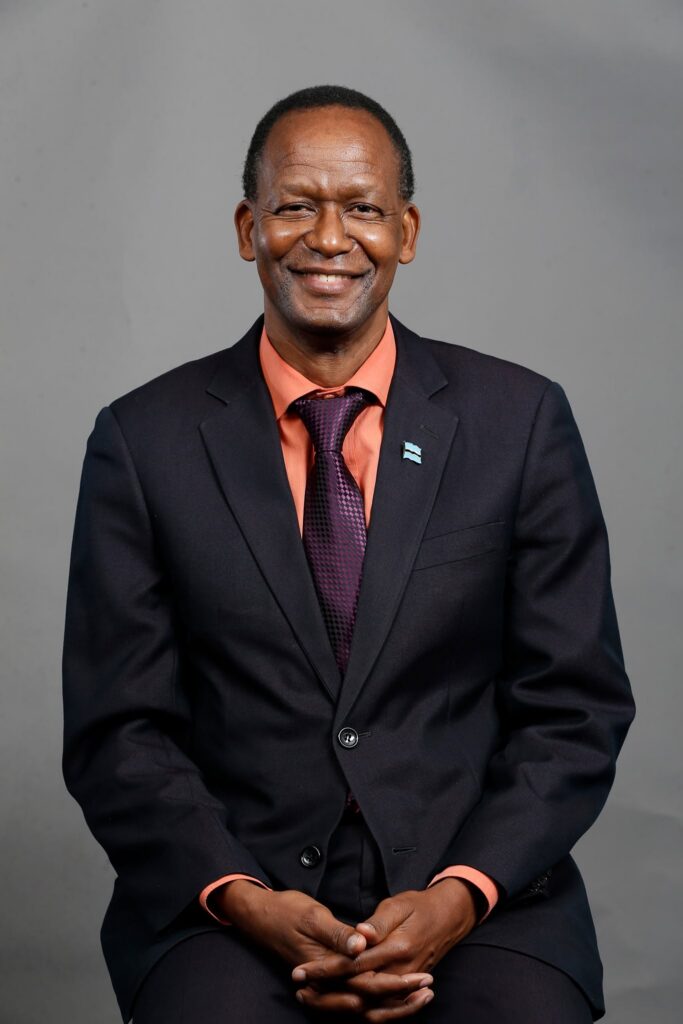
Republic of South Africa, 12 August 2026.
Introductory remarks by His Excellency Mr. Elias M. Magosi, SADC Executive Secretary, on the occasion of the Official Opening of the Ordinary SADC Council of Ministers Meeting.
Honourable Mr. Ronald Lamola, Minister of International Relations and Cooperation of the Republic of South Africa and Chairperson of the SADC Council of Ministers;
Honourable Dr. George Chaponda MP., Minister of Foreign Affairs and International Cooperation of the Republic of Malawi, and Chairperson of the Ministerial Committee of the Organ on Politics, Defence and Security Cooperation;
Honourable Professor Dr. Amon Murwira, Minister of Foreign Affairs and International Trade of the Republic of Zimbabwe, and Outgoing Chairperson of the SADC Council of Ministers;
Honourable Ministers here present;
Ambassador Teboko Seokolo, Deputy Director General for Africa in the Department of International Relations and Cooperation of the Republic of South Africa, and Chairperson of the SADC Standing Committee of Senior Officials;
Senior Officials from the SADC Member States;
Deputy Executive Secretaries of SADC;
Your Excellencies, Ambassadors and High Commissioners
Staff from the SADC Secretariat, and from the Government of the Republic of South Africa;
Members of the Media;
Ladies and Gentlemen;
Good morning!
It is with profound honour and privilege that I welcome you to this Ordinary Meeting of the SADC Council of Ministers.
Allow me, at the outset, to express my heartfelt appreciation to the Government and people of the Republic of South Africa for their warm welcome and generous hospitality. Since our arrival in this vibrant City of eThekwini, Durban, in KwaZulu-Natal, we have experienced the warmth, beauty, and cultural richness and vibrancy for which this city is renowned.
Our special thanks go to Honourable Mr. Ronald Lamola, Minister of International Relations and Cooperation of the Republic of South Africa and Chairperson of the SADC Council of Ministers, for his exemplary leadership since assuming the interim Chairship of this body in September 2025, at a time when the region had to deal with an unusual development at Summit Troika level. Under his guidance, we have continued with the work of the region, advancing key regional priorities including geopolitical engagement, peace and security and migration, and demonstrating our collective commitment to integration, development and cooperation.
I also wish to commend the Government and people of the Republic of South Africa for the successful hosting of the 9th SADC Industrialisation Week and Exhibition, here in Durban from 26 to 31 July 2026. The outcomes of this annual event sent a strong signal of SADC’s determination to accelerate industrialisation, deepen regional integration, attract strategic investment, and unlock sustainable economic growth across the region.
May I also take this opportunity to thank Honourable Professor Dr. Amon Murwira, Minister of Foreign Affairs and International Trade of the Republic of Zimbabwe and Outgoing Chairperson of the SADC Council of Ministers, whose steadfast leadership in handling SADC matters and his unending support to sustain momentum across SADC’s programmes and initiatives during the transition period. It would be remise of me not to recognise the role played by The Republic of Zambia, the Incoming Chair of SADC, for completing and anchoring the Summit troika.
To the Ministers attending this Council Meeting for the first time, I welcome you to the SADC family, and look forward to your wisdom and expertise to enrich our deliberations as we continue to strengthen SADC and provide strategic guidance to our Heads of State and Government.
As we meet here today and the next couple of days, tomorrow will be different for the Republic of Zambia as the country undertakes the General Elections tomorrow, 13 August 2026. We take pride in the election process in our region as a symbol to strengthen our democratic and governance obligations under the SADC Principles and Guidelines governing democratic elections. We therefore extend our best wishes to the people of Zambia as they take this critical step in selecting a government. As a Community, we stand in solidarity with Zambia and remain confident that the elections will further strengthen peace, enhance unity, ensure stability, and facilitate development in the country.
Honourable Ministers,
We meet at a time of profound global change. Geopolitical tensions, shifting economic realities, declining development assistance and conflicts in various parts of the world continue to reshape the international landscape. While these developments pose challenges for the region, they also reinforce an important lesson we can no longer ignore, that the future of our region will increasingly depend on our ability to trust each other more and work together more, to strengthen regional resilience and drive our own development agenda, under our own terms. This understanding informed the Retreat of the SADC Ministers of Foreign Affairs held in Skukuza, South Africa, in May this year, where Member States reaffirmed their commitment to deeper regional integration, collective resilience and sustainable development, providing a strong foundation for navigating global uncertainty.
Despite a complex global environment, the region continues to make meaningful progress. I will highlight a few areas where progress is encouraging.
In the energy sector, the SADC region added 3,253 megawatts of new installed generation capacity across twelve mainland States, together with a further 1,611 megawatts from our Island States during the 2025/26 financial year. As a result, our total regional installed capacity now stands at 88,202 megawatts, while operational capacity has reached 54,812 megawatts, exceeding combined regional peak demand and reserve requirements of 52,617 megawatts.
These gains provide an important foundation for overcoming longstanding energy constraints. However, our success cannot be measured solely by megawatts generated. It must also be measured by the number of households, schools, health facilities and businesses that gain access to reliable electricity. Encouragingly, regional electricity access increased from 56 per cent in 2024 to 60 per cent in 2025, which is still below our target of 85 per cent electricity access across the region by 2030. To close this gap, we must continue accelerating grid expansion, strengthening cross-border interconnections and scaling up off-grid and renewable energy solutions that will leave no community behind.
Honourable Ministers,
Just as energy powers our economies, digital connectivity powers our future. In today’s interconnected world, digital infrastructure has become an essential enabler of communication, innovation, accelerated economic activity and inclusive development. The story here is also encouraging with Internet penetration rising to 57.2 per cent, 4G network coverage reaching 79.2 per cent and mobile penetration now at 95.2 per cent, exceeding the RISDP target set for 2030. These achievements are helping us to drive innovation, improve connectivity and expand economic opportunities across the region.
Economic transformation remains at the centre of our regional integration agenda. While performance across key economic indicators presents a mixed picture, there are encouraging signs that provide a platform for accelerated growth and industrial development. Manufacturing Value Added as a share of GDP declined from 11.3 per cent in 2024 to 10.9 per cent in 2025, underscoring the need for renewed efforts to strengthen industrialisation and value addition. This challenge also presents an opportunity to intensify investment in productive sectors and strengthen regional value chains.
Intra-regional trade recorded modest growth, reaching 20.2 per cent in 2025, driven by manufactured products, fuels, machinery, vehicles and agricultural goods. While this growth remains below pre-COVID pandemic levels, it demonstrates the continued dynamism of regional markets and the potential for further expansion. Our merchandise trade balance remained positive, albeit declining by US$2.2 billion to US$27.9 billion in 2025. This positive balance reflects the resilience of our economies in an increasingly complex and unpredictable global trading environment.
On investment, Foreign Direct Investment increased by 44 per cent to US$11 billion, largely driven by strong inflows into Mozambique and South Africa. This remarkable growth reflects continued investor confidence in the opportunities available within the SADC region and highlights the attractiveness of our markets and resources. Notwithstanding this positive picture, investment in research and development remains below both regional and continental targets. To date, no Member State has achieved the regional target of investing 1 per cent of GDP in research and development, nor the African Union target of 1.5 per cent. If we are to advance industrialisation, improve productivity and remain competitive in a knowledge driven global economy, greater investment in science, technology and innovation will be critical.
Honourable Ministers,
Agriculture remains the backbone of our economies and the primary source of livelihoods for more than 70 per cent of the region’s population. Following severe climatic shocks in recent years, the sector is showing encouraging signs of recovery, with agricultural growth estimated at between 2 and 3 per cent in 2025, compared with negative or stagnant growth in 2024. While there remains a gap in meeting the Comprehensive Africa Agriculture Development Programme target of 6 per cent growth, the progress achieved demonstrates the resilience of our farmers and the effectiveness of ongoing recovery efforts.
Most encouraging is the 16 per cent reduction in the number of food-insecure people across the region, reflecting improved agricultural performance and the impact of recovery efforts. This progress should strengthen our resolve to continue investing in sustainable, climate-resilient agriculture.
However, recent Foot-and-Mouth Disease (FMD) outbreaks have disrupted livestock production and related trade, threatening livelihoods, nutrition, and market access, while reinforcing the importance of stronger regional preparedness, better coordination, and effective response mechanisms.
Achieving long-term food security will require deliberate investment in the next generation. Our young people must be at the centre of agrifood systems transformation. They are not merely beneficiaries, they are innovators, entrepreneurs, and future custodians of our food systems. With nearly 75 per cent of the SADC population below the age of 35, we have a tremendous opportunity to harness their energy, creativity, and technological skills to modernise agriculture and strengthen food systems. We must, therefore, integrate youth priorities into national and regional agrifood systems, investment plans and dedicate resources to youth-centred agribusiness initiatives that can enhance productivity, promote value addition, create employment opportunities and accelerate the adoption of climate-smart agriculture.
Honourable Ministers,
Peace, security and good governance remain fundamental pillars of sustainable development, investment and prosperity, and are essential to achieving our aspirations. As has been reported before, the SADC region remains largely stable and free from inter-state conflict. Notable progress has been made in addressing political and security challenges in the Democratic Republic of Congo and Madagascar, reflecting the effectiveness of our collective efforts and commitment to the peaceful resolution of disputes.
The SADC Panel of Elders and the Mediation Reference Group have continued to play an important role in conflict prevention, mediation, and preventive diplomacy. Their work demonstrates the value of dialogue, partnership, and regional solidarity in preserving peace and stability. however, the work is not complete without an inclusive agenda. Women’s participation in peace and security processes remains below desired levels despite the disproportionate impact that conflicts have on women and girls. Sustainable peace is strengthened and sustainable when women are fully represented in decision-making processes and in peace operations.
Regional integration is ultimately about people, about creating opportunities, strengthening connections and improving the quality of life for our citizens. Movement of persons is therefore central to our vision of a more integrated, connected and prosperous SADC. Fifteen of our Member States now implement a 90-day visa-free regime for SADC citizens, while Mauritius, Seychelles, and Zimbabwe have done a commendable job, exempting all SADC Member States from visa requirements. However, ten Member States have signed the SADC Protocol on the Facilitation of Movement of Persons, and seven have ratified it. Given that eleven ratifications are required for the Protocol to enter into force, I encourage all the remaining Member States to accelerate ratification and enable our citizens to truly integrate.
Furthermore, movement of people, including skills mobility, across the Region require an enabling environment that promotes tolerance, social cohesion and mutual respect among the citizens of our Community. This should go hand in hand with orderly and regular migration that preserves the dignity of all persons, rule of law and reinforces the benefits of regional integration.
Honourable Ministers,
Climate change remains one of the defining challenges of our era. Earlier this year, devastating floods claimed lives, damaged critical infrastructure, displaced communities and disrupted trade across parts of our region. At the same time, seasonal forecasts indicate a high likelihood of a severe El Niño event during the 2026/27 season, with the potential to surpass the intensity and impacts of the 2023/24 El Niño, further exacerbating food and nutrition insecurity, high fertiliser and energy costs, constrained fiscal space and growing humanitarian needs.
These interconnected shocks threaten to undermine hard-won development gains and hinder our aspirations for regional integration, industrialisation and inclusive economic growth. We must therefore move from reacting to disasters to investing in resilience through strengthened early warning systems, anticipatory planning and action, climate-resilient infrastructure, disaster risk financing and resilient recovery efforts. The Operationalisation of the SADC Humanitarian Emergency Operations Centre in Nacala, Mozambique is critical to strengthening our preparedness and response capacity. Adequate financial and human resources must be provided to enable the Centre to coordinate contingency planning, emergency response and recovery efforts effectively and swiftly.
Honourable Ministers,
The health and well-being of our citizens is also important to the integration agenda, as we strive to be more productive, innovative, and better equipped to contribute meaningfully to national and regional development.
We meet at a time when the Democratic Republic of the Congo continues to respond to the Bundibugyo Virus Disease (BVD) outbreak, which has resulted in a significant loss of life and placed additional strain on the country’s health system. On behalf of the SADC Secretariat, I wish to express our solidarity with the Government and people of the DRC, particularly the families who have lost their loved ones during this outbreak. I also wish to express our sincere gratitude to the Member States that have provided support to the response efforts, as well as to our International Cooperating Partners for their continued technical and financial assistance to the DRC and Uganda. Such solidarity is critical in addressing public health emergencies that transcend national borders and demonstrates the importance of collective action in strengthening regional health security.
An equally crucial aspect is the importance of building resilient health systems that are both adequately and sustainably financed. We are encouraged by the Joint Meeting of SADC Ministers of Finance and Ministers of Health, in Harare last month, strongly emphasizing the need for sustainable health financing. The message from the Ministers was clear: investing in health is not merely a social obligation; it is a strategic investment in human capital, economic productivity, and long-term sustainable development.
In conclusion, Honourable Ministers, allow me once again to express my sincere appreciation for your commitment and policy guidance in advancing the SADC Vision and achieving our shared regional development goals. There is a performance report that reflects the Region’s performance on its metrics towards integration. I encourage our leaders to read it and appreciate progress, areas we need to improve on, challenges and risks the region must content with as well as possible interventions to move us forward.
We extend our appreciation to the Standing Committee of Senior Officials, led by Ambassador Tebogo Seokolo, whose diligence, professionalism and dedication have provided a solid foundation for your deliberations and decision-making.
I would also like to acknowledge the dedicated team at the SADC Secretariat, led by my two Deputy Executive Secretaries for the professionalism, expertise, sleepless nights and tireless commitment that continue to drive the implementation of Council decisions and advance the broader regional integration agenda. The progress reports and documentation you have today will not be possible without this dedicated team, which operates sometimes with very limited staffing.
I wish you fruitful deliberations.
I thank you for your attention! Muito Obrigado! Merci Beaucoup! Asante Sana