



Samora Machel Constituency, Windhoek, 19 September 2026.
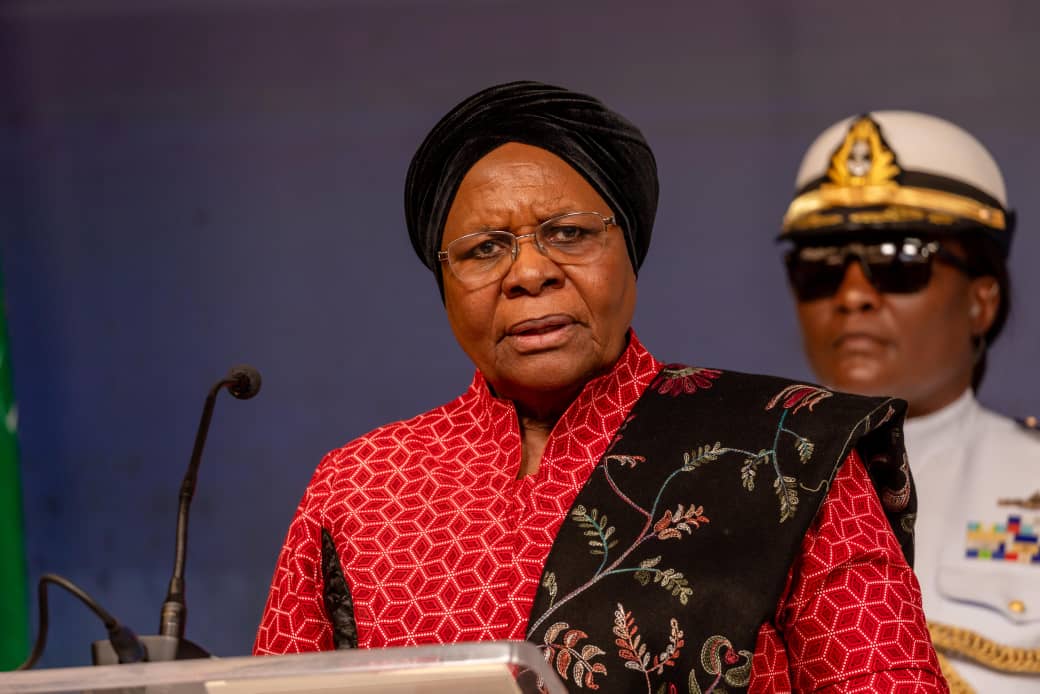
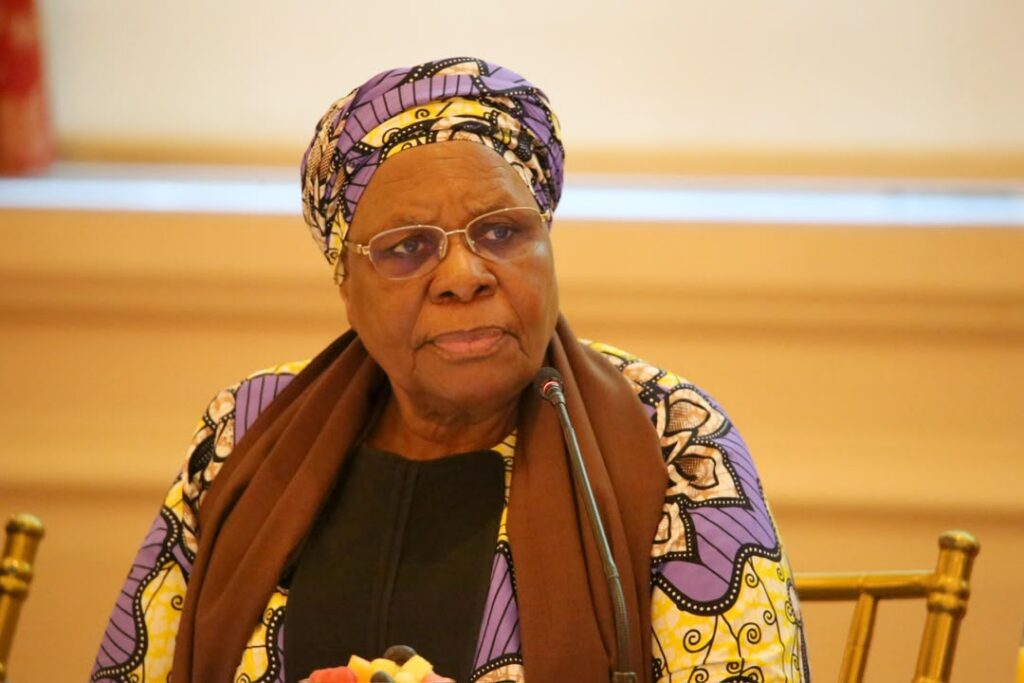
Keynote address by Her Excellency Dr Netumbo Nandi-Ndaitwah, President of the Republic of Namibia
Director of Ceremonies, Mr. Sikongo Haihambo, Executive Director;
Honourable Indileni Daniel, Minister of Environment, Forestry and Tourism;
Honourable Emma Theofelus, Minister of Information and Communication Technology;
Honourable Sam Nujoma, Governor of Khomas;
Honourable Stefanus Ndengu, Chairperson of the Khomas Regional Council;
Honourable Lydia Kanime, Samora Machel Constituency Councillor;
Your Worship Councillor Sakaria Uunona, Mayor of the City of Windhoek;
Regional and Local Authority Councillors Present;
Mrs. Linda Aipinge, MICT Executive Director;
Mr. Timoteus Mufeti, Environmental Commissioner;
Mr. Moses Matyayi, Chief Executive of the City of Windhoek;
Mr. Bennedict Libanda, Chief Executive Officer of the EIF of Namibia;
Commissioner Johanna Ngondo, Khomas Regional Commander;
All senior government and private sector officials present;
Members of the Media;
Ladies and Gentlemen;
Good morning,
I am pleased to join you today for the commemoration of World Cleanup Day and, most importantly, relaunching our national Cleanup Namibia Campaign.
The United Nations General Assembly, through Resolution 78/122, designated 20 September as World Cleanup Day. This year’s observance shines a spotlight on the environmental and socio-economic impacts of food waste under the theme, “From Clean Plates to Clean Cities.” The theme reminds us that cleanliness does not begin and end in our homes. It extends to our streets, neighborhoods, schools, workplaces, markets, open spaces, rivers, dams and cities.
Today is not 20 September, but we are observing it today as part of our efforts to amplify the importance of environmental cleanliness and to relaunch the Cleanup Namibia Campaign.
Fellow Namibians,
A clean environment is not simply about having streets that look attractive. It is about the health, dignity and quality of life of our people. It is also about sanitation. It is about dignity and human rights.
Poor waste management creates conditions for waste-borne diseases, contaminates our surroundings and water sources, attracts pests and animals, and places additional pressure on our municipalities and public health systems. It also affects our livestock, biodiversity, tourism and the overall attractiveness of our towns and cities.
In Windhoek, we have seen another consequence of poor waste management that should concern all of us: the increasing presence of baboons in areas where they should not be. When waste is carelessly discarded or food waste is left exposed, it can attract baboons and other animals. The situation around areas such as Goreangab, Havana and other parts of Windhoek demonstrates that poor waste management can create problems that extend beyond litter and untidy surroundings.
Baboons may appear harmless when seen from a distance, but when they become accustomed to human settlements and begin searching for food among households and public spaces, they can become a serious nuisance and, in some circumstances, a danger to society. Children, older persons and other vulnerable members of our communities can be particularly exposed.
Cleanliness, therefore, must become part of our everyday culture. Namibia has long been recognised for its commitment to environmental protection and sustainable natural resource management. Windhoek was, for many years, recognised as one of Africa’s cleanest cities. However, increasing littering, illegal dumping, plastic pollution and poor waste management have threatened our environment, public health, urban appearance and national image. This contributed to Windhoek losing its position as Africa’s cleanest city to Kigali, Rwanda, in 2016. We should not see this simply as the loss of a title. We should see it as a wake-up call.
In response to this loss, the Government launched the Cleanup Namibia Campaign in 2018. Cabinet subsequently directed that the Ministry of Environment, Forestry and Tourism lead the campaign together with the Ministry of Information and Communication Technology under the Nationhood and National Pride Programme. Today, we are renewing that commitment.
Across our country, roadsides, riverbeds, informal settlements, residential areas, tourism attractions and open spaces continue to experience irresponsible waste disposal, despite existing legislation and municipal waste management programmes. This tells us that legislation and municipal services alone will not solve the problem. We need a change in behaviour.
Fellow Namibians, ladies and gentlemen,
National campaigns have an important role to play in changing attitudes and saving lives. At Independence, our country faced a very different but equally serious challenge. Large quantities of unexploded ordinance and explosives, remnants of the war, remained in different parts of Namibia. Many people, including children, did not fully understand the danger posed by these objects. The Government and its partners responded with a powerful national message: “Don’t Touch It, Report It.”
That simple message encouraged them not to touch or handle suspicious objects, but to report them to the relevant authorities.
Repeated daily across the country, it changed behaviour and saved lives. We are taking a similar approach with the Cleanup Namibia Campaign. We want the message of cleanliness to reach every Namibian, from Okamatapati to Aranos, from Linyanti to Fransfontein, and from Onamutai to Ncamagoro. Whether you live in Windhoek, Oshakati, Rundu, Katima Mulilo, Walvis Bay, Keetmanshoop, Opuwo or in a small rural settlement, the message is the same: Keep your surroundings clean. Manage your waste responsibly. Reduce, reuse and recycle. Do not litter. Do not dump waste illegally.
Fellow Namibians,
Not all waste is simply rubbish. The world is talking about a circular economy. A circular economy encourages us to reduce waste, reuse materials, repair products, recycle what can be recycled and find new economic value in materials that would otherwise end up in dumpsites or in our streets and open spaces. The waste buy-back centre in Windhoek is an excellent example of what can be achieved when waste is turned into an economic opportunity. Such initiatives give people an incentive to collect, sort and sell recyclable materials while at the same time helping to keep our environment clean. I commend the City of Windhoek for this brilliant and progressive initiative.
I particularly want to challenge our young people to see waste differently. Do not only ask, “Where can I throw this away?” Ask instead, “What can I make from this? What value can I create from it? What business can I build from it?”
I challenge young Namibians, innovators, entrepreneurs, students and researchers to develop new and practical business ideas around waste. Let us create businesses that turn plastic, glass, paper, metals, organic waste and other discarded materials into products, income and employment. In Samora Machel, there were young people who organised themselves to provide innovative sanitation solutions and in Windhoek West, it was recently shared with us that young people have a business for a home-grown recycling technology. If these young innovators are present here today, I encourage them to meet with the City of Windhoek and with relevant OMAs so that they become part of the champions for the relaunch of our Cleanup Namibia Campaign.
The relaunch of the Cleanup Namibia Campaign is therefore about much more than picking up litter. It is about protecting public health, conserving our environment, improving the appearance and dignity of our communities, supporting tourism, creating economic opportunities and, most importantly, changing our behaviour.
The campaign will be implemented around three key objectives:
First, to raise public awareness of the importance of proper waste management, environmental conservation and responsible waste disposal.
Second, to mobilise communities, institutions, businesses and other stakeholders across Namibia to participate in coordinated clean-up activities and to promote collective responsibility for maintaining a clean country.
Third, to promote behavioural change by encouraging individuals, institutions and businesses to adopt environmentally responsible practices, including waste reduction, reuse, recycling and the prevention of littering and illegal dumping.
We are in keeping with the Sustainable Development Goals, with Article 95(l) of the Constitution, which calls for the maintenance of the ecosystem, essential ecological processes and biological diversity, as well as the sustainable use of natural resources for the benefit of present and future generations.
We are in keeping with our Environmental Management Act and our national development priorities as outlined in the Sixth National Development Plan, NDP6. Sanitation goes hand in hand with cleanliness.
Fellow Namibians,
A clean Namibia will not be created by Government alone. It will be created by parents teaching children not to litter. It will be created by businesses taking responsibility for the waste they generate. It will be created by municipalities providing effective waste management services. It will be created by schools educating learners about environmental responsibility. It will be created by communities taking pride in their surroundings.
Let us make cleanliness a habit, not an event. Let us make responsible waste management part of our national culture. Let us protect our children from waste-borne diseases and other dangers associated with poorly managed waste.
Let us keep our streets clean so that baboons and other wildlife are not attracted into our neighborhoods in search of food. Let us turn waste into opportunity. And let us restore Namibia’s reputation as a clean, environmentally responsible and proud nation.
Under disaster risk management, I directed the Prime Minister to prioritize access to sanitation and housing. The two are interlinked.
The clarion call, therefore, is sanitation for every Namibian in all our local authorities, our schools, clinics, villages in 121 constituencies of our 14 regions. Sanitation also includes access to decent and adequate toilet facilities in towns and in rural areas.
With these words, I hereby declare the 2026 national Cleanup Namibia Campaign officially relaunched.
I thank you.