




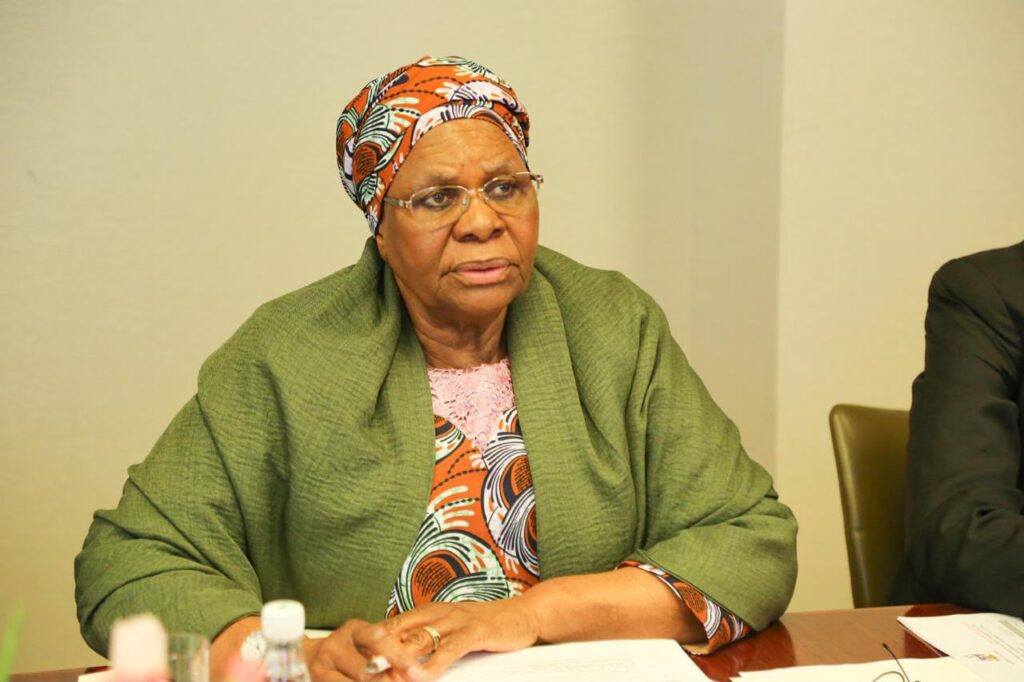
New York, 20 September 2026.
Intervention by Her Excellency Dr Netumbo Nandi-Ndaitwah, President of the Republic of Namibia.
Your Excellency, Mr António Guterres, Secretary-General of the United Nations;
Ms. Sanda Ojiambo, Assistant Secretary-General and Chief Executive Officer of the United Nations Global Compact;
Fellow Heads of State and Government;
Excellencies;
Captains of industry and leaders of the private sector;
Distinguished Participants;
Ladies and Gentlemen;
We meet at a moment when energy policy has become inseparable from economic security, climate resilience and human development. The question before us is no longer whether the global energy system must change, but how we can accelerate that change at the scale and pace required.
I am running a few minutes late; my previous meeting is running over.
For Namibia, this is not an abstract policy debate. Reliable and affordable energy determines whether a rural clinic can safely preserve medicines, whether a small enterprise can expand, whether a young person can find decent work at home.
A clean energy transition must therefore be measured not only in megawatts installed or emissions avoided, but in jobs created, communities connected, skills transferred and industries established.
Namibia approaches the energy transition from the perspective of a developing country. We support the objectives of the Paris Agreement and a global pathway towards limiting the increase in temperature to 1.5 degrees Celsius.
At the same time, the transition must recognise different national circumstances and safeguard the right of developing countries to industrialise, eradicate poverty and secure universal access to energy.
A transition that leaves communities without power, workers without viable alternatives or countries trapped at the bottom of global value chains will neither be durable nor fair.
Our national approach is therefore anchored in an increasingly diversified energy system, expanded domestic generation and stronger regional integration.
At continental level, Africa’s energy transition must be an industrialisation strategy. We must use clean energy not only to export electricity or unprocessed minerals, but to manufacture, beneficiate, strengthen food systems, modernise transport and create a skilled workforce.
In conclusion, Governments must provide direction, predictability and enabling infrastructure. Business must bring investment, innovation and responsible execution.
The United Nations, development finance institutions and international partners must help align standards, mobilise finance and strengthen cooperation.
Together, we can build an energy future that is cleaner and more secure; an industrial future that creates value where resources are found; and a transition that is genuinely inclusive and leaves no country, community or worker behind. An industry where young people and women can play a role.
I invite the business leaders gathered here to join us in this exciting journey to a cleaner and healthier environment and a more prosperous world for all.
I thank you.