





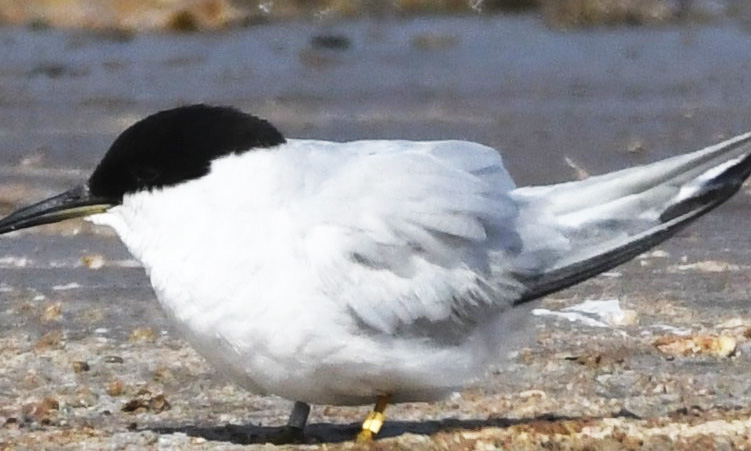
Since mid-November Lüderitz Marine Research has been monitoring a newly discovered breeding colony of Damara terns north of the Lüderitz Peninsula.
The first active nests were found on 13 November, and by early December 14 nest sites had been located and 10 incubating adults were captured and marked with rings and flags.
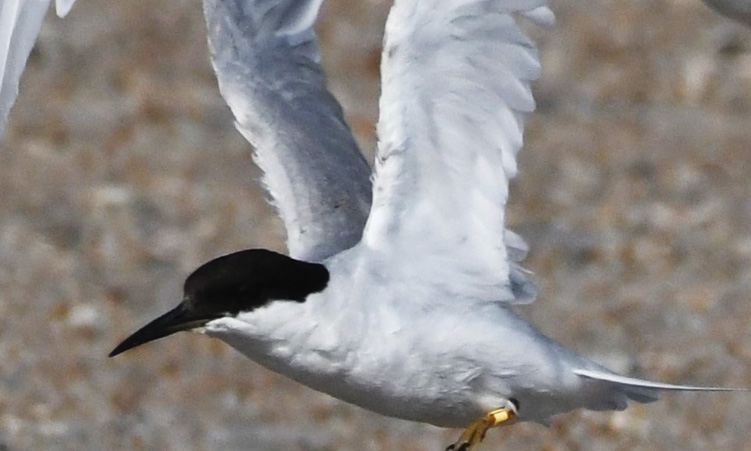
Since then several of these birds have been seen around the peninsula – including some successful pairs feeding recently fledged chicks.
However, the breeding season of this species is rather protracted, and in the last few days several new nests were located containing eggs and a few newly hatched chicks – including some found on 30 January.
One tiny chick, just a few centimetres in length, lay near the salt pan under guard by its parents.
They regularly bring food, cover the chick when cold, shade it when hot, and stay alert in case of any perceived danger (intruders, jackals, crows, hyenas, gulls, kestrels, etc.).
At this stage, a chick can only rely on its camouflage to avoid these dangers.
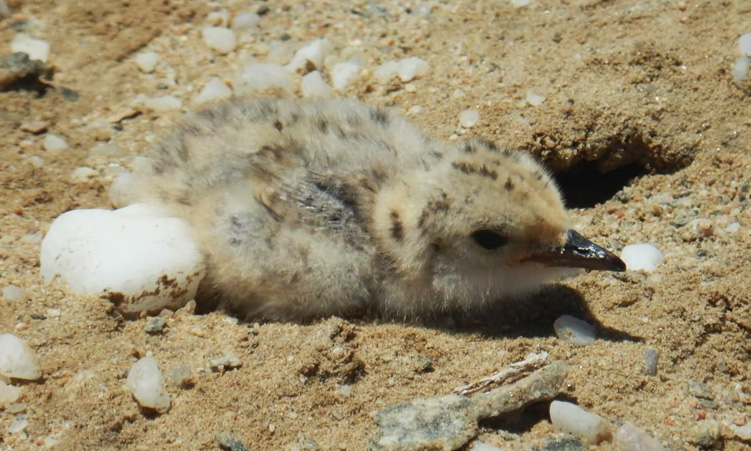
CAMOUFLAGED SURVIVAL … A well-camouflaged Damara tern chick relies on its natural markings to blend into the salt pan on the Lüderitz Peninsula.
Unfortunately, these survival strategies shaped by evolution fail completely when faced with modern threats such as off-road vehicles and drones, which scare the adults away from nests and chicks.
Both infractions were noted at the colony site within the last three days.
Stay on the tracks and do not fly drones in a national park!
– Lüderitz Marine Research