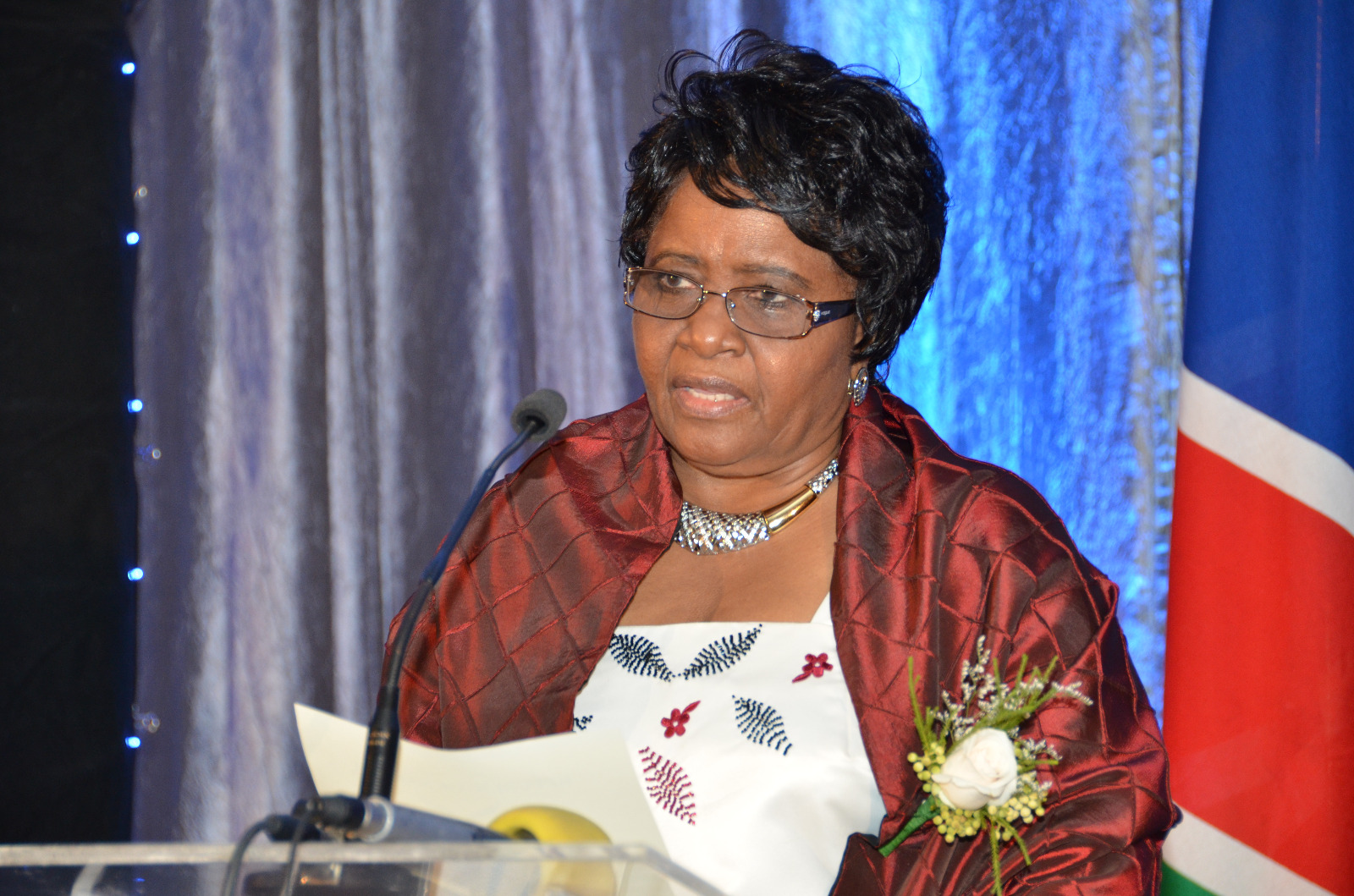






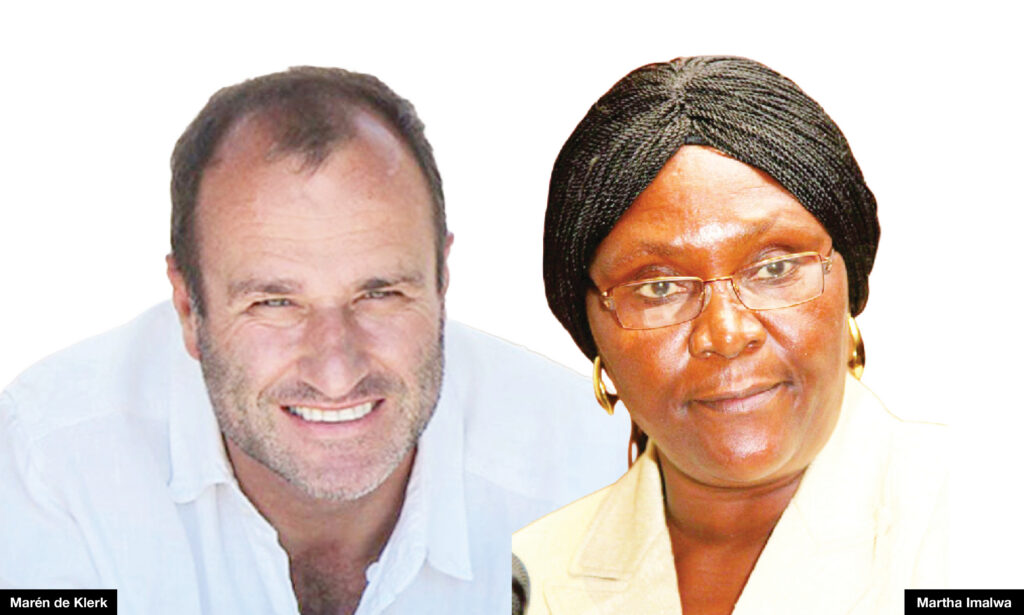
Acting prosecutor general Martha Imalwa has obtained a Prevention of Organised Crime Act property restraint order in respect of assets of fugitive lawyer Marén de Klerk valued at up to N$75.3 million.
Imalwa is targeting assets valued at up to N$75.3 million in respect of De Klerk and the company Celax Investments Number One, and assets valued at up to N$2.3 million in respect of the close corporation Moyo Estates in terms of a restraint of property order that acting judge James Devittie granted in the Windhoek High Court on 10 July.
Imalwa informs the court in a sworn statement that De Klerk, who left Namibia in January 2020, is a fugitive from justice in Namibia. A request for De Klerk’s extradition from South Africa, where he is believed to be living, to Namibia in order for him to be prosecuted was sent to South Africa’s Department of Justice and Constitutional Development in May this year, Imalwa also says in her affidavit.
De Klerk left Namibia shortly after he had been questioned by Anti-Corruption Commission investigators in connection with the Fishrot fraud, corruption and racketeering case about the alleged illegal allocation and use of Namibian fishing quotas worth hundreds of millions of Namibia dollars.
A warrant for the arrest of De Klerk was issued by a magistrate in Windhoek near the end of April 2021.
Imalwa previously obtained a Prevention of Organised Crime Act (Poca) property preservation order, followed by a forfeiture order in respect of an amount of N$4.68 million in a bank account of De Klerk’s former law firm, De Klerk, Horn and Coetzee Incorporated (DHC) and an amount of N$1.8 million in a bank account in De Klerk’s own name.
The only specific asset mentioned in the restraint order issued by Devittie is an amount of N$1.3 million, which was paid out from a retirement annuity of De Klerk and was seized by the Namibian Police in June 2024.
CRIMES ALLEGED
According to Imalwa, there are reasonable grounds to believe that De Klerk, Celax Investments, of which he is the sole director, and accused charged in the Fishrot case committed crimes including racketeering, fraud, corruption and money laundering with a scheme through which they benefited from Namibian fishing quotas allocated by former minister of fisheries and marine resources Bernhard Esau.
“They operated as a syndicate at all relevant times to access fish quotas without being [fishing] rights holders under the enabling legislation,” Imalwa says in her affidavit.
The accused mentioned by Imalwa include Esau, former attorney general and minister of justice Sacky Shanghala, Tamson Hatuikulipi, who is Esau’s son-in-law, James Hatuikulipi, Pius Mwatelulo and Otneel Shuudifonya.
As part of the scheme in which the accused are alleged to have participated, N$81.88 million in proceeds from fishing quotas allocated to the National Fishing Corporation of Namibia (Fishcor) was diverted to an account of DHC for the use and benefit of the accused, Imalwa says.
An amount of N$22.5 million was also paid into a trust account of the law firm Sisa Namandje & Co and distributed to nominees of the accused, Imalwa recounts.
She informs the court that a forensic analysis done by the auditing firm Deloitte showed that out of horse mackerel quotas totalling 461 186 tonnes that were allocated to Fishcor from 2014 to 2019, 238 000 tonnes were sold to the Icelandic fishing company group Samherji.
“Evidence shows Samherji financed the conspiracy by funneling millions through law firms and private companies disguised as ‘governmental objectives’. In return, it gained access to Namibia’s prime fish stocks at below-market prices,” Imalwa says, adding that former Fishcor chief executive Mike Nghipunya, who is also an accused in the Fishrot case, played a key role in the alleged scheme.
While Fishcor received most of the quota usage fees – about N$459.7 million – paid by Samherji, a significant portion of N$90.9 million was directly diverted from Samherji to third parties, Imalwa says. DHC was the main recipient of the diverted funds and received N$75.6 million thereof, she says.
The law firm also received payments totalling N$6.28 million from Fishcor, Imalwa states.
Moyo Estates received an “affected gift” of N$2.3 million from Celax Investments after the company received the funds from DHC, she says.
According to Imalwa, De Klerk registered Celax Investments on the instructions of Shanghala and James Hatuikulipi to act as a covert financial conduit through which misappropriated quota proceeds deposited into the trust account of DHC were channelled to various entities controlled by the accused.
Imalwa says the restraint order Devittie was asked to issue is an interim mechanism designed to preserve assets pending the final determination of criminal proceedings that could end with an asset confiscation order issued in terms of Poca.
She further says she intends to use the International Cooperation in Criminal Matters Act of 1996 to have the property restraint order granted in Namibia registered in the High Court of South Africa and enforced in South Africa as well.
“Once registered in South Africa in terms of their domestic equivalent legislation (the Prevention of Organised Crime Act, 1998), this order will have the effect of a civil judgement of that court, thereby ensuring that the preservation and eventual confiscation of the proceeds of unlawful activities are not frustrated by [De Klerk’s] current physical location or the cross-border nature of the assets,” she states.