Some Namibian contract workers on TotalEnergies’ oil and gas project say they were handed new employment terms on a ‘take-it-or-leave-it’ basis, with no room to negotiate.
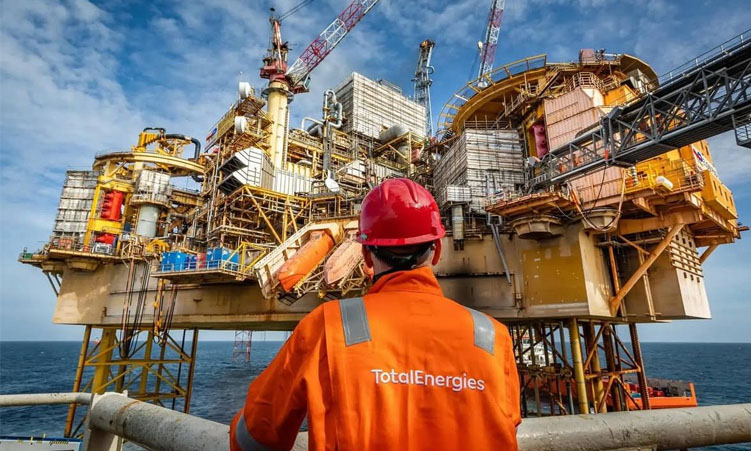
TotalEnergies EP Namibia, a subsidiary of the French oil giant, is one of the front runners in developing Namibia’s offshore oil finds in the Orange Basin.
The company is currently negotiating the terms of the investment with the government. The project is expected to run for more than 25 years.
During the exploration phase, TotalEnergies took on around 13 workers through Apos, an oil and gas services firm that recruits and manages personnel for the industry, on rolling fixed-term contracts of between 12 and 24 months.
That arrangement has, however, left some Namibian workers aggrieved, citing contracts with no pension, limited medical aid cover and years without salary increases.
TotalEnergies and Apos deny any wrongdoing, saying the new terms improve workers’ pay and benefits, and that staff who sought clarification were given the chance to raise questions.
An employee who spoke on condition of anonymity to discuss confidential matters, told The Namibian this week that workers tried to engage the company on the new packages, but were told the offers were not open for negotiation.
“It was presented as a take-it-or-leave-it situation. We tried to engage and ask questions, because people wanted to understand how the packages were calculated,” the employee said.
The workers are being transitioned to TotalEnergies Namibia contracts after initially being recruited through Apos, which provided staffing services for the project.
The employee said the workers accepted the conditions because they wanted to gain experience in Namibia’s emerging oil and gas sector.
“Most Namibians want to get into the oil and gas industry. People were willing to move around their packages and take chances because they believed there would be better opportunities once the project progressed,” the employee said.
According to the employee, Apos made a monthly contribution of N$1 000 towards medical aid, but the workers had to cover additional costs themselves.
“We are not saying don’t give us medical aid and pension. Those are important. But the question is: What about the years people worked without those benefits and without salary increases?” the source asked.
‘DOUBLE STANDARDS’
Another employee called out TotalEnergies for potentially having double standards.
“You cannot preach local content outside and not apply it inside the company. Local content must also mean decent contracts and conditions for Namibians working on the project,” the employee said.
TotalEnergies EP Namibia managing director Meriam Kane-Garcia this week said the workers had until now been employed by Apos, the third-party contractor that recruited and managed them.
“And their conditions of employment were determined in terms of the employment agreement with Apos,” she said.
She rejected claims that the company had refused engagement with the employees, saying those who requested clarification were given an opportunity to discuss their questions.
Kane-Garcia said the new offer includes medical aid and pension benefits.
“The offers made by TotalEnergies EP Namibia BV include benefits such as medical aid and pension, and the proposed remuneration packages on a total cost-to-company basis are intended to improve substantially on the overall earnings of the recipients of the offers,” she said.
Kane-Garcia said 75% of the recipients had accepted the offers.
Apos chief executive Veronique Herma this week disputed some of the allegations.
She said the company made a monthly financial contribution towards private medical insurance for every employee, who could either join the company’s medical scheme or use the contribution towards their own cover.
Herman confirmed that Apos did not offer a pension benefit.
“To date, we have not yet established a benefit for a pension fund. We also understand that offering a pension benefit is not a requirement under Namibian law,” she said.
Herman said 13 employees are currently seconded to TotalEnergies EP Namibia and described their transition to direct employment as “a natural progression”.
She rejected claims that employees did not receive annual salary increases, saying more than 80% of employees with more than one year’s service had received increases.
The Mineworkers’ Union of Namibia (MUN) says it does not currently represent TotalEnergies employees, although workers in the oil and gas sector fall within its scope of representation.
MUN assistant general secretary Paulus Situmba says if the allegations are true, they raise serious concerns about employment conditions in the industry.
He says an industry expected to generate billions of dollars should provide decent work and fair employment conditions.
“We believe an industry generating billions of dollars should not operate in a manner that leaves workers without essential employment benefits such as employer-funded medical aid and pension contributions,” he says.
Situmba says if the allegations point to breaches of labour, the matter should be referred to the Office of the Labour Commissioner for investigation.
“The benefits should begin with the people whose labour drives the industry’s success,” he says.