Human nature dictates that when our time on earth comes to an end, we should leave behind something valuable for future generations.
We work hard to make ends meet, build homes, secure livelihoods and acquire enough to ensure a better life for our children.
However, there is no more sustainable inheritance we can leave our children than a functional environment. We can leave our children all the material wherewithal and lots of money in the bank, but if Mother Nature is falling apart, none of it will matter.
Neither silver nor gold can sustain life in a compromised and degraded environment where air-borne diseases flourish and soil becomes barren.
It is against this line of thought that the government, through the Ministry of Environment, Forestry and Tourism and various stakeholders, is encouraging people to plant trees to leave behind a healthy environment as our collective legacy to future generations.
The government seeks to drive a tree planting culture across Namibia as a measure of sustaining the very environment that supports our lives and livelihoods. Our country’s climatic variability makes a strong case for all of us to take tree planting very seriously.
As a country, we celebrate Arbour Day on the second Friday of October annually to leverage the start of the rainy season. This year, Arbour Day is today and is being observed under the theme ‘Towards One Million Trees by 2030: Plant Today, Breathe Tomorrow’.
This theme tasks us all with a serious responsibility to plant and grow one million trees by 2030. This target requires the support of all of us to succeed. My plea is that every Namibian should plant a tree.
Over the past three decades, Namibia has lost about 20% of its forests to unsustainable harvesting of forest resources, deforestation, wildfires and drought.
This should be a wake up call for all of us to restore our forest resources. Targeting one million trees by 2030 is a good start.
When this target is considered against all 121 constituencies, 14 regions and 57 local authorities, it is attainable and has a strong likelihood of being exceeded if we all take responsibility.
The Ministry of Environment, Forestry and Tourism is working to ensure a conducive policy environment for tree planting in Namibia. As a result, the ministry has finalised the National Strategy on Tree Planting which will serve as our guide, measure progress and fix our efforts along the way.
This framework is crucial because it will help coordinate national data on tree planting and inform interventions when needed. However, a strategy and a target alone will not be enough. The real impact will come from people planting trees and taking care of them until they become mature trees.
Trees serve a critical ecological, environmental, cultural and economic role. Besides providing shade, shelter, bearing fruit and other conventional uses of trees, they also serve as natural air coolers in our midst.
As temperatures rise due to global warming, trees serve as our resolute protection from unbearable heat. They also clean the air, supply oxygen and absorb carbon dioxide thereby fighting climate change. Trees anchor the soil we need to grow our food, protecting fertile topsoil from water and wind erosion.
Above all, trees provide forest resources that can be developed into a lucrative value chain that can create hundreds of employment opportunities for our youth.
Additionally, some trees serve various cultural and traditional roles, with a number of them possessing medicinal properties. Therefore, when we plant a tree, we provide a solution from an ecological, environmental, economic and cultural perspective for more than one issue.
As Namibia celebrates Arbour Day today, I urge all Namibians to plant and grow trees as our collective legacy to future generations. Planting trees should become fashionable.
Planting trees should dominate in our communities and be sustained to become a culture we also pass on to future generations.
The Ministry of Environment, Forestry and Tourism offices remain available across the country to serve the community with technical advice on which type of trees to plant where and how to take care of them because tree planting takes more than just planting.
Let us take baby steps to transform our environment by planting trees each to achieve our one million target by 2030.
Let us take this national initiative to plant trees seriously in line with our sixth National Development Plan’s core pillar of environmental sustainability.
Your participation can make this drive a national achievement.
There is a saying that goes: The best time to plant a tree was 20 years ago. The next best time is today.
Namibia, we can do it.
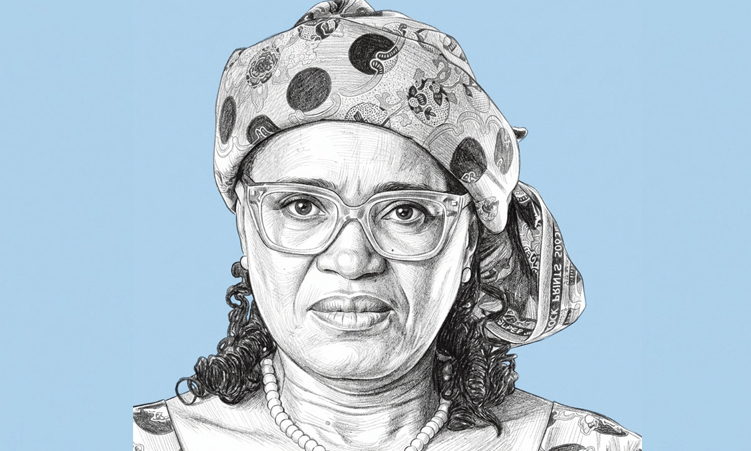
- Indileni Daniel is a member of parliament and the minister of environment, forestry and tourism.