



THE government admitted last week that it has only constructed one school hostel in the Zambezi region in the past 26 years.
This was confirmed in the National Assembly by deputy education minister Anna Nghipondoka when she answered questions from Rally for Democracy and Progress (RDP) member of parliament Agnes Limbo, who is from the region.
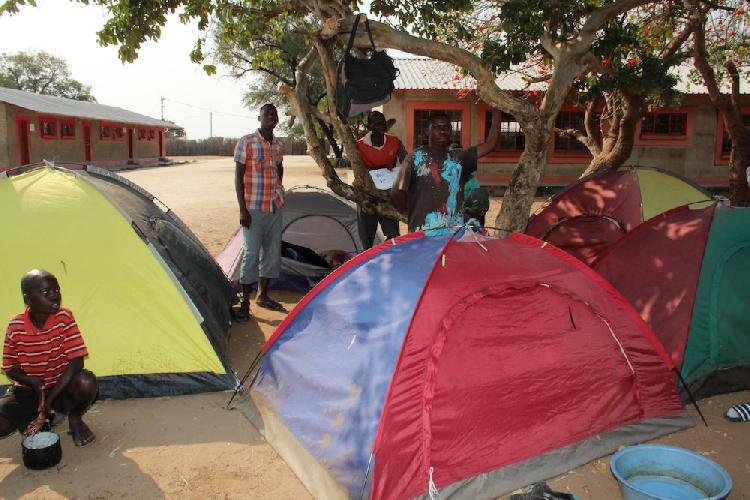
Nghipondoka, who insisted that there are ongoing projects in the region to address the problem of the lack of hostels, also conceded that pupils at a school in Zambezi are using the bush to answer the call of nature due to non functional toilets.
Zambezi is rated as one of the poorest regions in the country by the National Statistics Agency (NSA) which said the region also has a high inequality rate.
Limbo wanted to know whether the ministry of education is aware that the government has only constructed one hostel in the region since independence – at the Sangwali Secondary School.
‘Can the minister tell this august House if there are concrete plans to construct a new hostel and/or renovate existing hostels, some of which are in a dilapidated state?’ Limbo asked.
Nghipondoka replied that the limited national budget has been divided and allocated for all the regions to get a fair share.
‘We (government) may have built only one hostel, but the region has benefited in other areas too, and we can testify to that,’ the deputy minister said.
According to the information issued by Nghipondoka, there are ongoing development projects in the Zambezi region. These include the extension, renovation and construction of new schools.
They include the addition of three classes at the Masokotwane Combined School, two classes each at the Iseke Combined School, Singalamwe Combined School, Mpukamo Combined School, Muzii Combined School and a large block at the Ikaba Combined School.
Renovations are ongoing at the Linyati Combined School and the Ibbu Combined School, the deputy minister said.
In the next three years, the government will also be funding the construction of a combined school, a regional education office, a teachers’ resource centre and a community learning and development centre.
During the same period, the state will construct hostel facilities at the Ndoro Memorial Combined School and the Schuckmansburg Combined School.
The construction of the Lisikili Combined School and another one at Salambala is ongoing too.
‘With these projects being completed, the Zambezi region stands to benefit immensely from all project planning for the regions,’ Nghipondoka said.
The region has failed to make it to the top of best performing schools over the past years. The region was ranked 14th in Grade 12 results last year. The deputy minister then warned fellow lawmakers not to generalise education results.
‘The Zambezi region was ranked number two at Grade 12 in the Namibia Senior Secondary Certificate Higher Level (NSSC) phase, and in Grade 10 the region was ranked number five,’ she stated.
Besides the one school hostel built by the state, it is not yet clear how many schools in the region are equipped with hostel facilities.
The National Statistics Agency (NSA) said the region had over 102 schools by 2012, three of which were private schools.
NSA’s report on poverty said 50% of people in the Zambezi are impoverished, coming second to the two Kavango regions, which have the highest rate at over 52%. The Zambezi region has a population of about 90 000 people.
Despite the challenges of hostels, Zambezi has kept one of the highest number of pupils in schools with attendance levels of between 86% and 87%, according to data by the NSA.
The education ministry also admitted that pupils at the Simataa Secondary School were using the bush to answer the call of nature due to broken down facilities.
‘As a ministry, we are aware of the critical situation at the Simataa Secondary School hostel. The problem at Simataa is the limited ablution blocks to support the number of learners in the hostel. The current ablution facilities cannot handle the pressure, so the school gets constant blockages,’ Nghipondoka said.
She said the ministry had tasked the regional offices to construct a larger ablution facility at the hostel, and that process should have been completed by the end of last month.
Meanwhile, Nghipondoka told the National Assembly that over 203 700 pupils in the country are benefiting from the free secondary education system which was implemented this year.