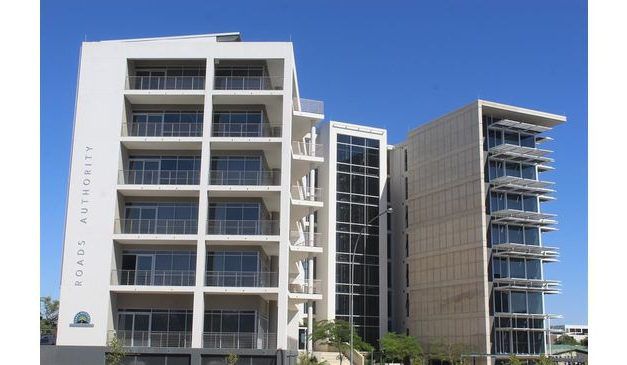
The Roads Authority has paid private lawyers more than N$2.6 million to discipline and fire two executives – an expense labour experts say lays bare how parastatals squander public money.
Lawyer Ileni Velikoshi was paid N$1.5 million as chairperson of the hearing, while the firm Köpplinger Boltman van Greunen Incorporated received N$1.1 million as the initiator, according to payment documents The Namibian has seen.
The disciplinary hearing resulted in the dismissal of former Roads Authority (RA) transport executive officer Sidney Boois and divisional manager Richard Milinga, who were both fired in February.
They were accused of inflating a vehicle procurement tender valued at about N$16 million.
The hearing, which started in 2023, ended up costing the government over N$2.6 million in total, with more expected to accumulate after the case went to the High Court.
Details of the payments are contained in invoices and documents which The Namibian has seen.
The spending has raised concern among labour experts, who say the amount is “unbelievably extreme” and that the authority disregards public resources.
RA spokesperson Hileni Fillemon this week declined to comment.
“This matter is sub judice, hence it would be inappropriate for the Roads Authority to comment on any aspects related to the case at this stage. We appreciate your understanding,” she said yesterday.
Lawyer Ileni Velikoshi declined to comment.
“Please be advised that the Roads Authority is our client. In accordance with our professional and ethical obligations, we are unable to disclose any information pertaining to our client to third parties, including members of the media like yourself,” he said.
One of Velikoshi’s invoices shows he charged the Roads Authority N$25 000 a day for some of the work, including attending the hearing and mitigation and aggravation arguments.
He was paid N$25 000 for attending the judgement.
Velikoshi billed N$75 000 for three days of work between 11 and 13 February, covering research, analysis of the parties’ written submissions, and drafting the judgement on sanctions.
Köpplinger Boltman van Greunen Incorporated this week declined to comment on the matter, saying it would first consult with its client.
“I am still representing the client, and I will not disclose any information pertaining to the particulars of the fees or of the matter. We will discuss this internally with the client and get back to you,” he said.
‘EXTREME WASTE OF RESOURCES’
Labour expert Herbert Jauch says the amount of money spent is far too big for a disciplinary hearing.
“The case of the disciplinary hearing at the RA is unbelievable . . . It simply disregards public resources and is an extreme wastage of resources,” he says.
Jauch says the authority’s spending shows it does not understand how to properly manage the resources at its disposal.
“As state-owned enterprises (SOEs), they will need to be bailed out and supported with taxpayers’ public funds. That is why it is important for them to behave financially well and to use the resources available prudently instead of wasting them on disciplinary proceedings,” he says.
Jauch says in a disciplinary case, an internal investigation is conducted to establish the facts and provide a coherent case, after which the person involved is charged and a hearing is held in which he or she can respond.
Entities like the Roads Authority are already struggling to achieve their mandate due to budget constraints, he says.
“In an environment where public entities like the Roads Authority are already facing budget constraints and struggling to meet their core mandate and deliver services, it is even more incredible that you can spend almost N$3 million on a disciplinary case,” he says.
Jauch says disciplinary hearings should be resolved speedily with fewer financial resources.
“Disciplinary hearings should be resolved speedily with little financial resources required, and we have seen at other organisations it can be done.
“This is not rocket science. It is a matter of being well organised and having a prudent approach to the funds available and dealing with disciplinary cases speedily and fairly.
“The fact that this case took more than two years already shows these organisations are poorly managed and run, and this results in a great wastage of resources,” he says.
Jauch encourages SOEs to save taxpayers’ money.
“This needs to change, and it raises questions about capability, skills and capacity within state-owned enterprises. It is nothing new, and it is time it is addressed systematically,” he says.
Lawyer Richard Metcalfe yesterday said he considers the amount spent on the disciplinary process to be reasonable, but questioned whether a disciplinary process was the most appropriate route to take if allegations of fraud and corruption formed the basis of the case.
“In such circumstances, criminal charges should have been lodged with the Commercial Crime Investigation Unit of the Namibian Police or the Anti-Corruption Commission (ACC),” he said.
Metcalfe suggested that the authority could have used the ACC and the police to investigate such allegations without incurring additional costs.
Parastatals have in the past been accused of splashing money on lawyers.
The Namibian last year reported that the Namibia Tourism Board paid lawyers N$1.4 million to preside over a disciplinary hearing.
Lawyer Slysken Makando was paid N$630 000 and Kaijata Kangueehi N$800 000 to preside over an internal disciplinary process against a finance manager who was dismissed in April 2025.