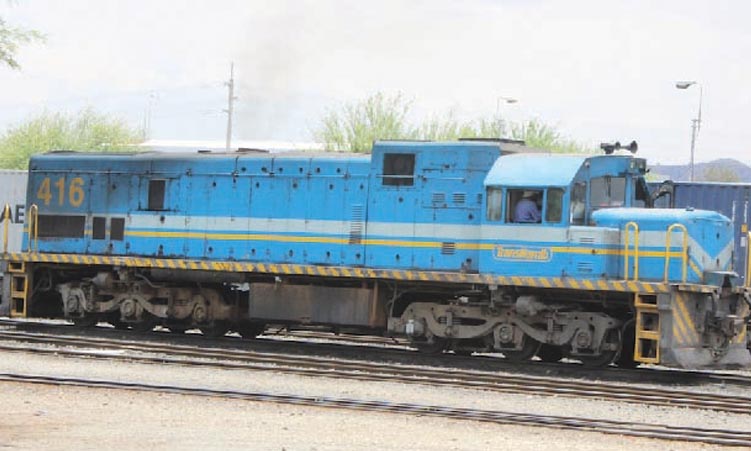
The 57km Ondangwa-Oshikango railway line, which cost N$329 million to construct, has gone more than two years without a TransNamib train.
TransNamib spokesperson Alina Garises told The Namibian yesterday that the last recorded train movement between Ondangwa and Oshikango took place on 12 July 2024.
The railway line was inaugurated by former president Hifikepunye Pohamba in 2012.
Despite the prolonged absence of trains, the state-owned railway company said the service to Oshikango has not been discontinued.
“Oshikango is earmarked as a dry port facility as trade between Angola and Namibia continues to grow,” Garises said.
She added that engagements are ongoing to secure import and export cargo, with intermodal and railway services in Namibia expected to play a key role in supporting the logistics solution.
Garises said the railway line was established to facilitate trade activities between Namibia and Angola.
“However, trade activity at Oshikango has declined significantly since the Covid-19 pandemic, resulting in reduced demand for rail services to the area,” she said.
TransNamib said the infrastructure itself remains usable.
“The railway line between Ondangwa and Oshikango remains in good condition and is being maintained,” Garises said.
She alleged that there is still potential for the railway to become an important freight route if Angola eventually connects its rail network to Namibia.
“The prospect of Angola connecting to the railway at Oshikango remains feasible, particularly following the public opening and verification of bids submitted under the tender to the concession to operate, manage and maintain the Namibie corridor, which took place on 13 August in Luanda,” she added.
TransNamib said its objective is to increase freight volumes and support an integrated logistics system.
The Namibian reported in 2006 that the Ondangwa-Oshikango railway line was estimated to cost N$329 million.
The media reported at the time that the railway project, which was driven by former president Sam Nujoma in the early 2000s, was financed by the Arab Bank for Economic Development in Africa (N$35.2 million) and the Kuwait Fund for Arab Economic Development (N$64.5 million). However, the Namibian government also made financial contributions to the project.
The railway line was envisioned to link the copper mining town of Tsumeb to Ondangwa and close to the border with Angola.
The railway would form part of the Namibe-Lubango-Oshikango-Walvis Bay Development Corridor.
At the time, Nujoma and members of the public volunteered to work on the railway line. Nujoma at the time said the railway extension was a concrete step that would bring Namibia closer to the realisation of Vision 2030.
Former prime minister Nahas Angula says Nujoma, who died in February 2025, left Namibia with an important legacy, one being the northern railway.
Angula questions why works and transport minister Veikko Nekundi wants to put reflective materials on donkeys but cannot get the Ondangwa-Oshikango railway to operate.
“I want to know how much cargo is carried on that northern railway from Tsumeb to Ondangwa and from Ondangwa to Oshikango,” Angula says.
In December last year, Nekundi introduced reflectors for animals in communal areas to reduce nighttime road accidents caused by free-roaming animals.
He said the reflective ear tags and collars cost N$5 million. Works ministry spokesperson Tangi Shivute did not respond to questions sent to her on Wednesday.