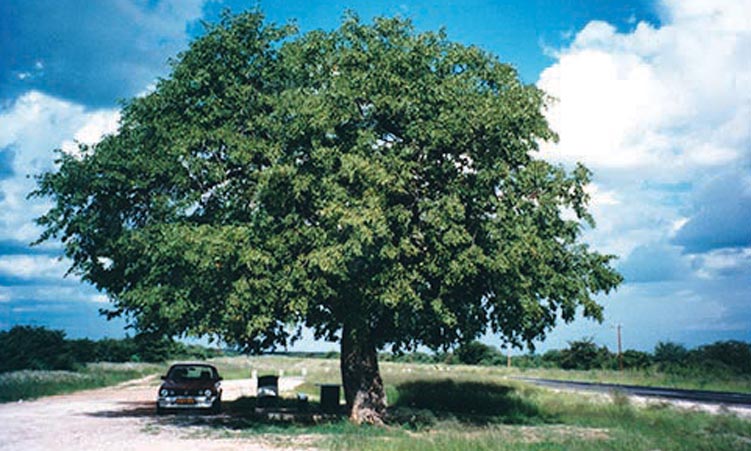
Illegal harvesting of mopane trees for firewood is raising concerns in parts of the Oshana and Omusati regions, with officials warning of damage to forest resources.
“The problem is particularly evident in parts of the Uuvudhiya constituency, as well as in areas such as Onkani, Efo-etalala and surrounding communities in the Otamanzi constituency in the Omusati region,” Akwilinus Hinananye, who is a forester in the Ministry of Environment and Tourism and based at Engombe Growth Point in the Uuvudhiya constituency, told The Namibian on Wednesday.
“The scale and manner in which some individuals are harvesting mopane trees is becoming a matter of concern for forest conservation and sustainable natural resource management,” Hinananye said.
He said the most concerning practice is the complete uprooting of live mopane trees, including their roots and stump for use as firewood.
Hinananye said unlike the selective harvesting of branches or dead wood, uprooting an entire live plant destroys the plant completely and significantly reduces its ability to regenerate.
When this practice is repeated over large areas and over a long period, it can gradually degrade the forest and reduce the ability of the mopane shrublands to recover, he said.
Hinananye said the illegal harvesting of forest resources is not limited to household consumption as in most areas. He said people taking cattle to cattle posts (cattle herders) are involved in cutting and uprooting mopane trees and selling the firewood.
“Most of the buyers come from areas where firewood is increasingly scarce, creating a demand that encourages further harvesting. This situation creates a chain of unsustainable use. It has been noted that the transportation of illegally harvested firewood is also reportedly taking place during weekends and at night, when forestry officials are generally not conducting normal working-hour patrols,” Hinananye said.
This, he said, makes detection and enforcement more difficult and allows products to move from harvested areas to areas of demand.
The sustainable management and use of Namibia’s forest resources is governed by the Forest Act 12 of 2004 as amended, which provides a legal framework for the protection, management and sustainable use of forest resources.
Hinananye said mopane shrublands matter because they provide more than firewood.
They form an important part of the natural environment and support the livelihoods of rural communities, he added.
“Forests and woodlands provide host habitat for the famous mopane worms, fodder for livestock and wildlife, habitat and shelter for birds, insects and other wildlife, fuel-food and other products for communities, food and other non-timber forest products, protection of soil from erosion and degradation, carbon storage and climate regulation,” Hinananye said.
He said addressing illegal mopane harvesting should not be viewed as the responsibility of the directorate of forestry alone.
Communities living within and around forest areas have an important role to play in protecting natural resources, he added.
Hinananye said buying illegally harvested firewood contributes directly to the demand that drives the destruction of the forest and, therefore, buyers should be severely punished as the driving force behind the syndicate.
“Buying forest products without knowing their source can unintentionally encourage illegal harvesting,” he added.
Uuvudhiya constituency councillor Timoteus Shivute says his office has not been notified of this matter.
He says such illegal activity in the constituency highlights the urgent need for a permanent police station at Eengombe to fight crime such as this, as well as cattle theft and housebreaking, which are also major concerns in his constituency.