19 August 2026, Windhoek.
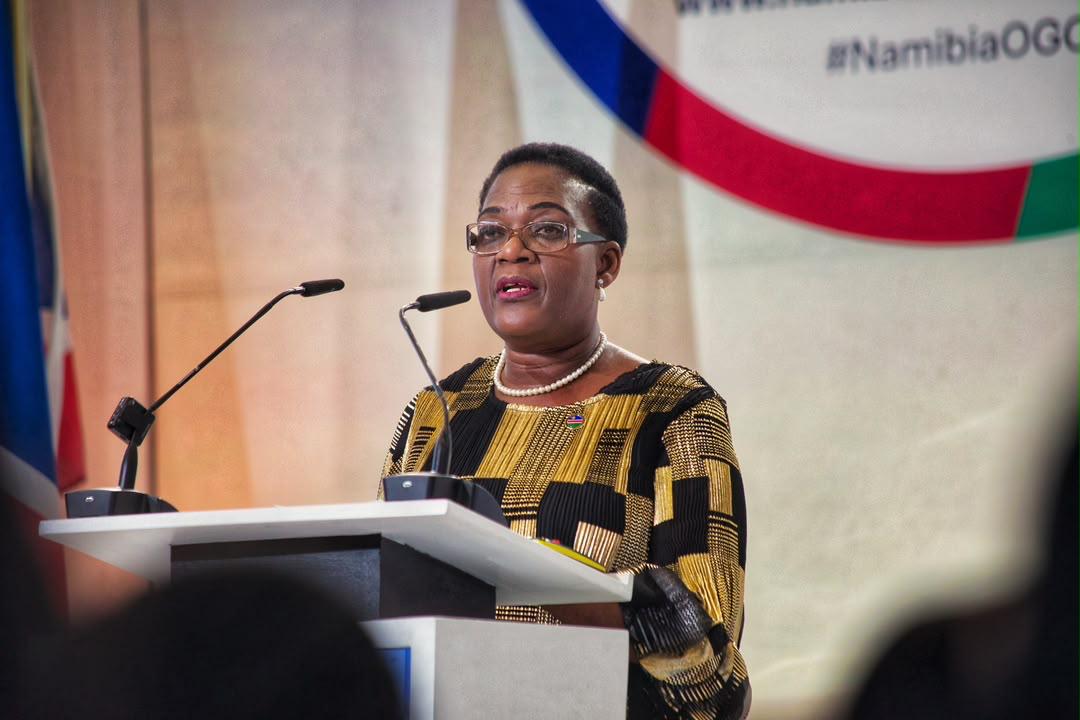
Statement by Hon. Kornelia Shilunga, Special Advisor and Head of the Upstream Petroleum Unit, at the Namibia Oil and Gas Conference 2026.
Director of Ceremonies
YOUR EXCELLENCY Lucia Witbooi, Vice-President of the Republic of Namibia,
HONOURABLE Modestus Amutse, Minister of Industries, Mines and Energy, Republic of Namibia,
HONOURABLE Ministers and Deputy Ministers in our presence today,
Members of Parliament
HIS EXCELLENCY Dr Philip Mshelbila, Secretary General, Gas Exporting Countries Forum,
Honourable Shafishuna Nujoma Jr., Governor of the Khomas Region and other Governors present here today.
Your Excellencies, Members of the Diplomatic Corps
Your Worship Councillor Ndeshihafela Larandja, Major of the City of Windhoek and other Majors present today
Mrs Victoria Sibeya, Managing Director, National Petroleum Corporation of Namibia,
Mr Jason Kasuto, Chairman, Economic Association of Namibia and Managing Director, Monasa Advisory & Associates
Mrs Julia Muetudhana, Acting Chief Executive Officer, Namibian Investment Promotion and Development Board (NIPDB)
Dr Clemens von Doderer, Resident Representative of the Hanns Seidel Foundation Namibia co-host partner
Mr. Travis Smithard, Chief Executive Officer of Rhino Resources
Captains of industry, esteemed investors, sponsors and exhibitors
Distinguished speakers, delegates, colleagues, members of the media, ladies and gentlemen,
Good morning,
It gives me a great pleasure to speak to you on this occasion of the Namibia Oil and Gas Conference 2026. I would like to thank, Economic Association of Namibia, NIPDB for organizing this important Oil and Gas forum.
I would also like to thank you all for your attendance and special thanks to those who are visiting us from different parts of the world, especially those who are visiting Namibia for the first time.
Namibia stands at an important moment in the development of its petroleum industry. Over the past few years, significant discoveries in the Orange Basin have fundamentally changed the outlook for our upstream petroleum sector. These discoveries have created new opportunities, but they have also placed on us an important responsibility: to ensure that the development of these resources translates into sustainable economic opportunities for Namibia and its people.
I believe this forum offers us all a unique opportunity to share ideas on how we can play our various roles in enabling our country to leverage its petroleum resources to attain socio – economic development while providing energy to the world.
As Government, our role is therefore not only to facilitate exploration and production. Our responsibility is to establish the policy, legislative and institutional environment that provides certainty to investors, protects the interests of the Namibian people and supports the development of a competitive national petroleum industry.
I have found the theme of this year’s conference “From Decision to Dividend: Making Namibia’s Oil Work for Namibians” to be fitting as Namibia moves towards Oil and Gas development and production phases.
In this regard, I would like to highlight several key areas of work currently receiving attention within the Upstream Petroleum Unit.
The development of major petroleum projects.
Government continues to engage with investors and operators on the development of Namibia’s significant discoveries. This includes ongoing discussions for the final investment decision relating to the Venus development, operated by TotalEnergies, and the broader work required to move major discoveries from exploration towards commercial development.
These engagements are important because project development requires capital, technology, infrastructure, skills, regulatory certainty and strong partnerships between Government and industry.
Government’s role is to establish a predictable, transparent and competitive regulatory environment that enables responsible investment while ensuring that Namibia receives a fair and sustainable benefit from its natural resources.
Industry, on the other hand, must bring the capital, technology, technical expertise and project execution capability necessary to develop these resources safely, efficiently and responsibly.
The objective is therefore not Government versus industry. It is Government and industry working together to create national value while protecting the national interest. More than the presence of resources underground.
Our licensing regime.
We are continuing to assess and strengthen Namibia’s petroleum licensing framework to ensure that it remains competitive, transparent and fit for purpose.
As exploration activity increases, Government is also considering the management and future issuance of petroleum exploration opportunities and blocks.
Our approach is intended to provide investors with greater clarity and certainty, while ensuring that Namibia retains the ability to manage its petroleum resources in the national interest.
We want Namibia to be viewed as a jurisdiction where investors understand the rules, where those rules are applied consistently and where investment decisions can be made with confidence.
Legislative reform.
The Government is also progressing work on the review of the Petroleum legal and fiscal regime.
As our petroleum sector develops, our legislative framework must evolve with it. The experiences gained from recent exploration activities, the scale of the discoveries made and the complexity of future developments require us to continuously assess whether our laws remain adequate.
The objective of these reforms is to strengthen the regulatory framework, improve clarity where necessary and ensure that our legislation supports responsible petroleum development while safeguarding the national interest.
Local content.
We recognise that the development of Namibia’s petroleum resources must create meaningful opportunities for Namibians.
Am happy to confirm that the National Upstream Local Content Policy has been approved by Cabinet. The objective is to provide clear policy direction on local content, which will lead to establishment of clear and practical framework that increases Namibian participation across the petroleum value chain, including through the development of local businesses, employment, skills transfer, technology transfer and access to procurement opportunities.
Local content must, however, go beyond participation for its own sake. We want to see Namibian companies developing the capacity, expertise and financial strength to compete within the petroleum industry and, ultimately, beyond it.
The successful implementation of this Policy will require strong collaboration among all stakeholders, including Government institutions, petroleum operators, contractors, local businesses, civil society and communities. It will also require a shared commitment to transparency, accountability, and adherence to international best practices.
From Petroleum Investment to Industrial Development
If we simply extract crude oil and export it, we will have captured only a portion of the value contained in our petroleum resources. Our ambition must be greater.
We must explore opportunities for refining, petrochemicals, gas-to-power, logistics, fabrication, marine services, storage, engineering and other associated industries.
The petroleum sector should become an anchor for wider industrial development.
This is precisely the direction envisaged under NDP6: using natural resources as a platform for economic diversification, industrialization, value addition and employment creation, rather than perpetuating an economy based primarily on the export of raw resources.
The President has been clear that the oil and gas sector has the potential to transform Namibia’s economy, but that its development must contribute to energy security, employment, local capacity and sustainable growth.
- Making Namibia an attractive oil and gas destination and welcoming new entrance and frontier – Basin Investment
Attracting investment requires more than geological potential and must offer investors a combination of resource potential, regulatory certainty, fiscal stability, efficient institutions, infrastructure and a skilled workforce.
We are therefore looking at the broader investment environment and how Government can remove unnecessary barriers to investment while maintaining appropriate safeguards.
We want Namibia to be recognised not simply as a country with oil and gas resources, but as a credible, competitive and responsible petroleum jurisdiction.
Secondly, The session on “Independent Entrants: Unlocking Value in Frontier Basins” is particularly relevant.
Namibia remains a frontier petroleum province with significant opportunities for further exploration and development. We welcome investors who are prepared to bring not only financial capital, but also technology, expertise, innovation and long-term commitment. At the same time, investment must be undertaken within a framework that provides certainty to investors while safeguarding Namibia’s national interests.
Our message is therefore straightforward: Namibia is open for responsible investment. Namibia is open for partnership. And Namibia is open for innovation. But investment must contribute to the broader national development agenda.
- Unlocking the potential of the Walvis Bay and Lüderitz basins.
The development of Namibia’s petroleum sector must also be viewed in the context of our broader economic infrastructure.
Our ports, logistics networks, supply bases, roads, airports and other supporting infrastructure will play an important role in enabling offshore petroleum development.
Walvis Bay and Lüderitz, in particular, have the potential to become important service and logistics hubs for the petroleum industry.
Government therefore has an important role to play in ensuring that infrastructure development keeps pace with the opportunities emerging from the upstream sector.
Ladies and gentlemen,
Namibia’s petroleum story is still being written.
From First Oil to Lasting Dividend
As we look towards first oil, we must also look beyond first oil.
The first barrel will be an important milestone, but it cannot be the destination.
The real dividend must be reflected in jobs, stronger Namibian businesses, improved infrastructure, technology transfer, skills development, increased government revenues, industrial growth and improved opportunities for future generations.
We must also ensure that petroleum revenues are managed prudently and transparently so that the benefits of today’s resources extend beyond the period of production.
This requires strong institutions, sound governance, environmental responsibility, accountability and long-term planning.
As regulators and policymakers, we have a responsibility to ensure that the development of Namibia’s petroleum resources is undertaken in a manner that is safe, responsible, commercially viable and nationally beneficial.
Distinguished Guests,
The question before us is no longer simply “Does Namibia have oil?” The more important question is:
“What will Namibia do with the opportunity that oil and gas presents?”
Our answer must be ambitious.
We must use this opportunity to build an economy that is more diversified, more industrialized, more inclusive and more competitive.
We must ensure that Namibians are not merely observers of the petroleum industry, but participants, owners, employees, entrepreneurs, professionals and beneficiaries.
And we must ensure that the decisions we make today create value not only for the present generation, but for generations of Namibians yet to come.
The journey from Decision to Dividend requires partnership, discipline, transparency, competence and a shared national purpose.
Let us therefore work together – Government, industry, investors, Namibian businesses, workers, academia and communities, to ensure that Namibia’s petroleum resources become a catalyst for economic transformation, industrialization, employment creation and shared prosperity.
The opportunity is before us.
The decisions are ours to make.
And the dividend must belong to Namibia. I thank you.
I thank you.