





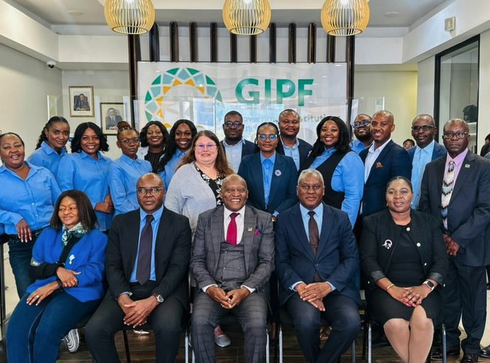
Prime minister Elijah Ngurare has called on the Government Institutions Pension Fund (GIPF) to protect its reputation by investing more of its funds in Namibia.
This comes as some of the fund’s investments outside the country have damaged its image and public confidence, he says.
“As the GIPF, you have a huge brand to protect, a brand that has been blemished in the media on investments outside the country that just disappeared into thin air,” Ngurare said during the launch of the GIPF’s 2026-2029 strategic plan in Windhoek on Wednesday.
He said the GIPF needs to change public perceptions by making visible investments that benefit communities across the country.
Ngurare mentioned Concordia College in Windhoek, which was built by the former Consolidated Diamond Mines, as an example of an investment that continues to benefit Namibians many years later.
This call follows several high-profile investment losses linked to the fund.
In November last year, the GIPF reported an impairment loss of N$815 million from its investment in the South African-based Signal Structured Finance Fund following a tax claim lodged by the South African Revenue Service against the fund.
The loss attracted public criticism.
At the time, the GIPF said the long-term impact remained limited and that the loss was below its materiality threshold.
The loss added to concerns that date back to 2019 when the Office of the Prosecutor General said it was unable to trace more than N$600 million lost through the now-defunct Development Capital Portfolio (DCP).
The GIPF financed several local companies through the DCP – some of which had little or no business track record.
The programme operated from 1996 to 2006.
‘BETWEEN A ROCK AND A HARD PLACE’
Economist Mally Likukela says investing more locally could support economic growth, but Namibia first needs enough quality investment opportunities.
“The question is not whether the GIPF wants to invest locally. The question is: Do we have quality assets in which the fund can invest locally?” he asks.
Likukela says the government has a responsibility to create an environment that attracts investment and produces projects capable of accommodating a fund as large as the GIPF.
“What stops the GIPF from investing locally is the quality and availability of assets,” he says.
Likukela says the GIPF must balance local development goals with its obligation to safeguard pensioners’ money.
He says public confidence in the fund must be addressed through accountability and transparency.
“If money keeps disappearing and the explanations are not sufficient, obviously people will have questions. I agree with the prime minister on that, but I also still think the GIPF is really caught between a rock and a hard place.”
THREE-YEAR PLAN
The strategic plan launched on Wednesday was developed after assessing economic conditions, market developments, risks and stakeholder needs.
GIPF board chairperson Penda Ithindi says the strategy focuses on the long-term sustainability of the fund, improved service delivery, stronger governance, organisational capacity and socio-economic impact.
The pension fund currently manages assets worth N$213.2 billion and recorded a 15% net investment return over the three years ending 31 January.
GIPF chief executive Martin Inkumbi says the strategy reinforces responsible governance, prudent investment management and sustainable growth.
The fund paid more than N$30 billion in benefits over the past five years, committed N$2.7 billion to renewable energy projects and N$17.2 billion to infrastructure development.
The fund also supported the construction of more than 8 000 houses, serviced over 5 000 plots, and helped create 10 900 jobs.
The fund yesterday mentioned the official opening of Goreangab Mall, a N$300-million retail development backed through its investment in Oryx Property Limited.
The GIPF holds a 29.46% shareholding in Oryx, which fully funded the development and retains ownership of the mall.
The project was developed jointly by Oryx Property Limited and Safland Property Group.
The fund has also committed N$800 million under a core plus commercial property mandate to Oryx to support similar retail and commercial developments across the country.