





But IPPR warns influence runs far deeper
Namibia’s debt to China is relatively small, but Beijing’s influence over the country’s economy is growing rapidly through ownership of assets, investments in key industries and dominance in sectors critical to the country’s future.
This is contained a new report by the Institute for Public Policy Research (IPPR).
The report argues that while concerns over China’s so-called “debt-trap diplomacy” have dominated international debate, Namibia presents a different picture.
Rather than relying on government lending, China has entrenched itself through equity ownership, foreign direct investment (FDI), infrastructure development and control of industries central to Namibia’s economic growth.
Government figures released by the Ministry of Finance in January this year show Namibia owed Chinese lenders about N$1.6 billion as of the end of January 2026.
This is just 8.1% of the country’s N$19.6 billion foreign-denominated debt.
The report says those figures show Namibia’s sovereign exposure to China remains low compared to several African countries.
“The terms of these loans do not appear onerous,” the report states.
This is because several loans dating back to the early 1990s are interest-free, while newer infrastructure loans carry interest rates of just 2%.
However, the IPPR argues that focusing on sovereign debt alone obscures where China’s real influence lies.
FROM LOANS TO OWNERSHIP
Namibia’s experience differs from countries such as Zambia, which defaulted on its external debt in 2020 and later entered restructuring negotiations, and Angola, which accumulated billions of dollars in Chinese-backed financing linked to oil revenues.
Unlike several African countries, Namibia has not relied heavily on Chinese sovereign borrowing.
“Namibia’s sovereign exposure to Chinese lenders remains relatively modest,” the report states.
However, the IPPR argues that looking only at government debt does not provide the full picture of China’s economic role in Namibia.
The report says the relationship has expanded beyond traditional lending into investment and ownership.
One of the clearest examples is Husab Mine, where state-owned mining company Epangelo borrowed US$259 million (about N$4.27 billion) from the China Development Bank and Taurus Mineral to finance its 10% stake in the operation.
Another example is the recently launched Erongo Sunam Desalination Project, where Chinese state-owned China General Nuclear Power Group (CGN) owns 70% of the project while the Namibia Water Corporation holds the remaining 30%.
IPPR describes this model as “financing through ownership”, saying it has become a defining characteristic of China’s engagement with Namibia.
MINING DOMINANCE
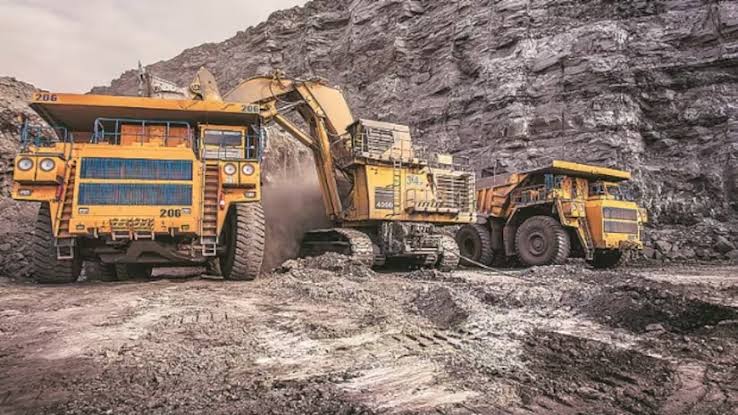
China’s presence is most dominant in mining.
The report says Chinese companies hold majority stakes in both the Husab and Rössing uranium mines, while also owning a 25% shareholding in Langer Heinrich.
Construction of the Twin Hills gold project is also underway under 100% Chinese ownership.
Together, these investments give Chinese companies considerable influence over some of Namibia’s most valuable mineral resources.
FROM MINES TO INFRASTRUCTURE
The report says China’s presence now stretches far beyond mining.
Chinese contractors have become major players in infrastructure development, participating in projects including the Walvis Bay Container Terminal, national road upgrades and renewable energy developments.
Chinese firms are also increasingly involved in electricity generation projects while supplying equipment used across Namibia’s renewable energy sector.
The report further says the country’s information and communication technology infrastructure relies heavily on Chinese-made equipment.
NAMIBIA’S BIGGEST INVESTOR
The report shows China has overtaken traditional investment partners to become Namibia’s largest foreign investor.
According to Bank of Namibia statistics, Chinese investment accounts for 32.4% of Namibia’s total FDI stock, well ahead of South Africa at 20.7% and the United Kingdom at 6.1%.
Unlike sovereign debt, these investments give Chinese companies long-term commercial influence across strategic sectors of the economy.
GROWING DEPENDENCE
The IPPR says the concentration of Chinese investment raises questions about Namibia’s long-term economic resilience.
China purchased more than 91% of Namibia’s exports to China in 2025, almost entirely uranium, making Beijing a critical export market for one of the country’s biggest industries.
At the same time, the report warns that China’s production of between 60% and 70% of the world’s laboratory-grown diamonds poses a long-term challenge to Namibia’s natural diamond sector.
The report also highlights concerns within telecommunications.
State-owned mobile operator Mobile Telecommunications Limited has acknowledged an overreliance on Huawei for critical infrastructure, a situation the report says reduces Namibia’s bargaining power and could increase vulnerability should supply chains or diplomatic relations be disrupted.
“China is an important market for Namibia’s natural resources.” However, the report warns that closer economic ties also create vulnerabilities.
“Whether it is ‘win-win’ we leave to readers to judge,” the IPPR says.