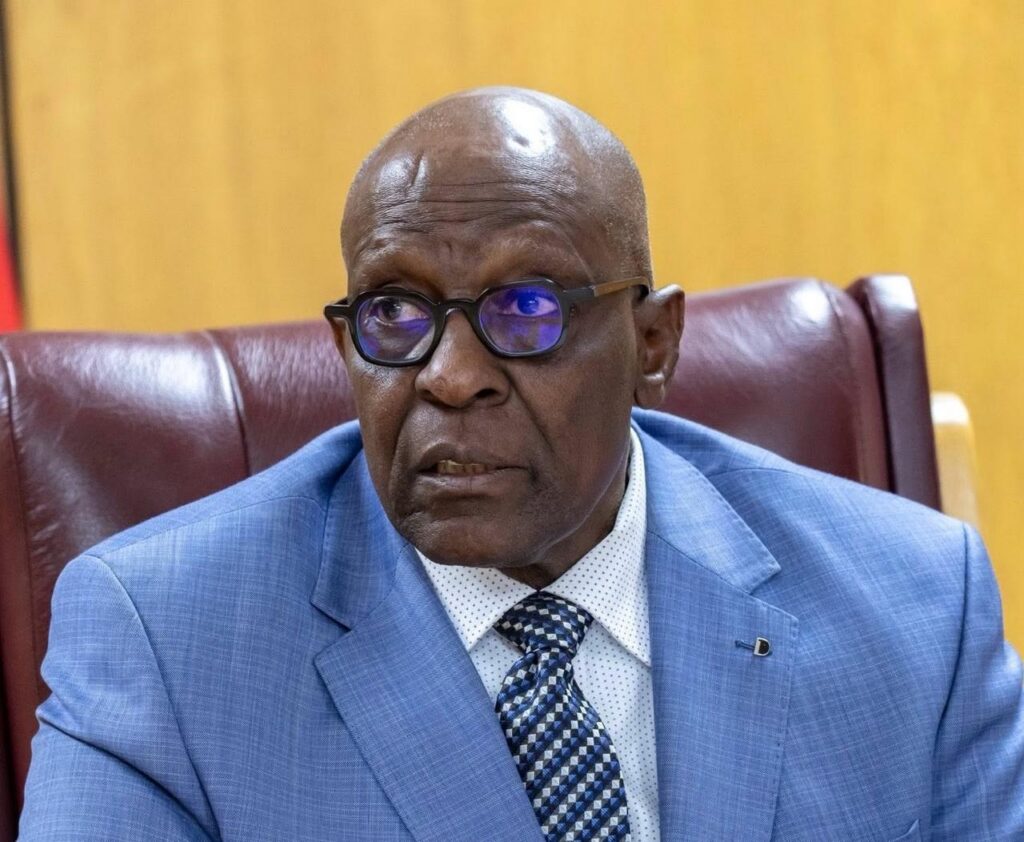
National Planning Commission (NPC) director general Kaire Mbuende says slower-than-expected economic growth and lower government revenue have reduced the money available for development projects across Namibia.
Mbuende was responding during a recent high-level engagement at Oshakati to concerns raised by heads of local authorities, who say some towns continue to receive less funding for capital projects than others, leaving them with growing development gaps.
He said the NPC does not decide which projects receive funding in each town, adding that the commission allocates money to government ministries, which then decide how to distribute it to regions, towns and individual projects.
“We allocate money to ministries such as health, education and home affairs. The ministries then decide how to divide those funds among their different projects,” he said.
Mbuende said the government had expected the Namibia Revenue Agency to collect more tax revenue than it did, adding that revenue fell short because the economy did not perform as well as expected.
Mbuende said the government had expected oil and gas production to begin sooner, but the projects have taken longer than anticipated.
He said oil and gas are expected to boost the economy once production starts.
“We believe the economy is on an upward path, and if growth is stronger than current projections, the government will have more resources for development,” he said.
Mbuende said the government cannot rely only on treasury funding to drive development.
He said state-owned enterprises should use their balance sheets to raise money for projects, while local authorities should make greater use of public-private partnerships.
He said towns such as Oshakati, Windhoek and Walvis Bay have good opportunities to attract private investment for development.
“We cannot postpone development simply because treasury funding is limited. We have to be creative and find other sources of financing,” he said.
Mbuende said delays in implementing projects remain one of the biggest challenges. According to him, procurement processes can take up to six months before a consultant is appointed, followed by several more months before work begins.
“The money is sitting in the bank, but projects are not moving because of lengthy procedures. We need to speed up implementation because the current pace of development does not match the resources we already have,” he said.
He called on public servants to act with greater urgency so that development projects can be completed faster and communities can benefit from the available funds.