





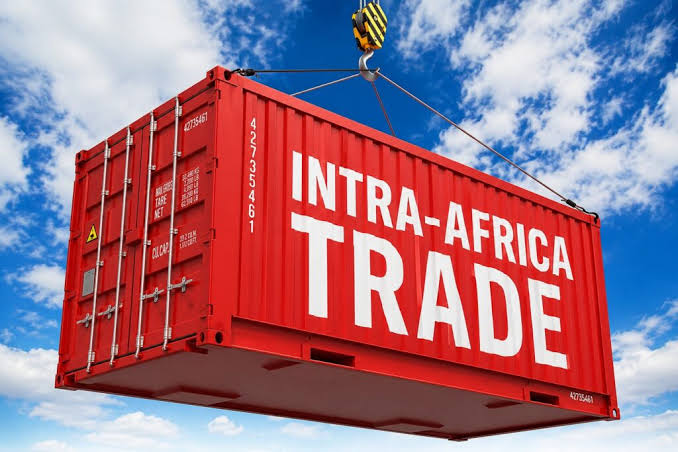
Namibia is trading billions of dollars with Africa, but much of that trade is still flowing through old regional arrangements and not the African Continental Free Trade Area (AfCFTA).
The latest trade statistics from the Namibia Statistics Agency (NSA) shows that Namibia exported N$6.2 billion worth of goods to the rest of Africa in July, accounting for 58% of its total exports and imported N$7.3 billion, resulting in a trade deficit of N$1.2 billion.
But despite the headline figure, the data does not show how much of that trade is being conducted under the AfCFTA.
Instead, Namibia’s trade remains heavily concentrated in markets where it already has preferential access through long-standing regional agreements, particularly the Southern African Customs Union (Sacu) and the Southern African Development Community (SADC).
Sacu alone absorbed 37.8% of Namibia’s total exports in July, while SADC markets outside Sacu accounted for another 9.8%.
Together, the two regional groupings accounted for 57.6% of Namibia’s exports leaving just 0.4% of exports to the rest of Africa.
Namibia’s biggest African export destinations in July were South Africa, Zambia, Botswana, the Democratic Republic of Congo and Mozambique which are all markets in which regional trade arrangements already play a significant role.
According to the NSA these agreements give Namibia “reciprocal preferential access to regional and global markets”, the report says, allowing certain commodities to receive preferential treatment.
The country’s exports to Sacu were dominated by non-monetary gold, diamonds and petroleum oils, while the SADC basket outside Sacu consisted mainly of fish, sulphur and unroasted iron pyrites and fertilisers.
The figures also reveal a sizeable dependence on Africa for imports.
Namibia imported N$7.3 billion worth of goods from the continent in July, representing 44.4% of total imports, producing an intra-African trade deficit of about N$1.2 billion.
“Intra-African trade is vital for promoting economic diversification, industrialisation, and resilience by reducing dependence on external markets,” says the NSA.
The Common Market for Eastern and Southern Africa (Comesa) accounted for 17.9% of Namibia’s exports and 9.6% of imports during the month, while Sacu remained the largest source of imports at 34.2%.
The AfCFTA was designed to connect over 1.4 billion people with a combined gross domestic product (GDP) of roughly US$3.4 trillion (approximately N$54 trillion) across 54 countries in Africa.
It aims to gradually remove tariffs on 90% to 97% of goods to increase intra-African trade.
The AfCFTA’s longer-term test for Namibia will therefore be whether it can help the country move beyond established regional trading corridors and open new markets for Namibian products.
Note: An exchange rate of US$1 = N$16.03 was used as per the Bank of Namibia exchange rate on Tuesday.
Email: shania@namibian.com.na