NAMIBIA is one of the world’s top producers of uranium, ranking third globally behind Kazakhstan and Canada.
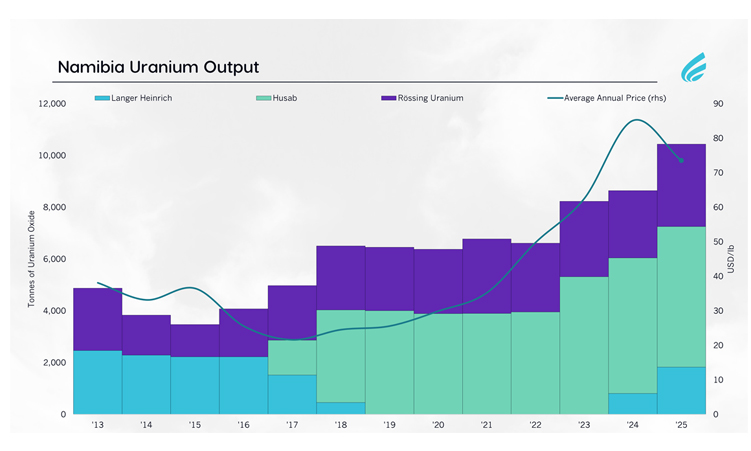
In 2024, the country accounted for 12.18% of the world’s uranium output.
Namibia has three major uranium mines: The Langer Heinrich mine is owned by Australia’s Paladin Energy, the Husab mine is owned by China General Nuclear Power and operated by Swakop Uranium, and the Rössing mine is majority-owned by China National Uranium Corporation.
The Namibian government also holds minority stakes in two of the mines with 10% of Husab through the state-owned Epangelo Mining Company and 3% of Rössing.
Uranium is a vital source of income for the country. Uranium ore and concentrates brought in N$28.1 billion in exports in 2025, making up 31% of total export revenue.
This reflects both increased output and the recovery of global uranium prices, with the price of uranium rising from an annual average of around US$30 per pound (/lb) in 2020 to around US$74/lb in 2025, and currently sitting at US$85.90/lb.
Price is very important in this industry.
Uranium, the raw material used to fuel nuclear power stations, becomes uneconomical to mine when prices are low, which can force operations to close or be placed on care and maintenance, a holding state in which a mine halts production but is kept ready to restart.
This is what happened to Langer Heinrich in 2018 – once prices recovered, the mine resumed operations in March 2024.
Uranium could become an even bigger player in the Namibian economy in the years ahead, with the Etango, Tumas and Norasa mines in the pipeline and growing global interest in nuclear power as an alternative energy source.
– Ida Williams is an economist at Cirrus.