THE NAME Aminius, which is actually /Nami #Nus, a Khoekhoegowab (spoken by Nama people) word meaning ‘Ostrich Farm’ (volstruisplaas in Afrikaans), tells a story that many people in the Omaheke region may no longer remember.
Place names often preserve the history of a community. In the case of /Nami #Nus, it serves as a reminder of a time when ostriches roamed freely across this beautiful landscape.
Sadly, today’s reality stands in stark contrast to the history reflected in the name.
During my father’s first visit to /Nami #Nus in the 1970s, he witnessed a disturbing sight: piles of dead ostriches lying alongside the road. Many were killed solely for their skins, with the rest left to rot.
It was an example of short-term exploitation with little regard for sustainability or future generations. Today, one would be fortunate to spot a single ostrich in an area that once carried their name.
The disappearance of these birds raises important questions about how communities use and manage natural resources.
Had there been greater awareness of sustainable resource management at the time, perhaps future generations would still enjoy the sight of ostriches thriving in their natural habitat.
The story does not end there.
SCARCITY AND SUCCESS
My mother often recalls her school days at /Nami #Nus when mornings brought a breathtaking spectacle: large herds of springbok would gather and dance across the salt pan, creating a scene of natural beauty that left a lasting impression on those who witnessed it.
Such memories may sound almost unbelievable to younger generations. The springbok, like the ostrich, have largely disappeared from the area.
When wildlife becomes scarce, every sighting becomes vulnerable. Instead of being seen as a long-term asset, animals are often viewed as an immediate resource to be harvested.
Yet Namibia’s success with community-based conservancies demonstrates that wildlife can generate sustainable economic benefits through tourism, conservation incentives, and responsible resource management.
Had similar approaches been adopted earlier at /Nami #Nus, the community might have benefited economically while preserving its natural heritage. Today, a new chapter is unfolding in /Nami #Nus through the growing charcoal, and firewood industries.
These activities create jobs, generate income, and contribute to local livelihoods. In a region where economic opportunities are often limited, such enterprises are welcome and necessary.
However, history teaches us an important lesson: economic development should not come at the expense of sustainability.
Trees are far more than a source of charcoal and firewood. They provide shade for people and livestock, food for wildlife, protection against soil erosion, and support for biodiversity.
They contribute to rainfall patterns, store carbon, and help maintain the ecological balance upon which future generations will depend.
If harvesting is not managed responsibly, we risk repeating the same mistakes that contributed to ostriches and springbok disappearing.
LIVING LESSONS
Future generations may one day ask why we failed to protect the natural resources entrusted to us.
Sustainability begins with taking only what we need today while ensuring that enough remains for tomorrow.
In communal areas, sustainability cannot be achieved through policies alone. It must become part of everyday life and be passed on from one generation to the next.
Parents and elders have a critical role to play. Children learn more from what they observe than from what they are told.
When young people see adults protecting trees, using resources responsibly, avoiding waste, and respecting wildlife, they are more likely to adopt those values themselves.
The concept of a circular economy offers useful lessons for communal communities. Instead of following a “take, use, and discard” approach, communities can seek ways to reuse, recycle and regenerate resources.
Livestock manure can be used to improve soil fertility. Organic waste can be composted for gardens.
Rainwater can be harvested and stored. Indigenous trees can be replanted to replace those harvested. Grazing can be managed to allow vegetation to recover.
Community gardens can improve food security while reducing pressure on natural ecosystems.
Equally important is strengthening environmental education in schools and community programmes. Young people should understand that sustainability is not merely an environmental issue. It is an economic and social necessity.
CHOICES MATTER
Healthy ecosystems support livelihoods, food security and long-term prosperity.
The history of /Nami #Nus provides a powerful lesson. The disappearance of ostriches and springbok reminds us that natural resources are not unlimited.
The growth of the firewood industry presents both an opportunity and a responsibility.
The choices we make today will determine whether future generations inherit a thriving landscape or merely stories of what once existed.
As we reflect on the meaning of the name /Nami #Nus, ‘Ostrich Farm’, let us ensure that future generations inherit more than memories.
Let us build communities where economic development and environmental stewardship go hand in hand, where sustainability is practised daily, and where the natural wealth of our communal areas continues to support life for generations to come.
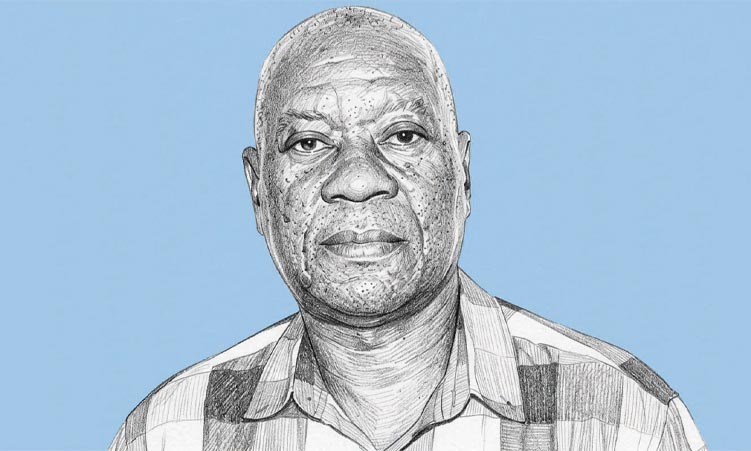
Professor Colin Stanley is the deputy vice chancellor: research and technovation at the Namibia University of Science and Technology (Nust). The opinions expressed in this article are solely those of the author.