






Traces of Violence’, a visual essay and art exhibition exploring the 1904-08 German colonial genocide against the Ovaherero and Nama people by artist Marcelo Brodsky, is being featured at this year’s Nama Cultural Festival to commemorate and remember the victims and descendants of the genocide.
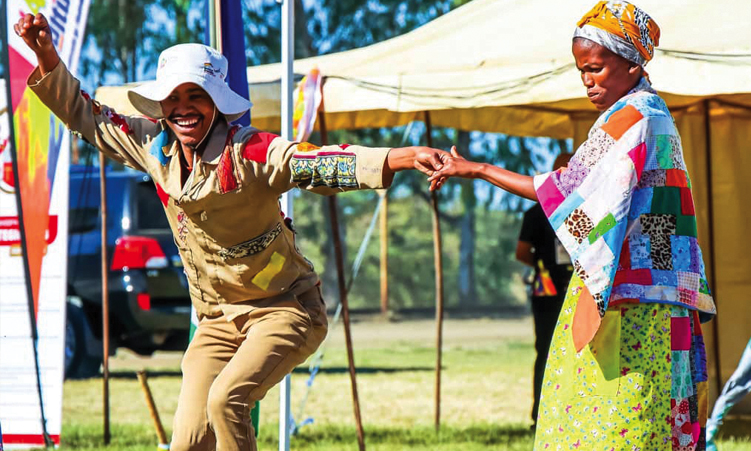
The 7th Annual Nama Cultural Festival promises a vibrant celebration of heritage, identity and unity among the Nama people and is running from 28 to 30 May, with the official opening taking place today.
Brodsky, an artist and human rights activist, says the exhibition depicts the importance of art in the social debate and its ability to influence public opinion and attract media attention.
He says the subject of human rights violations was and is a central part of his art.
“The photographs collected in archives, agencies and universities for two years and used for this visual essay and exhibition were taken by the colonists or their helpers such as soldiers, missionaries, journalists and so forth.
They are irrefutable evidence of the brutal violence of the perpetrators,” says the artist.
Based on advice by scholar Mark Sealy not to use these images as they are, since doing so he would be replicating the violence that was enacted on the victims, Brodsky says his solution was to place text in the pictures in which the photographers, perpetrators, soldiers and colonists declare what they were doing in their own words.
The visual essay and exhibition were developed in collaboration with the Nama Traditional Leaders Association (NTLA) and the European Centre for Constitutional and Human Rights based in Berlin.
It uses archival photographs overlaid with texts, paintings and drawings to re-narrate colonial suppression and atrocities.
NTLA secretary general Lazarus Kairabeb says the exhibition utilises advanced 3D spatial modelling done in conjunction with research group Forensic Architecture to document the colonial-era atrocities.
Kairabeb says Forensic Architecture’s mapping focuses extensively on historical sites like Shark Island, the former concentration camp at Lüderitz where many Nama people were imprisoned, used for forced labour and subjected to horrific conditions.
He says the 1904-08 genocide is deemed as the first genocide in the 20th century, and, therefore, cannot just be forgotten.
“The most essential part for us is the voices of our people that are speaking for themselves and are incorporated in the oral histories, lived knowledge and demands for intergenerational justice of descendant communities”.
Festival chairperson Dirk Eigub says educating the nation about the history of the Nama people remains one of the festival’s key pillars, creating an important platform for dialogue, reflection and collective memory.
Eigub says this year’s event is being held under the theme ‘Building Unified Systems for Cultural Continuity’, reflecting a focus on unity and collective responsibility in preserving culture.
He says the festival was born out of a need to safeguard the Nama people’s heritage amid growing concerns over the loss of language, identity and traditions.
“This festival is about creating a space where Nama culture can be celebrated in meaningful and creative ways, while also addressing the challenges facing our identity and traditions,” Eigub says.
Featured on the programme are the launch of the official Nama anthem, an interactive Khoekhoegowab language booth and a new Khoekhoegowab 30-second game aimed at engaging younger generations.