Grade 1 teachers are urging parents to enrol their children in mother-tongue schools and swap screen time for play to boost early academic development.
Namibia’s official education policy makes provision for pupils in pre-primary school to Grade 3 to be taught in their mother tongue or the predominant local community language.
This is the case even though English was introduced as the official language of instruction in schools since independence, to promote unity and facilitate communication in a country with linguistic diversity.
Grade 1 teacher at Keetmanshoop Primary School Loretta Dreyer says the policy’s provision should be encouraged more as it ensures parents give their children the best chance from the onset of their education journey to achieve academic success.
“This is a nationwide crisis. Parents want to enrol their children in English schools while they know they only speak their mother tongue at home. Why should a parent feel bad about sending their child to a Khoekhoegowab, Oshiwambo or Otjiherero-speaking school?
“We are delaying the development of these children and denying them due performance academically. Parents, take your child to a school where they understand the language spoken in the classroom,” Dreyer says.
She says pupils at non-mother tongue schools often spend the first term making an effort to understand the language, while the other pupils progress further with, for example, recognising their names, being able to write them, and counting to at least 20.
Dreyer says children should acquire these skills on pre-primary level already, but assessments reveal many start Grade 1 without pre-primary preparation.
Apart from learning to read and write their names and count to 20, children should know colours and shapes so that Grade 1 teachers can continue to teach sounds, sight words, sentence formation, and basic addition and subtraction.
“Imagine a child without this foundation. By the time this child learns what is ‘good morning’, ‘please sit down’, and ‘take out your books’, the class is way ahead,” Dreyer says.
She says while screen time from laptops, tablets and phones have improved children’s spoken English, it is a great inhibitor of pupils’ attention span and the development of their motor skills.
Dreyer says many of the videos children watch on YouTube and TikTok are only 20 to 30 seconds long, while a school lesson at Grade 1 is at least 10 to 20 minutes long.
“Children can no longer keep concentrating in classrooms,” she says.
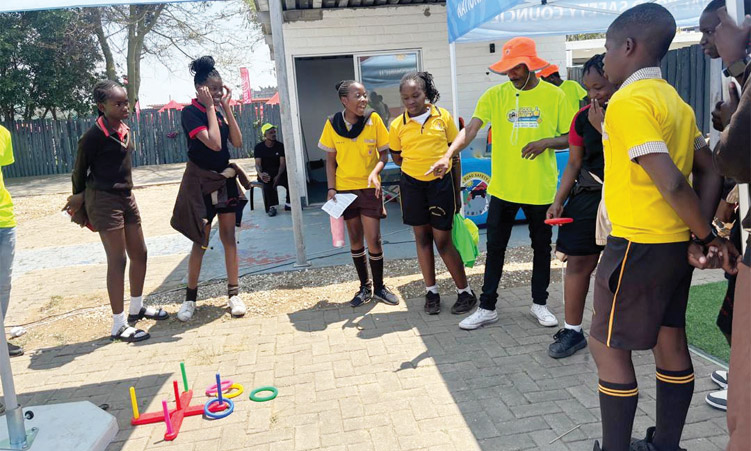
Cecilly Allen, a Grade 1 teacher at Minna Sachs Primary School, says parents should allow children to play more, draw and do crafts, as well as sing and dance.
She asserts that children who play more have better motor skills due to movement and have better handwriting as their finer finger muscles are better developed.
They also think on their feet, have better communication skills and a sense of direction, as well as improved confidence and competitiveness, Allen says.
“With art they develop their left brain and their imagination. It is that imagination they can put on paper. There is no right or wrong or mistakes in art, so children can go wild with their imagination and express their true inner selves and become alive,” she adds.