






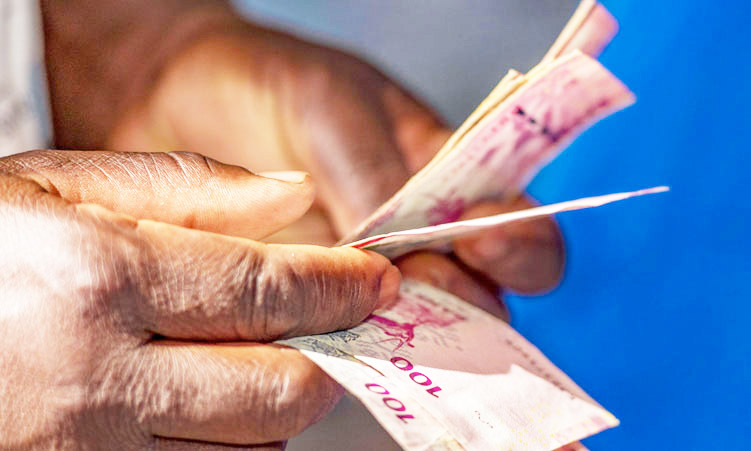
Namibia’s financial regulator has found a microlender that granted loans without the documents needed to prove borrowers could afford to repay them.
The finding comes as the industry’s loan book grows to N$9.3 billion.
The Namibia Financial Institutions Supervisory Authority (Namfisa) made the discovery during an on-site inspection of one registered microlender in the second quarter of 2026.
According to its 2026 second quarter quarterly statistical bulletin, the inspection found “instances of non-compliance, including the granting of loans without the mandatory supporting documentation required to substantiate affordability assessments”.
Responding to questions sent by The Namibian, the regulator did not disclose how many loans were affected, their combined value or which documents were missing. It also does not identify the lender.
Namfisa says further supervisory or enforcement action could be considered once the final findings were available.
The finding comes as borrowing from microlenders continues to increase.
The industry’s total loan book grew by 27% quarter on quarter and 19.3% year on year to N$9.3 billion at the end of June 2026.
“The microlenders’ loan book recorded a strong recovery both quarter on quarter and year on year at the end of the second quarter of 2026,” the regulator says.
Term loans, which are repaid over a longer period, accounted for N$8.6 billion, or 92.3% of the total outstanding debt. The average term loan stood at N$28 973.
Payday lenders issued 170 902 new loans during the quarter, accounting for 94% of all new loans. The average payday loan was N$4 329.
While these loans give households access to cash, borrowers must still repay them from their income. Affordability assessments are intended to help lenders determine whether borrowers can meet repayments without placing themselves under excessive financial pressure.
The inspection finding does not establish that all microlenders are granting unaffordable loans. However, it raises questions about whether lenders are properly documenting the checks required before extending credit.
MICROLENDERS DOMINATE HIGH-RISK CATEGORIES
Namfisa’s figures also show that microlenders make up most of the institutions in its two most serious intervention stages.
Stage 5 covers entities considered not viable or close to insolvency. In the second quarter of 2026, 43 of the 52 non-bank financial institutions in this stage were microlenders.
Stage 4 signals serious doubts about an entity’s future. Here, 37 of the 38 institutions were microlenders.
These numbers do not mean all of these lenders failed affordability checks. Namfisa has found other problems, including failure to submit required reports, unpaid levies and a history of non-compliance.
The numbers have shifted over the past year.
Namfisa’s 2026 annual report recorded 34 microlenders in Stage 4 and 53 in Stage 5 in 2025.
By the second quarter of 2026, Stage 4 had risen to 37, while Stage 5 had fallen to 43.
Namfisa also says it issued no administrative fines in the second quarter of 2026, though an administrative penalty against one microlender is under consideration.