




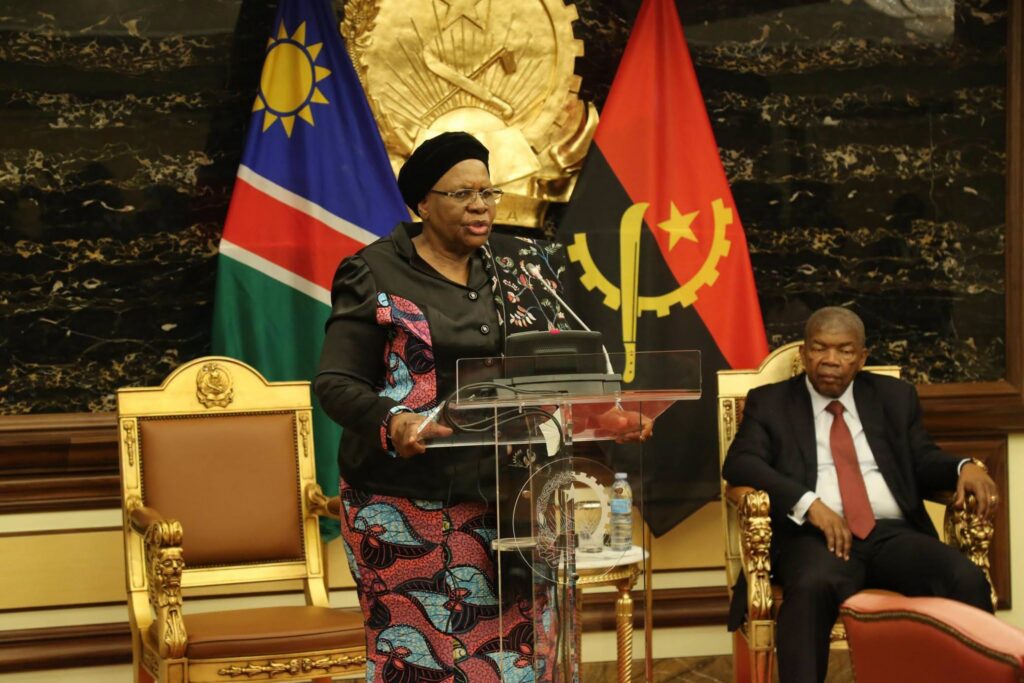
October 2026, Luanda, Republic of Angola.
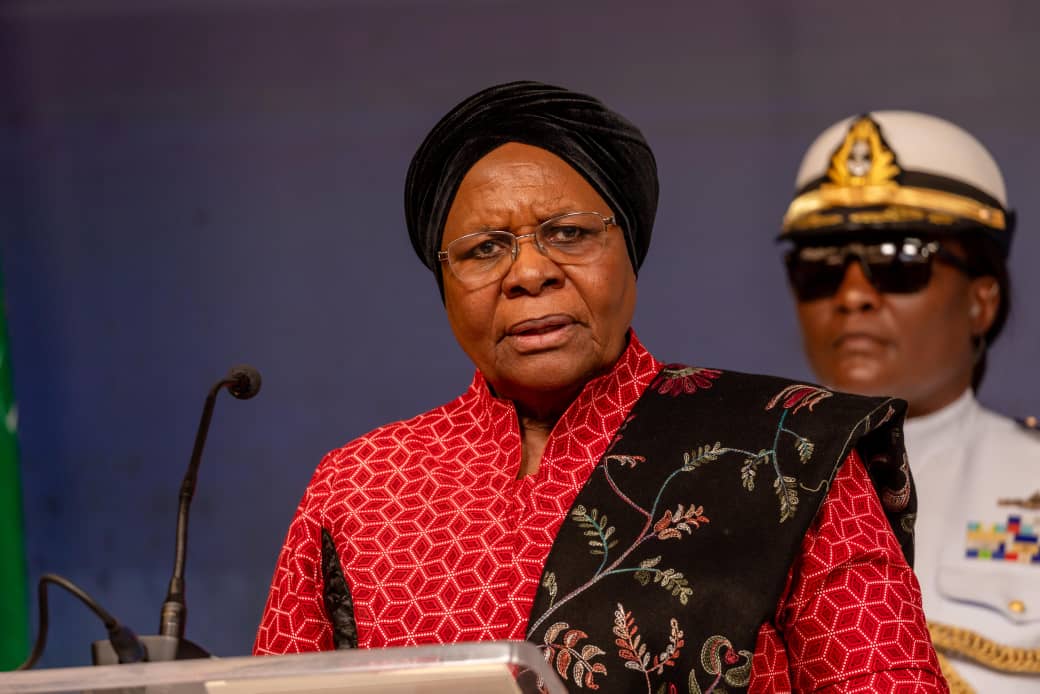
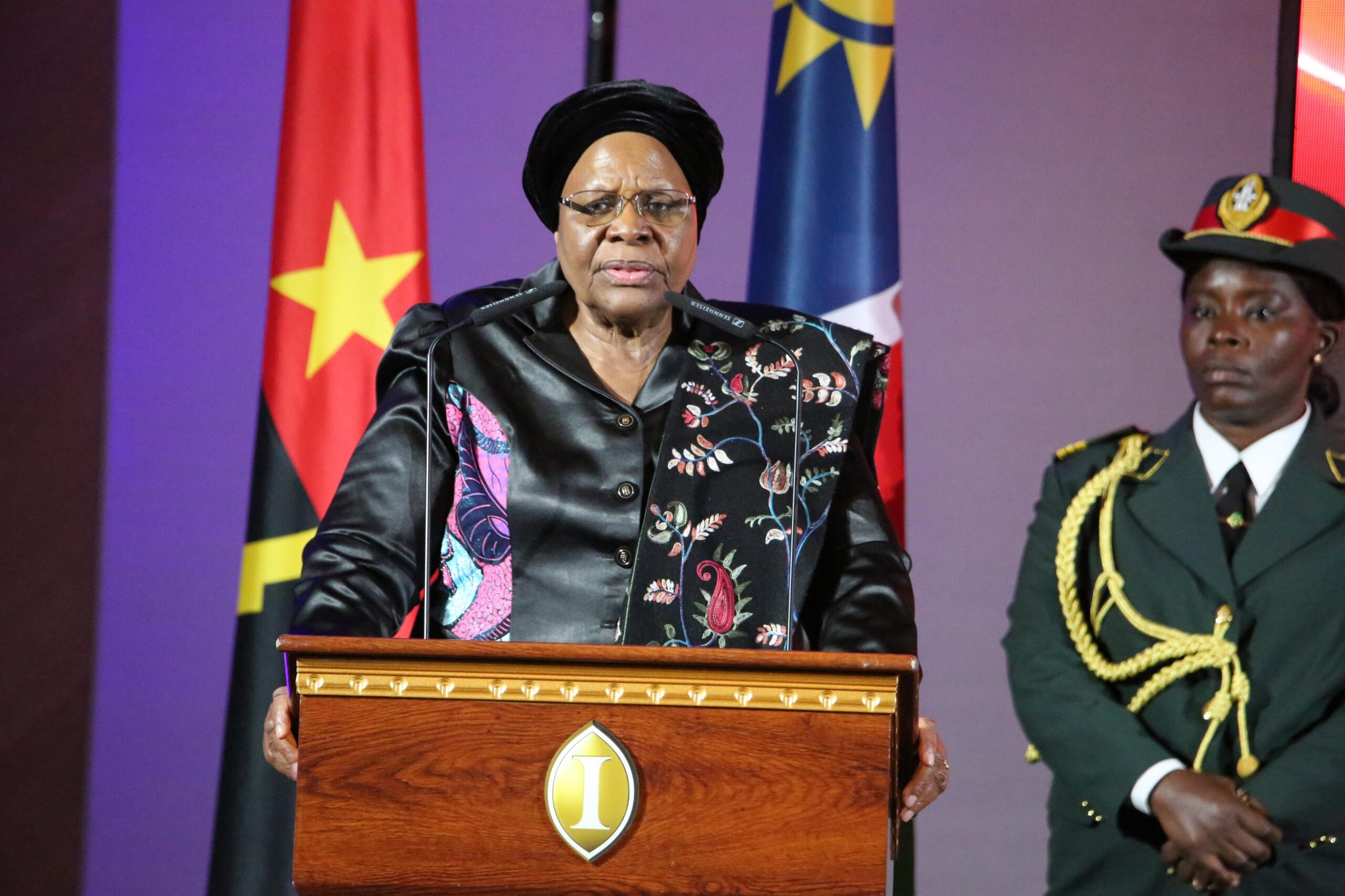
Address by Her Excellency Dr. Netumbo Nandi-Ndaitwah, President of the Republic of Namibia, to the National Assembly of the Republic of Angola.
Your Excellency Adão Francisco Correia de Almeida, President of the National Assembly;
Honourable Vice-Presidents of the National Assembly;
Honourable Leaders of Parliamentary Groups;
Honourable Chairpersons of Standing Committees;
Honourable Members of the National Assembly;
Honourable Members;
Honourable Ministers of Angola and Namibia;
It is a profound honour to address this August House, where the Angolan people’s sovereign finds expression. I extend warm and fraternal greetings from the Government, Parliament and people of the Republic of Namibia.
I thank you, Mr President, for the invitation to address this Assembly and congratulate you on your election to lead this National Assembly.
The year 2025 marked 50 years of Angola’s independence, which I am extremely happy to have attended. It was the same year when Angola had a responsibility to lead the programmes of the African continent as chair of the AU. That was a well-deserved match. Once again, I congratulate the Angolan people on this historic milestone.
I also commend President Lourenço for Angola’s leadership of the African Union during its chairmanship in 2025. Angola’s history gives particular weight to its voice on peace, sovereignty and African solidarity.
The President of Angola, as the AU champion on peace and mediation, carried out this responsibility on behalf of Africa with dedication and commitment. Peace is a prerequisite for development, and national parliamentarians have a role to play in the maintenance of peace and stability.
Mr. President, Honourable Members,
The history of Angola and Namibia is not simply a history of neighbouring countries. It is a history written through sacrifice, courage and an unwavering belief that the freedom of one African nation cannot be complete while another remains oppressed.
When Angola gained independence in 1975, it did not turn away from those who were still fighting for their independence. Angola’s Founding President, Dr. António Agostinho Neto, declared: “In Namibia, in Zimbabwe and in South Africa lies the continuation of our struggle.”
Those words were not merely a statement of solidarity. They were a commitment, honoured at enormous cost.
Angola opened its doors to the SWAPO Party and to thousands of Namibians in exile. It provided refuge, education, medical care and a base from which our liberation struggle could continue.
It did so while facing grave threats to its own peace and development.
We remember, with solemn gratitude, the sons and daughters of our countries whose lives were lost on Angolan soil. We remember especially the victims of the massacre of Cassinga on 4 May 1978. We look forward to the joint inauguration of the Cassinga Memorial Park, so that future generations may understand both the price of freedom and the duty to preserve it.
Namibia will never forget that its freedom was secured through the sacrifices of Namibians, Angolans and Cubans. Our gratitude is not confined to history books. It lives in the enduring friendship between our peoples.
That friendship has remained steadfast in times of grief. When we lost President Dr. Hage G. Geingob in February 2024 and our Founding Father, Dr. Sam Shafiishuna Nujoma, in February 2025, Angola stood with Namibia.
Your solidarity reminded us that the bonds forged in struggle endure across generations. For this, we say: thank you, Angola.
Mr. President, Honourable Members,
Our shared past places a responsibility upon us. We must honour the generation that fought for political freedom by securing economic opportunity for the generations that follow.
That is why the inauguration of the Angola–Namibia Bi-National Commission is an important milestone. The importance of the BNC is that we have elevated our cooperation to a mechanism co-chaired by our two Heads of State, thus enabling them to closely monitor the implementation.
This arrangement gives our partnership stronger political direction. It brings our political, economic, social, defence and security cooperation into a more coherent framework. Above all, it demands results.
Over the years, our two countries have concluded more than sixty bilateral agreements and memoranda of understanding, and during this BNC, we have signed seven agreements.
Those instruments are aimed at providing a formal legal framework for cooperation across a broad range of sectors. Those sectors include law enforcement, border management, trade, infrastructure development, water and energy security, transport connectivity, education, health, among others.
The success of those instruments cannot be measured by the number of instruments signed. It must be measured by the positive changes they make in the lives of our people: reliable services, greater trade, productive investment and decent jobs.
Hence, all arms of the state, including the Parliament, have a role to play in ensuring the effective and efficient implementation of those instruments of cooperation.
Mr. President, Honourable Members,
By its very nature, Parliament and its elected representatives have responsibilities that go beyond merely speaking on behalf of the electorate. Most importantly, they must focus on issues that improve the lives of the populace.
This is to say that Parliaments play an indispensable role in translating national commitments into tangible outcomes. It is here that laws are enacted, resources are appropriated, and the Executive is held accountable.
Amílcar Cabral reminded us that people struggle for the material conditions that allow them to live better, in peace, and to secure the future of their children. That principle remains as relevant today as it was during our liberation struggles.
The mother in every part of the country, including the deep rural areas, who needs clean water; the young graduate in urban or rural areas seeking employment; and the trader at the national designated border waiting to cross are all waiting to benefit from decisions taken in the national Parliament.
Legislatures can deepen cooperation on the protection of children, the prevention of trafficking in persons, shared water resources and the legal certainty needed for trade and investment.
Through parliamentary oversight, they can help ensure that the commitments of the Bi-National Commission or any developmental decision taken by the Executive receive the resources and attention required for delivery.
I recall with appreciation the November 2025 working visit to Namibia by this Parliament’s Standing Committee on Foreign Relations, International Cooperation and Angolan Communities Abroad, led by Honourable Felino Job.
Its engagement with our parliamentary counterparts strengthened an important channel of dialogue. I encourage regular reciprocal exchanges, including through the SADC Parliamentary Forum, headquartered in Windhoek.
I also welcome cooperation among our universities and institutions of higher learning. Student exchanges, research and collaboration in water, energy, agriculture, engineering and languages must help equip our young people to build the economies of tomorrow.
Mr. President, Honourable Members,
Our bilateral partnership forms part of a wider regional responsibility. We welcomed Angola’s decision to join the SADC Free Trade Area and the finalisation of its tariff offer with Member States in February 2025.
We look forward to the completion of the remaining domestic processes for this regional instrument to become operational in Angola, enabling businesses and citizens to benefit from the agreed trade preferences.
We are living in a world marked by increased global tensions, shifting alliances and multilateralism under threat; therefore, to serve our people better, regional integration must be experienced in the everyday lives of our people.
It should open markets, strengthen productive capacity and enable African enterprises to compete and grow. It should also prepare our countries to take fuller advantage of the African Continental Free Trade Area.
Africa has to focus on its own vision of development, as articulated in the AU Agenda 2063, the continent’s blueprint for sustainable development. African Parliaments have to embrace the AU Agenda 2063 and make it their political agenda.
As people’s representatives and in contact with the public at all levels, parliamentarians have to ensure that our people understand and are part of Africa’s development agenda, thus enabling them to appreciate our democracy and its institutions, including Parliament.
Mr. President, Honourable Members,
As Angola looks towards its general elections in 2027, Namibia extends its good wishes to the Angolan people and to all those entrusted with the democratic process.
We wish Angola peaceful, free and fair elections that further strengthen its democratic institutions.
Mr. President, Honourable Members,
The generation before us made difficult decisions so that we could live in freedom. We, in turn, must make responsible decisions whose benefits will be felt long after our time in office has ended.
Let our two nations therefore move with purpose from agreements to implementation; from shared potential to shared prosperity; and from solidarity in the struggle for liberation to solidarity in the work of development.
May the friendship between Angola and Namibia continue to grow stronger, in service of our peoples and of future generations, at all levels of our institutions.
Long live the friendship between the Republic of Angola and the Republic of Namibia!
Viva a amizade entre Angola e a Namíbia!
I thank you.
Muito obrigado.