





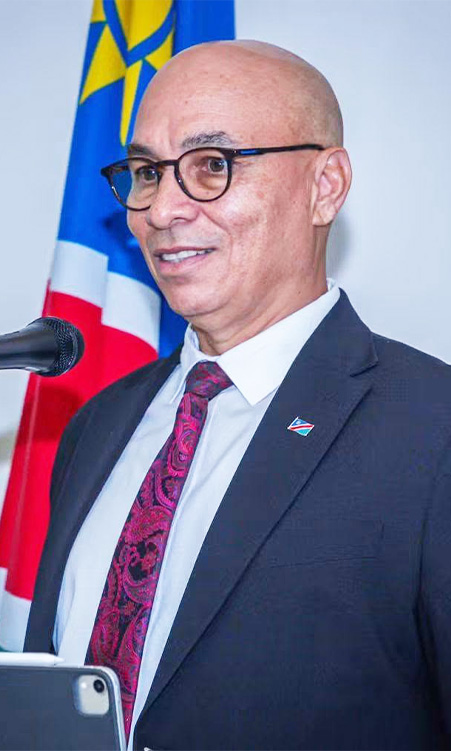
Civil society groups say the new head of the Anti-Corruption Commission (ACC), Bryan Eiseb, must rebuild public trust in the government’s commitment to fighting corruption.
Presenting a new report on procurement in Namibia on Friday, Institute for Public Policy Research (IPPR) research associate Frederico Links says Eiseb’s task is to turn the commission into a “real and powerful” organisation.
In July, prior to his appointment to the commission, Eiseb said the best anti-corruption measures are those that reduce the opportunities for corruption.
“Eiseb’s July 2026 statement points to all the areas where the ACC has apparently lost its way over the years under the leadership of founding and long-serving former head Paulus Noa,” Links writes in his October report.
“In short, the ACC has failed to effectively lead and coordinate the state’s anti-corruption responses,” he says.
According to Links, the commission has not promoted transparency, built meaningful law enforcement against corruption, and has not championed protection for whistleblowers.
“In the public procurement context, the ACC has been a passive and reactive shadow, despite the public procurement landscape being a primary corruption location and crime scene,” he says.
Therefore, Eiseb’s task will be to create an ACC that does not wait for problems to arise, and instead launches audits and investigations to catch issues before they become problems, Links says.
“Eiseb comes across as no-nonsense. He should not be afraid of breaking a few eggs to give new impetus to Namibia’s ACC,” Links says.
He adds that Namibia has already made several commitments to fighting corruption through international agreements, which the country has not fulfilled.
INTERNAL DYNAMICS
Responding to questions at the presentation on Friday, Links said the political pressures that have hindered the commission’s work are well known.
“He’s fully aware of that internal dynamic aspect he has to confront. He faces an internal situation that could make or break his agenda,” he said.
During a recent meeting with the IPPR, Eiseb said he would adopt some of the approaches he has used at the Financial Intelligence Centre in his work at the ACC.
Another major challenge would be convincing the public to report corruption issues. Although Namibia passed the Whistleblower Protection Act in 2017, it has not been implemented.
“People have reported [issues]. The ACC just says there’s no need to investigate and people become disillusioned. Some have lost their jobs, and some have been victimised,” an audience member said.