






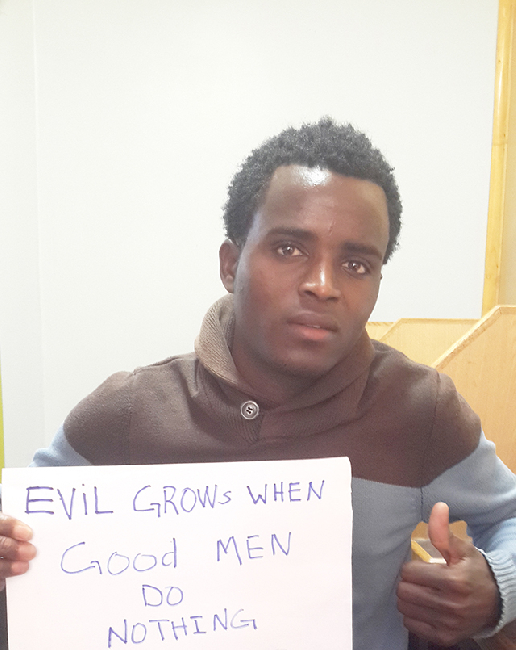
I am writing this with sadness – sadness for our loved ones; sadness for all women, our mothers, sisters, aunts and young girls in our patriarchal society.
I am writing with a sense of shame – shame that as a society, we are not able to give assurance to young children that we will take proper care of them. Shame that simply to be a woman or a child in our country is to be at risk of violence and abuse.
We are a society at war with ourselves. To be silent renders us impotent, unable and unwilling to solve this inexcusable character of Namibia. We do not fight for each other, we fight with each other.
To call this attack on women gender-based violence is too vague, to euphemistic and too simplistic. We should call it for what it is. It is the despicably and deplorably violent attacks by us men to women, girls and babies. They should feel safe and secure with us as men. They have a right to feel safe. How many more women, young girls and young children must live with this constant fear of being attacked and violated? It is the men who rape and kill.
We have human rights, we have a constitution that dictates that there should be equality between men and women in our country and there should be fair treatment; there should understanding which is based on the values enshrined in our constitution. We firmly stand behind the women of our country and firmly support the efforts that we all need to bring an end to this type of violence and also to create a society in which women enjoy safety, dignity and respect.
According to the World Health Organisation, Namibia has the third highest interpersonal violence death rate in the world. I have a solution to this! How do we get there? We should focus on the six key areas:
1. Funding women’s full participation in civil society.
2. Scaling up prevention efforts that address unequal gender power relations as a root cause to GBV.
3. Bringing GBV clinical services to lower-level health facilities.
4. Addressing the needs of child survivors, including interventions to disrupt the GBV cycle.
5. Developing guidance for building a system to eliminate GBV.
6. Developing support programmes for professionals experiencing second-hand trauma.
In my view, this should be put in action immediately in order to change the situation. Among all the brilliant ideas that I collected, I give precedence to certain aspects, such as:
• Organising awareness campaigns, especially in the rural areas, about gender equality and human rights.
• Stressing the fact that giving birth to a girl is not a disadvantage in the family.
• Spreading education, especially providing sexual information.
• Implementing an ethics code of conduct among doctors in order to separate the aim of profession from personal or religious beliefs.
• Creating a network between institutions involved such as the police, hospitals, NGOs, both at local as well as at international events.
• Promoting equality opportunities for men and women.
• Implementing the registration of birth and marriages in order to fight against human trafficking.
• Putting women in connection through social networka in order for them to share their experiences.
• Introducing mediators in hospitals.
It’s clear that we still have a lot of work to do on the basic prevention. And we keep pushing.
Tulonga Nghiningwalai is passionate about motivating the youth. Email him at tulonganghini96@gmail.com.

